The world's first operational stealth aircraft flew real combat missions for years before the Pentagon would even confirm it existed — built on math a Soviet physicist published openly because his own government didn't think it mattered. It flew in Panama and over Baghdad nearly invisible to radar. Then, on a single night over Serbia in 1999, a colonel with three decades-old missiles and twenty seconds of patience proved that invisible isn't the same as unbeatable.
The F-117 exists because an American engineer found a Soviet physicist's discarded idea and realized the Soviets themselves had missed its real value.
In 1962, Soviet physicist Pyotr Ufimtsev published a paper on how radar waves scatter off the edges of a flat surface, rather than its overall size. The Soviet Union saw little practical military application in it and allowed it to be openly published. Years later, Lockheed engineer Denys Overholser found the translated paper while researching radar theory for a new project — and realized Ufimtsev had just handed him the mathematics needed to calculate, and then minimize, an aircraft's radar reflection.
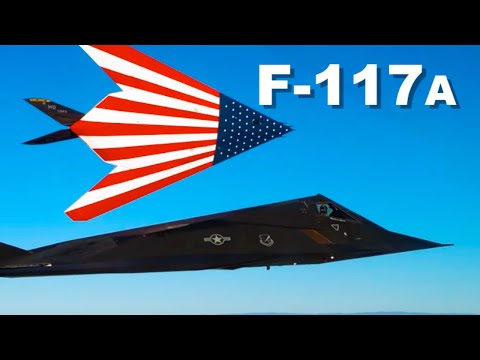
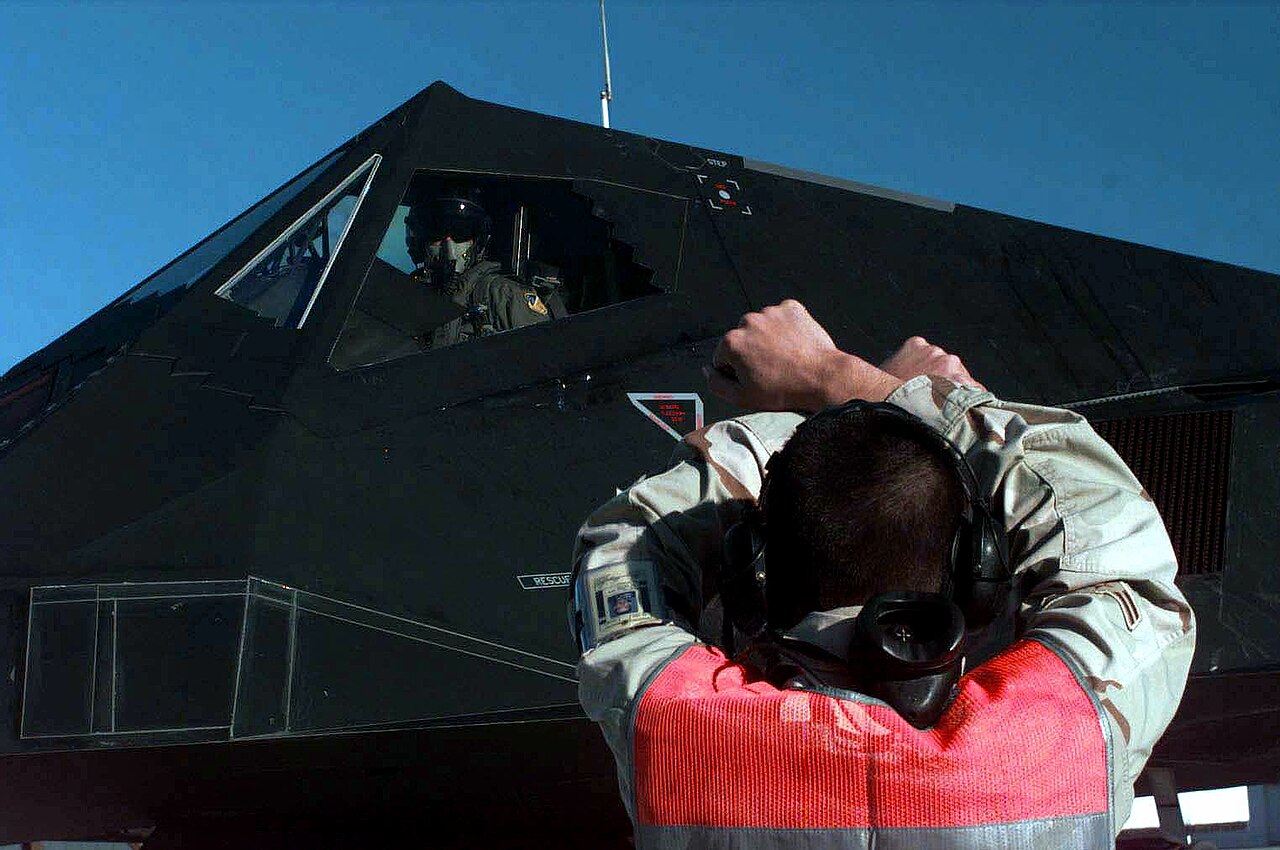
Because 1970s computers could only model flat surfaces, not smooth curves, the resulting design became a faceted, angular shape nicknamed the “Hopeless Diamond” internally at Skunk Works. It looked nothing like a conventional fighter — and it worked far better than anyone expected.
The father of stealth is a Russian mathematician.
— Denys Overholser, Lockheed Skunk Works engineer, crediting Pyotr Ufimtsev's radar diffraction theoryEvery strange angle on the F-117 exists to send radar energy anywhere except back at the receiver that sent it.
Lockheed's Overholser and his team designed the F-117's entire outer surface out of flat panels set at carefully calculated angles, because the software of the era — a program called Echo 1 — could only calculate radar returns from flat facets, not curves. The result deliberately deflects incoming radar energy away from its source instead of reflecting it straight back.
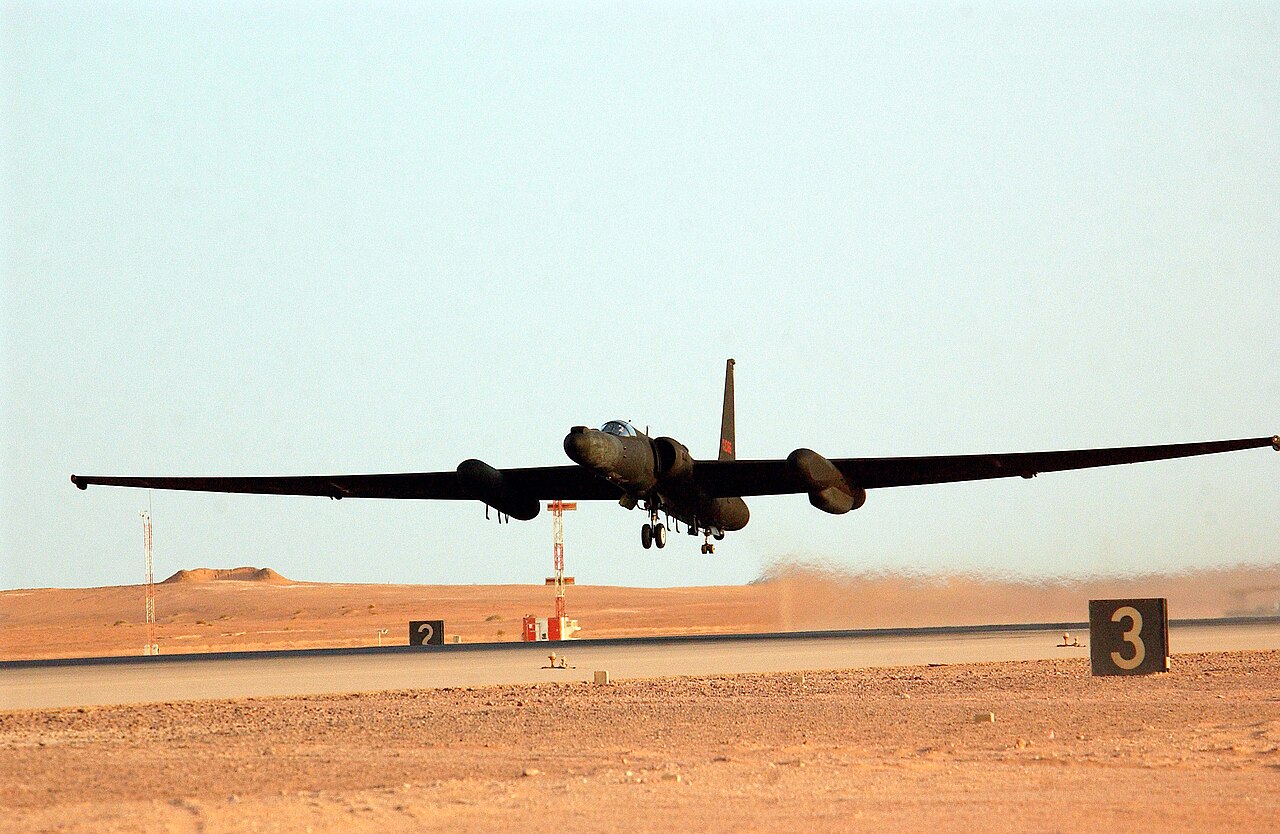
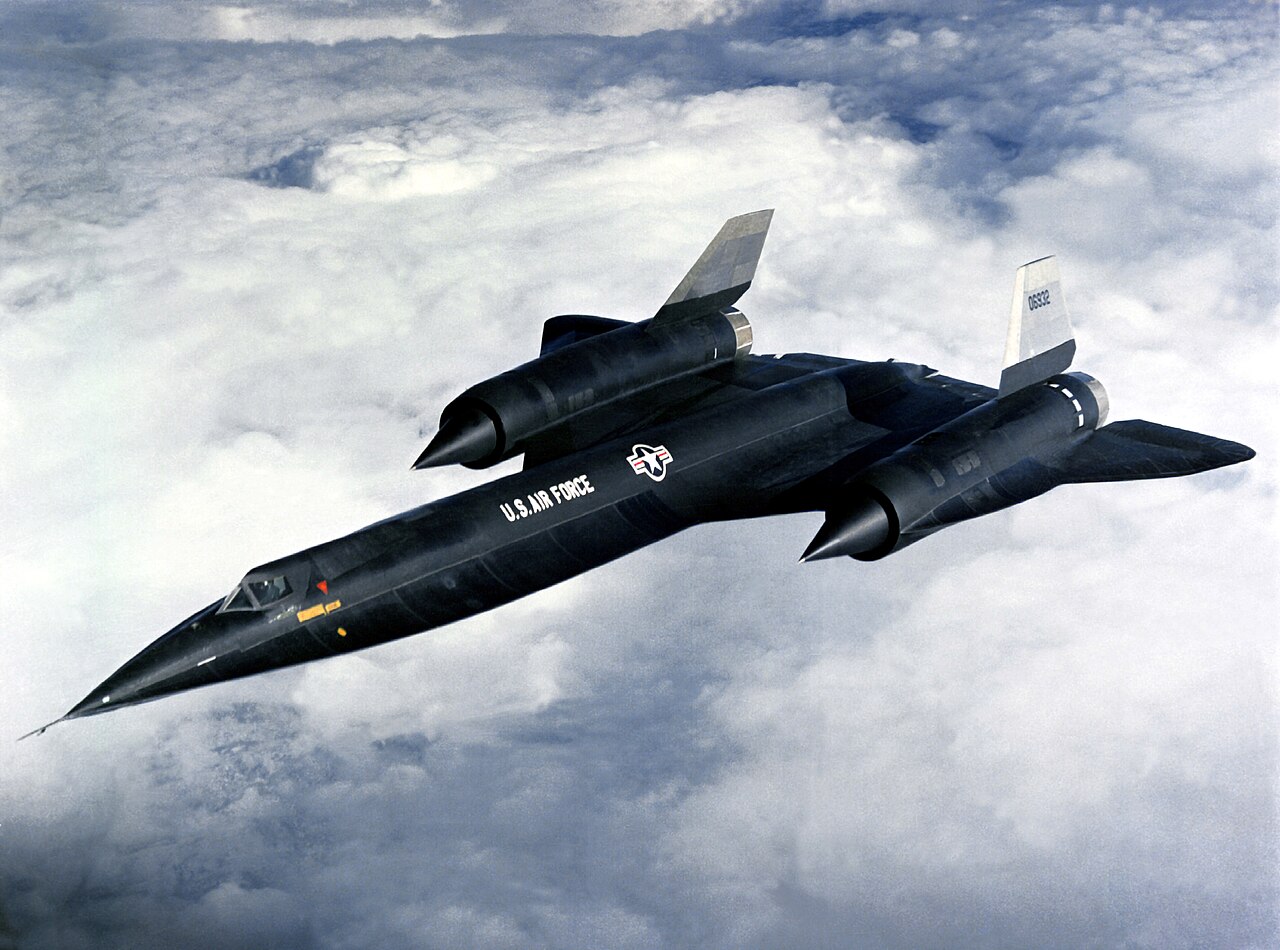
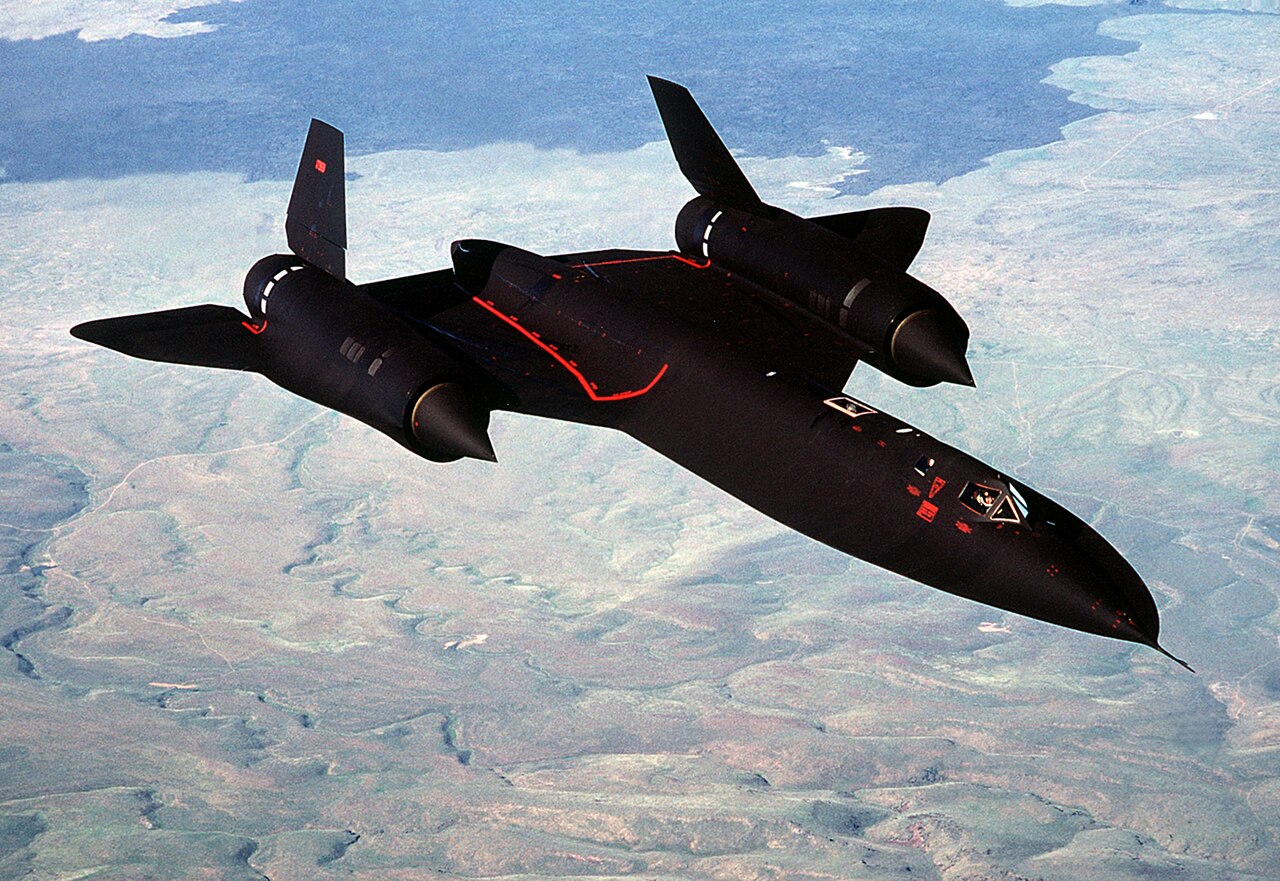
Unlike the supersonic spy planes on this site, the F-117 was never meant to outrun anything. It's subsonic, relatively small, and designed to slip past air defenses by simply not being detected in the first place — a completely different philosophy from the U-2 or SR-71's approach of flying too high or too fast to catch.
The Nighthawk flew real combat missions for seven full years before the Pentagon publicly confirmed the program existed — and then flew two of the most closely watched air campaigns of the era.
The F-117 flies for the first time out of Area 51, years before the public has any confirmation the aircraft, or the stealth concept behind it, is real.
The Air Force declares the F-117 operationally ready, flying only at night, from a remote airfield, under a security blackout so total that pilots' own families didn't know what they flew.
F-117s fly combat missions during the U.S. invasion of Panama, Operation Just Cause — the aircraft's first use in war, still years before most of the public understood what “stealth” meant.
After seven years of secret operational flying, the Air Force releases a single grainy photo and confirms the F-117 exists at all — ending years of speculation about strange, boxy aircraft glimpsed only at night.
F-117s strike deep into heavily defended Baghdad air space on the first night of the Gulf War, becoming the public face of “smart,” stealthy airpower on nightly televised briefings — while officially still flying only a fraction of the war's total sorties.
On the night of March 27, 1999, an aircraft built to be functionally invisible to radar was hit by a missile system designed in the 1950s — because the man commanding it refused to fight the way everyone expected.
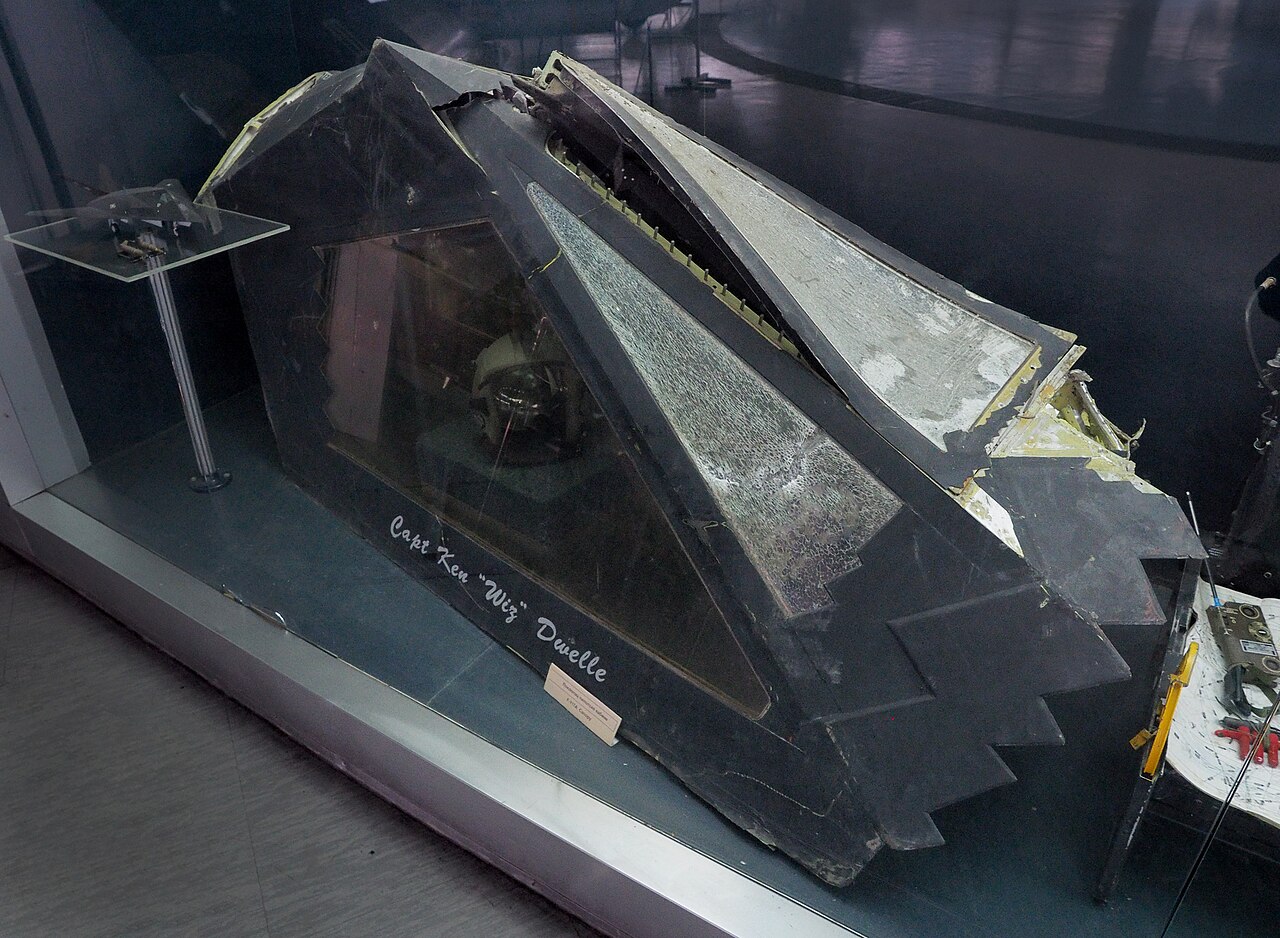
During NATO's Operation Allied Force over Yugoslavia, F-117 pilot Lt. Col. Dale Zelko — call sign Vega 31, flying an aircraft nicknamed Something Wicked — was targeted by a Serbian air-defense battery commanded by Colonel Zoltán Dani. Dani's unit flew far older Soviet-made SA-3 missile systems, decades less sophisticated than what NATO expected to threaten a stealth aircraft.
Dani's edge wasn't better technology — it was discipline. He moved his batteries constantly and limited radar activation to roughly twenty seconds at a time, just long enough to get a track without lingering as a target for NATO's own radar-hunting aircraft. On a predictable flight path, at a moment his radar happened to be active, his unit fired two missiles. One struck the F-117, and Zelko ejected.
Lt. Col. Dale Zelko, ejected safely, March 27, 1999
Rescued the following night by an Air Force combat search and rescue crew.
Zelko hid in an irrigation ditch as Serbian search parties passed within a hundred meters of his position, and was recovered roughly eight hours later by an MH-60 Pave Hawk crew. Parts of the wrecked F-117 remain on permanent display at Belgrade's Museum of Aviation; other fragments were reportedly studied by Russian and Chinese engineers. Years afterward, Zelko and Dani met in person and became friends — two men who'd spent one night trying to kill each other, on opposite sides of the only successful shootdown of an operational stealth aircraft in history.
We didn't shoot down the plane because we are so good. We shot it down because we knew the Americans were so sure of their invisibility that they became a bit careless.
— Colonel Zoltán Dani, commander of the Serbian air-defense unit that downed Vega 31The F-117 program didn't just hide an aircraft — it hid an entire operational wing, for the better part of a decade.
Pilots assigned to the F-117's home unit at Tonopah Test Range flew only at night and lived under a security regime so strict that many colleagues elsewhere on the same base had no idea the aircraft, or the unit, existed. Some pilots' own spouses believed they worked ordinary support jobs.
The Air Force did not publicly acknowledge the F-117 until 1988 — seven years after its first flight and roughly five years into full operational service, finally releasing a single official photograph after years of blurry, unconfirmed civilian sightings and speculation.
The Air Force officially retired the F-117 fleet in 2008. Retired aircraft do not, as a rule, keep showing up on flight-tracking sites and civilian dashcams over the Nevada desert more than fifteen years later.
The Air Force's official retirement of the F-117 in 2008 was meant to close the book on the type, with most of the fleet placed in flyable storage rather than fully scrapped — itself a signal the service didn't consider the airframes truly finished.
F-117s have been repeatedly photographed flying training and test missions well after 2008, including public sightings over Fresno, California in 2021 and multiple sightings refueling from tankers over the following years — reportedly used as low-cost adversary aircraft and stealth-material test platforms so the Air Force doesn't have to burn flight hours on frontline F-22s or F-35s for the same purpose.
Retired doesn't mean grounded — not for this program.
— Characterization repeated across multiple aviation outlets tracking continued F-117 sightings since 2008The F-117 proved stealth worked in real combat, then handed the concept to a generation of aircraft that no longer needed to look like a gemstone to disappear from radar.
Every stealth aircraft since — the B-2 Spirit, F-22 Raptor, F-35 Lightning II — owes its existence to the F-117 proving, in actual combat over Panama and Iraq, that a radar-evading aircraft could survive and strike inside heavily defended airspace.
By the time the B-2 was designed, computing power had advanced enough to model curved stealth shapes directly, eliminating the F-117's faceted “Hopeless Diamond” look in favor of smoother blended surfaces with even lower radar signatures.
The March 1999 shootdown remains the standard cautionary case study in military aviation circles: stealth reduces detection probability, it doesn't eliminate it, and predictable routes and timing can still cost even the hardest aircraft to see on radar.
Dale Zelko and Zoltán Dani's later friendship — the American pilot shot down and the Serbian commander who did it — became its own small, human postscript to a Cold War-descended stealth program built almost entirely around not being seen.
The F-117 is one of fourteen classified and experimental aircraft covered in The Secret Skies archive.
Every fact in this case file was cross-referenced against at least two independent sources. All links open in a new tab.
Smithsonian's official collection record and history of the F-117 program.
Detailed account of Colonel Zoltán Dani's unit and the March 1999 shootdown of Vega 31.
Reporting on continued post-2008 F-117 sightings and their likely test/adversary role.
Background on the declassified Soviet radar-diffraction theory behind the F-117's faceted design.
Official Air Force fact sheet covering the aircraft's specifications and operational history.