Every superpower of the 20th century built aircraft it hoped the rest of the world would never see: spy planes that flew above the reach of missiles, flying wings decades ahead of the physics behind them, rocket interceptors so desperate they killed their own test pilots, and space planes that flew once, perfectly, and were left to rot. This is the declassified paper trail behind fourteen of them — American, Nazi German, Soviet and NASA — with the real specs and the strangest true stories attached to each.
Five decades of Skunk Works and USAF programs built on the same premise: fly higher, faster or stealthier than anything an adversary's radar could catch — and worry about telling the public later, if ever.
Built in secret by Lockheed's Skunk Works in roughly 88 days, the U-2 flew reconnaissance missions over the Soviet Union at altitudes nothing in the late 1950s could touch. Its polished silver skin, catching sunlight at 60,000–70,000 feet, is the CIA's own officially confirmed explanation for more than half of America's UFO reports in that era.
The Oxcart solved the problem the U-2 couldn't: speed. Built from titanium to survive the heat of sustained Mach 3+ flight, it was flown exclusively by CIA officers, not military pilots, operating directly out of Groom Lake. Its existence stayed classified until 2007 — more than four decades after it retired.
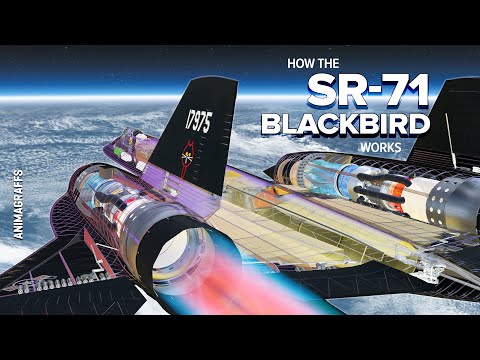
The Air Force's own successor to the Oxcart remains the fastest air-breathing crewed aircraft ever to fly operationally. No SR-71 was ever shot down despite thousands of missiles fired at them over the course of the Cold War. It was retired in 1998 — officially because satellites had caught up, though budget politics played a role too — leaving a reconnaissance gap that took decades to fully close.
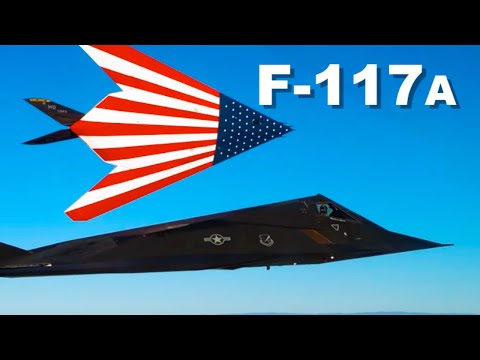
Skunk Works built the F-117 around faceted, angular surfaces because the 1970s computing power available couldn't model curved stealth shapes — a limitation later solved by the smoother B-2. It flew real combat missions starting in the 1980s while the Pentagon still wouldn't confirm the aircraft existed, finally acknowledging it publicly in 1988.
The B-2 traces its stealth flying-wing shape back to Jack Northrop's own 1940s designs, finally made viable by 1980s composite materials and computing power the F-117 never had. Each of the 21 built cost over $2 billion, making it, by weight, one of the most expensive objects ever manufactured.
Facing collapse by 1944, German engineers pursued increasingly desperate and radical designs — some decades ahead of their time, some fatal to the pilots who flew them first, almost all built too late to change the outcome of the war.
Brothers Walter and Reimar Horten built a tailless flying-wing jet fighter for reasons of aerodynamic efficiency, not stealth. Decades later, aviation historians speculated its shape and construction may have reduced its radar signature. Northrop Grumman built a full-scale plywood reproduction and tested it against WWII-era radar frequencies for a 2009 documentary: the results showed a real, if modest, reduction in detection range compared to a conventional fighter of the era — not invisibility, but a genuine, unintentional head start on stealth theory.
Roughly 100 mph faster than any Allied piston fighter, the Me 262 could have contested Allied air superiority had it entered service when the airframe was ready in 1942–43. Hitler personally ordered it redesigned as a fast bomber, delaying its combat debut as a fighter until mid-1944 — by which point fuel shortages, pilot shortages and overwhelming Allied numbers had already decided the air war.
The Natter was a point-defense interceptor meant to rocket vertically off a launch tower, fire a single volley of unguided rockets into a bomber formation, then have the pilot bail out as the airframe broke apart by design. On March 1, 1945, test pilot Lothar Sieber became the first human to launch vertically under rocket power — sixteen years before Yuri Gagarin — and was killed when the aircraft's canopy failed seconds into the flight.
The USSR built its own answers to America's black projects — sometimes feared far beyond what the hardware could actually do, sometimes achieving things the West couldn't, always shrouded in as much secrecy as the CIA's own programs.
For years, Western intelligence rated the MiG-25 as a near-mythical air-superiority threat capable of outperforming anything NATO could field. On September 6, 1976, Soviet pilot Viktor Belenko defected by flying his Foxbat straight to Japan. Once Japanese and American engineers disassembled it, they found a heavy, fuel-hungry interceptor built around raw speed and a huge radar — impressive, but nowhere near the invincible threat it had been assumed to be.
The Tu-144 first flew on December 31, 1968, more than two months before Concorde, and its close visual resemblance earned it the nickname "Concordski" in the West. Its reputation collapsed on June 3, 1973, when a Tu-144 broke apart in mid-air at the Paris Air Show in front of a huge crowd, killing its crew and eight people on the ground. It saw only a brief and troubled commercial passenger service before being quietly withdrawn.
On November 15, 1988, Buran completed a full uncrewed orbital mission and landed itself in a crosswind at Baikonur entirely under computer control, even executing an automated go-around when conditions briefly exceeded safe limits. It never flew again: the USSR collapsed three years later, the program lost its funding, and the only orbiter to ever fly was destroyed in 2002 when the roof of its storage hangar collapsed, killing eight workers.
Not built to hide from anyone — built to find the edge of what flight itself could do, one experimental record at a time, often at fatal cost to the test pilots who volunteered for it.
On October 14, 1947, Chuck Yeager flew the rocket-powered X-1, nicknamed Glamorous Glennis, past Mach 1 over the Mojave Desert — with two ribs he'd broken in a horseback riding accident two days earlier, using a sawed-off broom handle to lever the cockpit hatch shut because his injured arm couldn't reach it. It proved the "sound barrier" was a limit of aircraft design, not of physics itself.
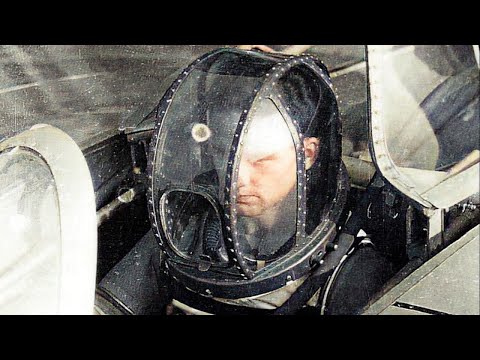
Still the fastest crewed, powered aircraft ever flown, the rocket-powered X-15 reached Mach 6.7 and climbed past 350,000 feet — high enough that several of its Air Force pilots qualified for astronaut wings without ever leaving the atmosphere in a spacecraft. Its research directly informed the Space Shuttle program decades later.
Conceived as a Mach 3 strategic bomber able to simply outrun Soviet air defenses, the XB-70 program was scaled back to two research prototypes once surface-to-air missiles made high-altitude speed alone obsolete. On June 8, 1966, during a General Electric-organized formation photo flight, an F-104 chase plane clipped the Valkyrie's wing, destroying both aircraft and killing both pilots involved in the collision.
Every aircraft above was cross-referenced against at least two independent sources, prioritizing declassified government documents and official museum records. All links open in a new tab.
Official CIA history covering both the U-2 and A-12 Oxcart programs in detail.
The engineering paper behind Northrop Grumman's 2008 radar cross-section testing of a full-scale Ho 229 reproduction.
The Smithsonian's account of Chuck Yeager's 1947 Bell X-1 flight.
NASA's official history of the X-15 program's speed and altitude records.
Detailed account of the fatal General Electric photoshoot collision that destroyed the second XB-70 prototype.
Account of Viktor Belenko's 1976 defection and the subsequent Western analysis of the aircraft.
History of the Tu-144 program, its early lead over Concorde, and the 1973 Paris Air Show crash.
Account of Buran's 1988 automated orbital flight and landing.
Coverage of the Buran program's cancellation and the 2002 hangar collapse that destroyed the only flown orbiter.
Account of Lothar Sieber's fatal March 1, 1945 test flight, the first manned vertical rocket launch in history.