In 1955, Lockheed's secret Skunk Works division built an airplane so radical it had to fly essentially unarmed, at the edge of space, over hostile territory, with a pilot who'd signed away his own identity. Seventy years later, it's still flying — and the CIA has now officially admitted that this one aircraft, quietly, for over a decade, was responsible for more than half of all the UFOs America thought it saw.
The U-2 wasn't developed by a normal aerospace program. It was built by a small, deliberately isolated team that barely existed on paper — under a man whose name is now shorthand for doing the impossible on an impossible deadline.
In the early 1950s, the CIA and U.S. Air Force needed a way to see deep inside the Soviet Union without starting a war to get the pictures. Existing aircraft and rockets couldn't do it — anything that flew low enough to photograph anything useful could be tracked and shot down. Lockheed's answer came from Clarence “Kelly” Johnson, the engineer who had already built the P-38 Lightning and the P-80, America's first operational jet fighter, in just 143 days.
Johnson ran his projects out of a small, isolated unit at Lockheed's Burbank plant, officially named Advanced Development Programs. Almost nobody called it that. Legend holds a nearby employee answered the phone “Skonk Works” — a nod to a moonshine still in the comic strip Li'l Abner — and the nickname stuck, spelled “Skunk Works” after a trademark dispute. The unit operated under Johnson's now-famous rules: small teams, minimal paperwork, total autonomy from the rest of the company, and absolute secrecy, even from most of Lockheed itself.
The CIA signed the contract for what it called the CL-282 in late 1954. Johnson's team is commonly credited with delivering the first flyable aircraft in about 88 days from the start of fabrication — figures in various contemporary and Lockheed retrospectives range from roughly 80 to 88 days for the build itself, with the full contract-to-first-flight span running about eight months. Either way, it was an absurd pace for an aircraft this radical, achieved by a team small enough to fit its own building.
Lockheed test pilot Tony LeVier was only supposed to be running taxi tests at the CIA's new, unmarked desert test site at Groom Lake, Nevada, on August 1, 1955. At around 70 knots, the U-2 unexpectedly lifted off the dry lakebed. LeVier later said he had “no intentions whatsoever of flying” and struggled to judge his height over the featureless lakebed before setting back down, blowing both tires. The first planned flight followed three days later, on August 4, 1955.
I had no intentions whatsoever of flying. I immediately started back toward the ground, but had difficulty determining my height because the lakebed had no markings to judge distance or height.
— Tony LeVier, Lockheed test pilot, describing the U-2's unplanned first flight, August 1, 1955The U-2 looks less like a fighter jet and more like a powered glider with a jet engine bolted underneath — because that's essentially what it is. Every part of that strange shape exists for one reason: to stay in the air at an altitude nothing else could reach.
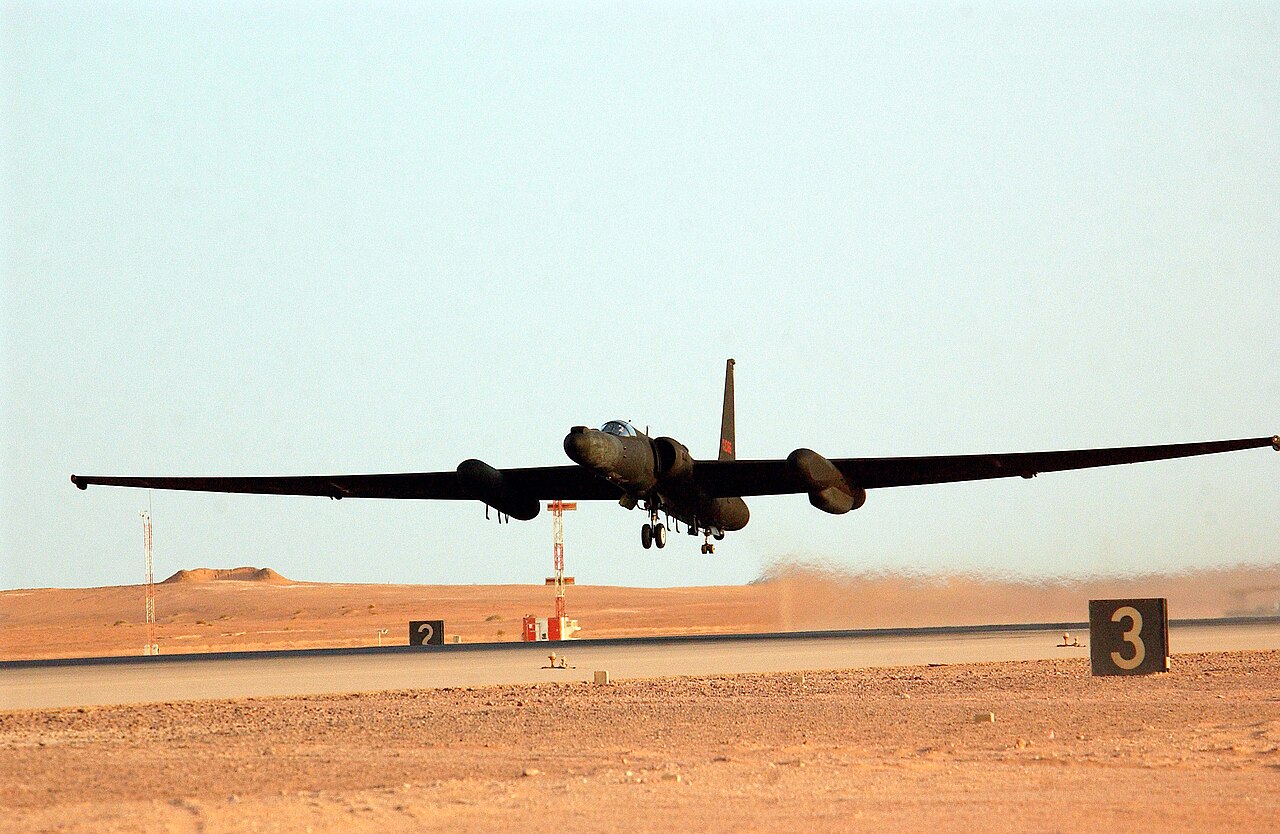
The production U-2S has a wingspan of about 103 feet — longer than a Boeing 737's — on a fuselage barely 63 feet long, built to generate enormous lift out of thin, high-altitude air at the cost of everything else. It cruises above 70,000 feet, with a documented maximum altitude around 80,000 feet, roughly twice the cruising altitude of an airliner and higher than 95% of Earth's atmosphere sits beneath it. At that height, the sky overhead is nearly black even at noon.
Top speed is roughly 500 mph, though the aircraft rarely gets close to it: at operational altitude, the gap between stall speed and the speed that would tear the airframe or engine apart narrows to as little as 10–12 knots — a margin pilots call “the coffin corner.” Fly a few knots too slow and the wing stalls; a few knots too fast and the aircraft can come apart. Threading that needle for hours at a time is part of what makes flying the U-2 as demanding as anything in aviation.
To reach and hold that altitude, Johnson's team stripped out anything not essential to lift and range — there's no ejection seat on early models, minimal structural redundancy, and a single engine. The tradeoff bought an aircraft that, in the mid-1950s, Soviet fighters and surface-to-air missiles simply could not reach. For the first several years of the program, the U-2 was, for all practical purposes, untouchable.
Because extra landing gear weight would have compromised the design's efficiency, the U-2 uses a “bicycle” gear — two wheels in line along the fuselage instead of the usual wheel-under-each-wing layout — with small, detachable outrigger wheels called “pogos” that fall away on takeoff and have to be manually reinserted before every landing.
Flying the U-2 has never been a purely military job, and landing it may be the single hardest routine task in aviation — “routine” being a generous word for something that still requires a car racing down the runway at 120 mph every single time.
Because the earliest U-2 overflights of the Soviet Union were intelligence-gathering missions, not acts of war under any military rulebook Washington wanted to acknowledge, the program was run by the CIA rather than the Air Force. Its first pilots were serving Air Force officers who resigned their commissions and became civilian employees of the CIA under contract — a process pilots at the time referred to as being “sheep-dipped.” They flew under false identities and cover stories, sometimes for Lockheed itself, with their real service records sealed. If they were captured or killed, the U.S. government had built itself just enough distance to deny the whole thing.
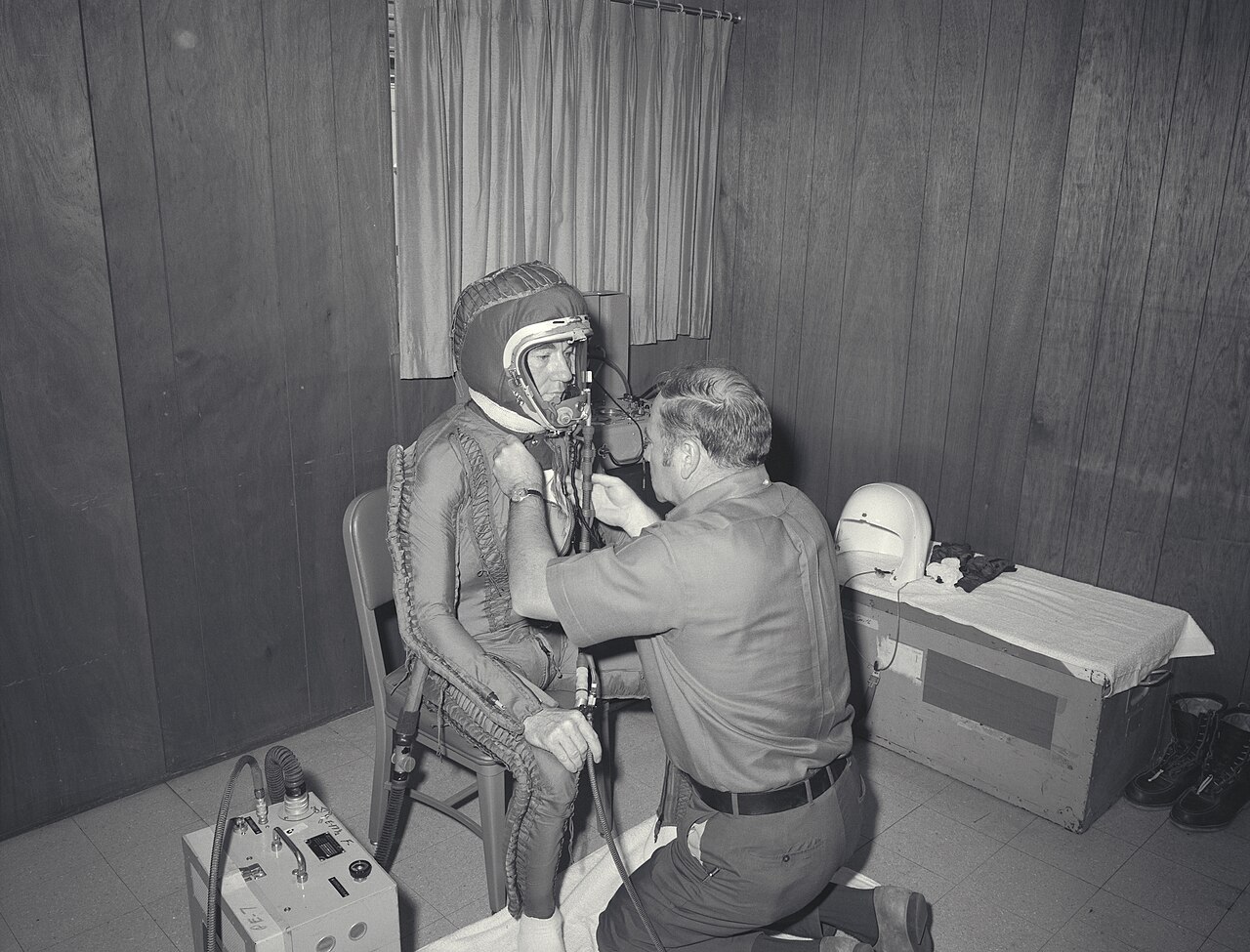
At altitude, pilots wear a full-pressure suit nearly identical in concept to the suits NASA would soon build for Mercury astronauts — for the same reason. Above roughly 63,000 feet, the air is thin enough that unprotected blood boils at body temperature, a threshold physiologists call the Armstrong Limit. The suit is pressurized, supplies breathing oxygen, and is the only thing standing between a pilot and that limit for a mission that can last nine hours or more, largely alone, strapped into a seat the size of a phone booth.
What U-2 pilots call the altitude
Too slow, the wing stalls. Too fast, it breaks.
The U-2's huge wing generates so much lift that it wants to keep flying in ground effect even at very low speed, refusing to simply settle onto the runway the way a normal aircraft does. Pilots have to force a full aerodynamic stall just a couple of feet off the ground to get it down at all — and because the pilot's forward visibility from that reclined, visor-restricted seat is poor at best near the runway, a second qualified U-2 pilot chases the aircraft down the runway in a high-performance car, radioing altitude calls in real time: “Ten feet… five… three… two… one…” It has been standard procedure since the aircraft's first test flights, and it remains standard procedure today.
Early CIA U-2 pilots were quietly identified and approached individually rather than through any open call for volunteers, screened for both flying skill and the ability to keep an extraordinary secret indefinitely — from friends, from family, in some cases for the rest of their lives. Many never spoke publicly about their missions until decades of declassification finally allowed it.
This is the detail that turns an aviation engineering story into something much stranger: for more than a decade, the single best-documented aircraft in the world was, by the CIA's own admission, secretly responsible for the majority of America's UFO reports.
In a 1997 article for the CIA's own in-house journal, Studies in Intelligence, historian Gerald K. Haines wrote plainly that, according to Agency officials directly involved in the programs, high-altitude U-2 and later A-12 OXCART reconnaissance flights “accounted for more than half of all UFO reports” made to the Air Force from the late 1950s through most of the 1960s. It is one of the most direct, on-the-record government confirmations that a specific classified aircraft caused a specific wave of UFO sightings anywhere in the declassified record.
The physics behind it is almost mundane. Early U-2s were finished in bare, highly polished silver metal. At 60,000–70,000 feet, well above where any airliner or private plane was expected to be, that silver skin caught direct sunlight long after sunset on the ground below — producing a bright, slow-moving, fiery object with no visible means of propulsion, exactly the kind of thing witnesses had no framework to explain. Commercial pilots, air traffic controllers and ordinary civilians reported it, in good faith, as exactly what it looked like: something unidentified.
The Air Force's Project Blue Book, the public-facing UFO investigation office, regularly consulted the CIA's own Project Staff to quietly check sighting reports against classified U-2 flight logs. That process let investigators privately close out a large share of cases — without ever being able to tell the letter-writer who'd reported the sighting what had actually caused it. From the outside, that looked exactly like a cover-up. From the inside, it was the price of protecting a program that was, at the time, one of America's most closely guarded secrets.
The U-2/OXCART admission is frequently cited as the single best-documented real-world case of a government aircraft generating a mass UFO panic through nothing more than altitude, secrecy and a reflective paint job. It doesn't explain every UAP case on record — but it is direct proof that at least one enormous, sustained wave of them had a completely mundane, thoroughly human explanation the public simply wasn't allowed to hear at the time.
On May 1, 1960, the U-2 program's careful secrecy collapsed in public, over Soviet airspace, and the pilot at the center of it spent the rest of his short life trying to outrun what happened next.
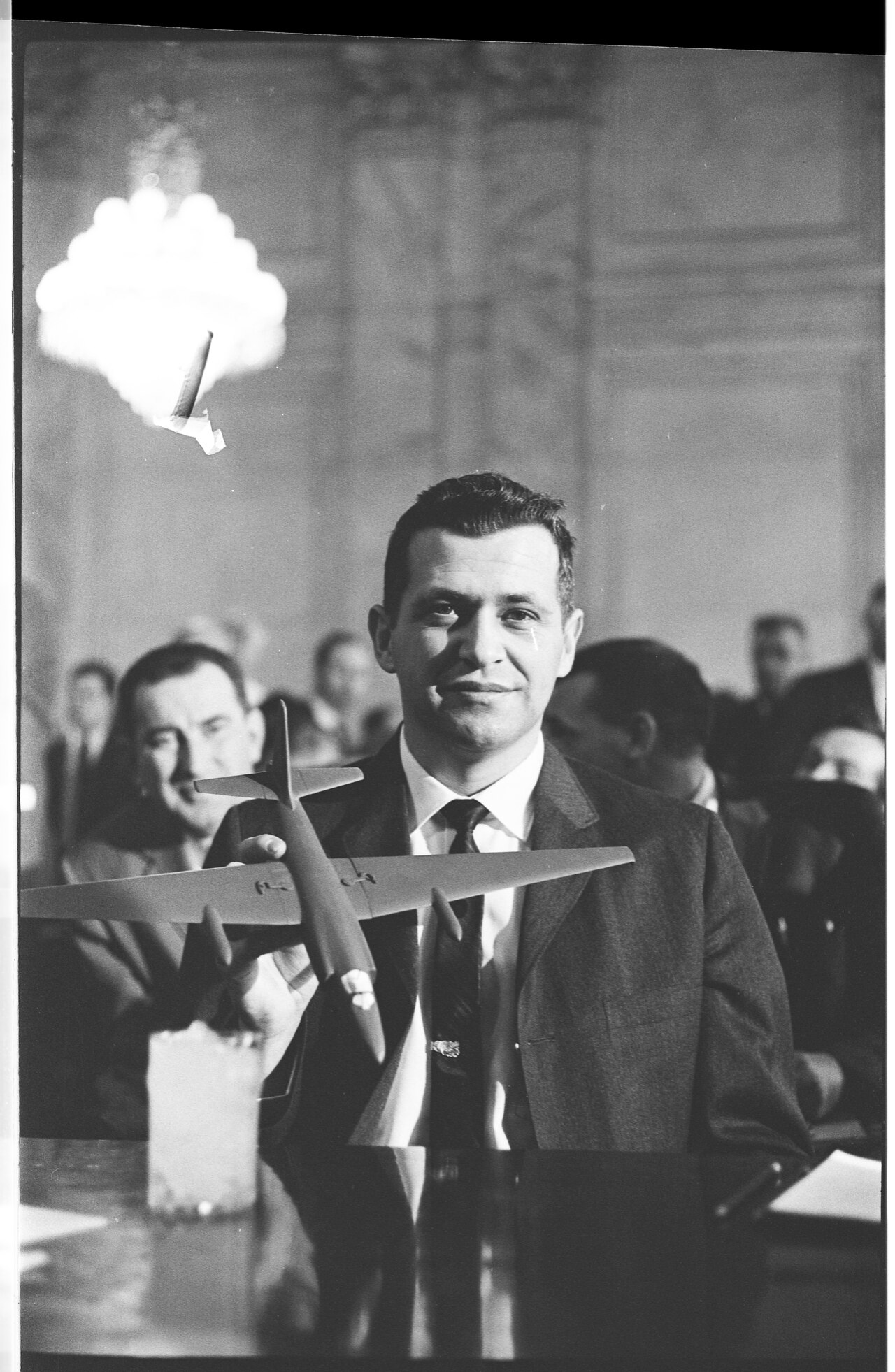
Francis Gary Powers was a CIA contract pilot, one of the “sheep-dipped” former Air Force officers flying under civilian cover. On the morning of May 1, 1960, he took off from Peshawar, Pakistan, in a U-2 the program logged as Article 360, on a mission codenamed Operation Grand Slam — a nearly 3,000-mile overflight of the Soviet Union, planned to end in Bodø, Norway, after photographing missile and nuclear facilities along the way.
Near Sverdlovsk in the Ural Mountains, a Soviet SA-2 surface-to-air missile battery fired a salvo at his aircraft. One missile detonated close enough to disable the U-2; Powers ejected and parachuted to the ground, where he was captured almost immediately. He did not activate the aircraft's self-destruct charge, and he did not use the poison-tipped pin concealed in a silver dollar he'd been issued. He chose to live.
We have no such plane.
— The U.S. government's initial public cover story, before Moscow produced Powers alive and the wreckage of his aircraftNASA had already issued a cover story about a weather-research aircraft that strayed off course over Turkey. Once Nikita Khrushchev revealed that the Soviets had recovered both the wreckage and a living pilot, the cover collapsed instantly and publicly. President Eisenhower was forced to admit the United States had been conducting years of secret overflights of Soviet territory — a humiliation that helped collapse a planned Paris summit between the two leaders days later and hardened Cold War tensions for years.
The Soviet Union tried Powers publicly for espionage in August 1960. He was convicted and sentenced to ten years' confinement — three years in Vladimir Central Prison followed by seven of corrective labor. He served roughly 21 months of it before a deal was reached.
Potsdam, East Germany / West Berlin — February 10, 1962
Traded, on a bridge, before dawn.
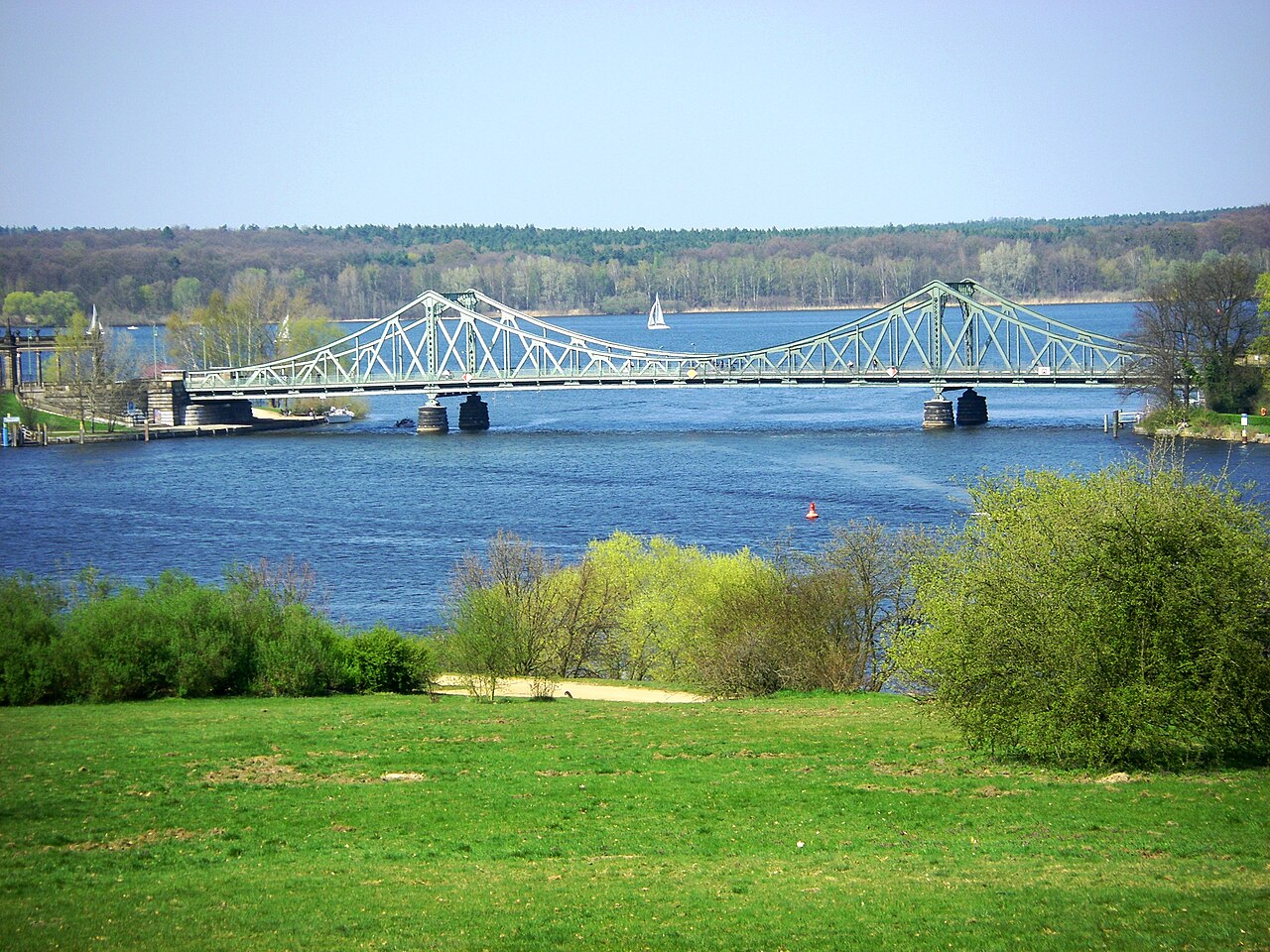
On February 10, 1962, Powers was exchanged on the Glienicke Bridge — a crossing point between West Berlin and Potsdam that would later earn the nickname “Bridge of Spies” — for Soviet intelligence officer Colonel Rudolf Abel, who had been convicted of espionage in the United States. The swap took place in near-total secrecy, before sunrise, each side walking its man across the span from opposite ends at a prearranged signal.
Powers came home to a country that wasn't sure how to feel about him. Instead of a hero's welcome, he faced pointed public and congressional questioning over why he hadn't destroyed the aircraft or used the suicide device — questions that shadowed him for years, even after a Senate committee and the CIA itself concluded he had followed his orders and conducted himself appropriately in captivity. He spent much of the rest of his life quietly working to clear his name.
August 17, 1929 – August 1, 1977
He steered away from the children, and didn't make it himself.
Powers eventually rebuilt a flying career as a helicopter traffic reporter for Los Angeles television and radio stations. On August 1, 1977 — twenty-two years to the day after the U-2's first, accidental flight — his news helicopter ran low on fuel returning from covering a wildfire. Descending toward the Sepulveda Basin, Powers spotted a group of teenagers playing baseball directly below his flight path and made a sharp last-second maneuver to steer clear of them. The move likely cost him control of the aircraft; the helicopter crashed, killing Powers and his cameraman, George Spears. Nobody on the ground was hurt. Seventeen years after the world questioned why he hadn't sacrificed himself over Sverdlovsk, he did exactly that over a baseball diamond in Encino, California, for a group of strangers who never knew his name.
The U-2 needed somewhere to be tested that officially didn't exist. That requirement created the most famous piece of empty desert in the world.
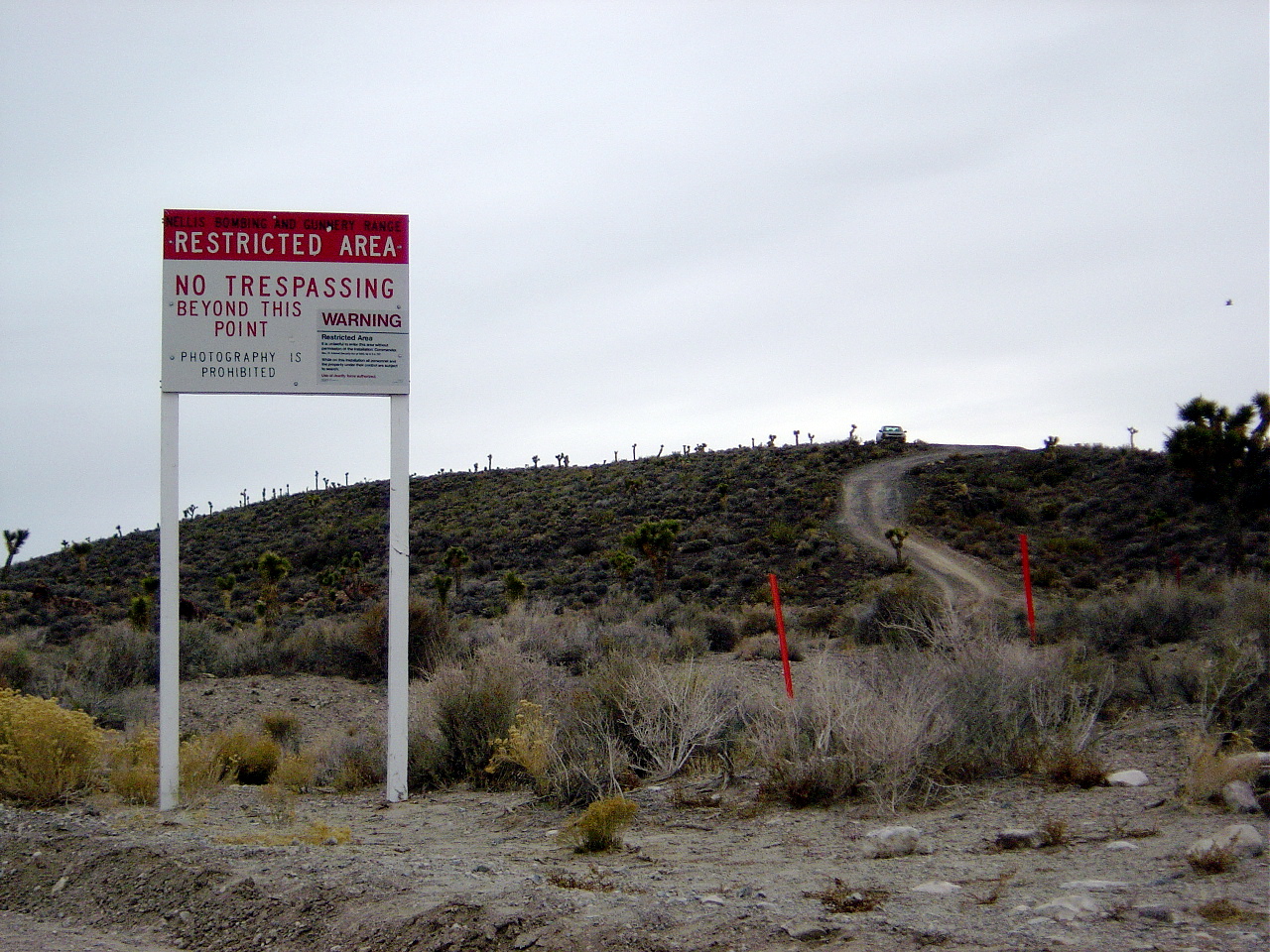
In 1955, Lockheed and the CIA scouted a remote, dry lakebed in southern Nevada called Groom Lake — flat, isolated, and already inside the boundary of the government's existing Nevada Test Site, which made it easy to fold into an already-restricted zone without drawing attention. The location appears on some early maps and documents by a simple grid designation: Area 51.
Because the U-2 program's entire existence was classified, the government could never acknowledge what was actually happening at Groom Lake, or even admit the base's real name. That total silence, combined with strange aircraft testing at extreme altitudes and unusual hours, did exactly what secrecy always does to curious onlookers: it filled the vacuum with speculation. Decades of UFO folklore around Area 51 trace directly back to a simple, mundane cause — a classified airfield testing classified aircraft, run by an agency that legally could not say so.
The government wasn't hiding aliens. It was hiding aircraft — and the secrecy needed to protect those programs meant investigators often couldn't tell witnesses the truth even when they knew it.
— Summary of the CIA's own declassified account of the U-2 and OXCART programs' connection to UFO reportsArea 51's existence wasn't formally acknowledged by the U.S. government until 2013, when the CIA released a declassified version of its internal history of the U-2 and OXCART programs that referenced the facility by name for the first time in an official document. By then, the base had already spent nearly six decades as the single most famous piece of classified real estate on Earth — not because of anything extraterrestrial, but because it was where America's most secret aircraft, starting with the U-2, learned to fly.
The U-2 proved the concept: fly high enough, fast enough, or stealthily enough, and an aircraft becomes effectively untouchable. Skunk Works spent the next four decades pushing that idea further, each aircraft more secret than the last.
Where the U-2 answered the altitude problem, the A-12 Oxcart answered the speed problem — a Mach 3+ CIA reconnaissance aircraft flown by CIA officers, not military pilots, operating out of Area 51 itself. Its existence wasn't declassified until 2007, and it directly shares credit, alongside the U-2, for the CIA's “more than half of all UFO reports” admission.
The Air Force's own Mach 3+ successor to the Oxcart, the SR-71 remains the fastest air-breathing crewed aircraft ever to fly operationally. It was retired in 1998 with, officially, nothing built to directly replace it — a gap that persisted for decades.
Skunk Works' stealth fighter flew real combat missions for roughly seven years before the U.S. government publicly acknowledged the aircraft existed at all — a secrecy timeline that, by then, was practically a house style.
Skunk Works and its Air Force counterparts are widely reported to be developing hypersonic successors to the SR-71 out of the same Palmdale, California facility that has produced classified prototypes for seventy years. None have been officially confirmed to exist — which, given this program's history, is close to exactly what you'd expect to hear right up until the day one is declassified.
Every other aircraft from the U-2's era has been retired, and most of its Skunk Works successors have too. The U-2 kept flying past all of them — and, as of this writing, is only now nearing the true end of its career.
More than 100 U-2s were built across the program's history, with the current U-2S variant — extensively re-engined and modernized from the 1955 original — still flying operational reconnaissance and signals-intelligence missions for the U.S. Air Force's 9th Reconnaissance Wing, based at Beale Air Force Base, California. Roughly two dozen remain in the active fleet, rotating to forward locations worldwide.
No single aircraft has ever fully replaced it. Satellites can't loiter over a location on demand the way an aircraft can; drones have taken over some of its role but not all of it. The Air Force has repeatedly proposed retiring the U-2 in favor of platforms like the RQ-4 Global Hawk and newer systems, only to keep extending its service life because nothing else does the job quite the same way, at the same cost, with the same flexibility.
Seventy-One Years After First Flight
The Air Force has targeted retirement beginning this year — the closest the program has come to actually ending.
Current Air Force plans call for the U-2 fleet to begin standing down starting in late 2026, with retirement extending over the following years — though Congress has previously pushed back on the pace of that drawdown, and the program has outlived multiple earlier retirement targets already. Whenever it finally happens, it will close out a service career longer than almost any combat aircraft in history: an airframe designed to be a stopgap until reconnaissance satellites matured, still flying missions satellites can't fully replace, seven decades on.
Most of what's on this page was secret for decades. Here's what the declassification record actually shows, and what it doesn't.
The CIA's own official internal history, The Central Intelligence Agency and Overhead Reconnaissance: The U-2 and OXCART Programs, 1954–1974, written by Gregory Pedlow and Donald Welzenbach, was first released in a heavily redacted form in 1998 and then re-released in a substantially more complete version in 2013 — the release that finally referenced Area 51 by name in an official government document.
The “more than half of all UFO reports” figure traces to a separate document: Gerald K. Haines's 1997 Studies in Intelligence article, “CIA's Role in the Study of UFOs, 1947–90,” which quotes Agency officials making that claim about the late 1950s through the 1960s specifically. It is frequently paired with the Pedlow & Welzenbach history in later reporting, which is part of why the two documents and their dates sometimes get conflated in retellings of this story — we've cited both separately below.
Full flight logs for individual U-2 and OXCART missions during the peak UFO-report years remain only partially released, meaning it's possible to confirm the overall pattern the CIA has acknowledged without being able to match every single historical UFO report to a specific logged flight. The broad claim is official; the case-by-case receipts, in most instances, still aren't.
Every fact in this case file was cross-referenced against at least two independent sources, anchored by declassified CIA and U.S. government documents. All links open in a new tab.
Gregory Pedlow and Donald Welzenbach's official CIA history of the U-2 and A-12 Oxcart programs, first released in redacted form in 1998 and more fully declassified in 2013.
The 1997 CIA journal article containing the Agency's statement that U-2 and OXCART flights accounted for more than half of UFO reports from the late 1950s through the 1960s.
Official State Department historical account of the May 1960 shootdown and its diplomatic fallout.
Official U.S. Air Force museum account of the shootdown, trial and prisoner exchange.
Coverage of the February 10, 1962 prisoner exchange for Rudolf Abel at the Glienicke Bridge.
Account of the fatal August 1, 1977 news helicopter crash that killed Gary Powers, including the NTSB-documented detail that Powers maneuvered to avoid a group of teenagers on the ground.
Detailed account of test pilot Tony LeVier's unplanned first flight at Groom Lake, sourced from Lockheed and CIA program histories.
Lockheed Martin's own retrospective on Kelly Johnson's career and the founding of the Skunk Works division.
Current reporting on the Air Force's timeline and rationale for winding down the U-2 fleet, and Congressional pushback on the pace of retirement.
Background context on Kelly Johnson's contemporaries and the broader Cold War test-pilot era referenced in this case file.