How a routine holiday flight from Cyprus became the most haunting aviation disaster in history — a Boeing 737 that climbed to 34,000 feet, leveled off, and kept flying on autopilot for nearly three hours after every single person on board had already lost consciousness.
Every time in this case file is local Cyprus/Greece time (EEST, UTC+3). The official investigation report itself is timestamped in UTC — which is why some retellings mistakenly list takeoff as “6:07am.” The aircraft actually left the gate just after nine in the morning.
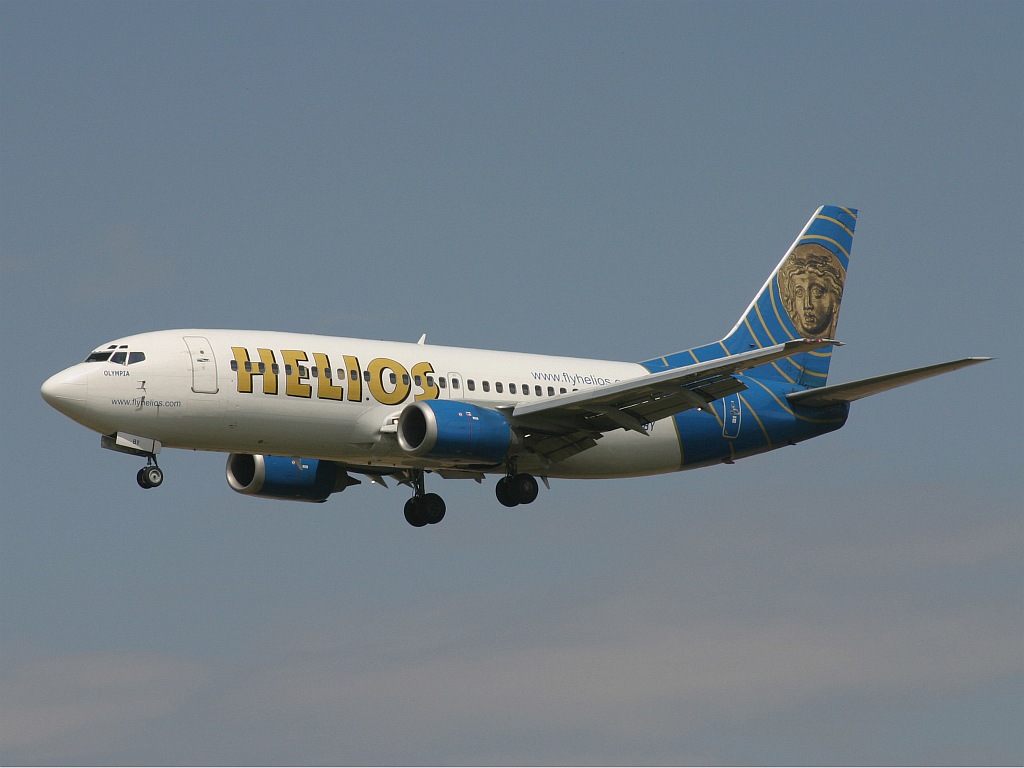
At 09:07, Helios Airways Flight 522 lifted off from Larnaca International Airport, Cyprus, bound for Prague with a scheduled stop in Athens. In command was Captain Hans-Jürgen Merten, 58, a German contract pilot with 35 years of flying and roughly 16,900 total hours, more than 5,500 of them on the 737. Beside him sat First Officer Pampos Charalambous, 51, a Cypriot pilot who had flown for Helios for five years. Behind them, cabin crew supervisor Louisa Vouteri led a team of four flight attendants, including a 25-year-old named Andreas Prodromou.
None of them knew that hours earlier, during unscheduled maintenance, the aircraft's pressurization mode selector had been left in the MANUAL position instead of AUTO — a two-inch switch on the overhead panel that would decide everything that happened next.
Flight 522 departs normally. The pressurization selector sits in MANUAL, missed during three separate required pre-flight checks. Nothing on the flight deck visibly demands attention yet.
The cabin altitude warning horn activates — an aural alert that, on the 737, sounds identical to the takeoff configuration warning, which can only occur on the ground. The crew, per the cockpit voice recorder, treats it as the latter and begins running the wrong checklist.
Captain Merten radios Helios's engineering base, reporting the horn and an “equipment cooling” light — a secondary symptom of the real problem — and is walked through unrelated circuit breakers. The actual cause, cabin depressurization, is never named.
Radio transmissions from the flight deck grow confused, then stop making sense entirely. Passenger oxygen masks drop automatically throughout the cabin as the cabin altitude keeps climbing toward the aircraft's own altitude.
Flight 522 reaches its cruise altitude and the autopilot holds it there. By now, both pilots are incapacitated by hypoxia. The passenger oxygen supply, designed to last roughly twelve minutes, has already begun running out.
The aircraft crosses into the Athens Flight Information Region still on its filed routing, unresponsive to repeated calls from air traffic control. Controllers alert Greek authorities that something is seriously wrong.
The Hellenic Air Force launches two F-16 fighters to intercept the silent airliner, which is now circling on autopilot near Athens with no one able to answer.
See The Watchers below for what the intercept pilots found.
Nearly three hours after takeoff, the fuel that was only ever loaded for a short hop to Athens finally runs out.
Larnaca is roughly 330 miles (530 km) southeast of Athens — a flight Flight 522 was scheduled to complete in about 40 minutes. Instead, it flew for nearly three hours, crossing the Aegean and holding near its Athens arrival point until its fuel ran out.
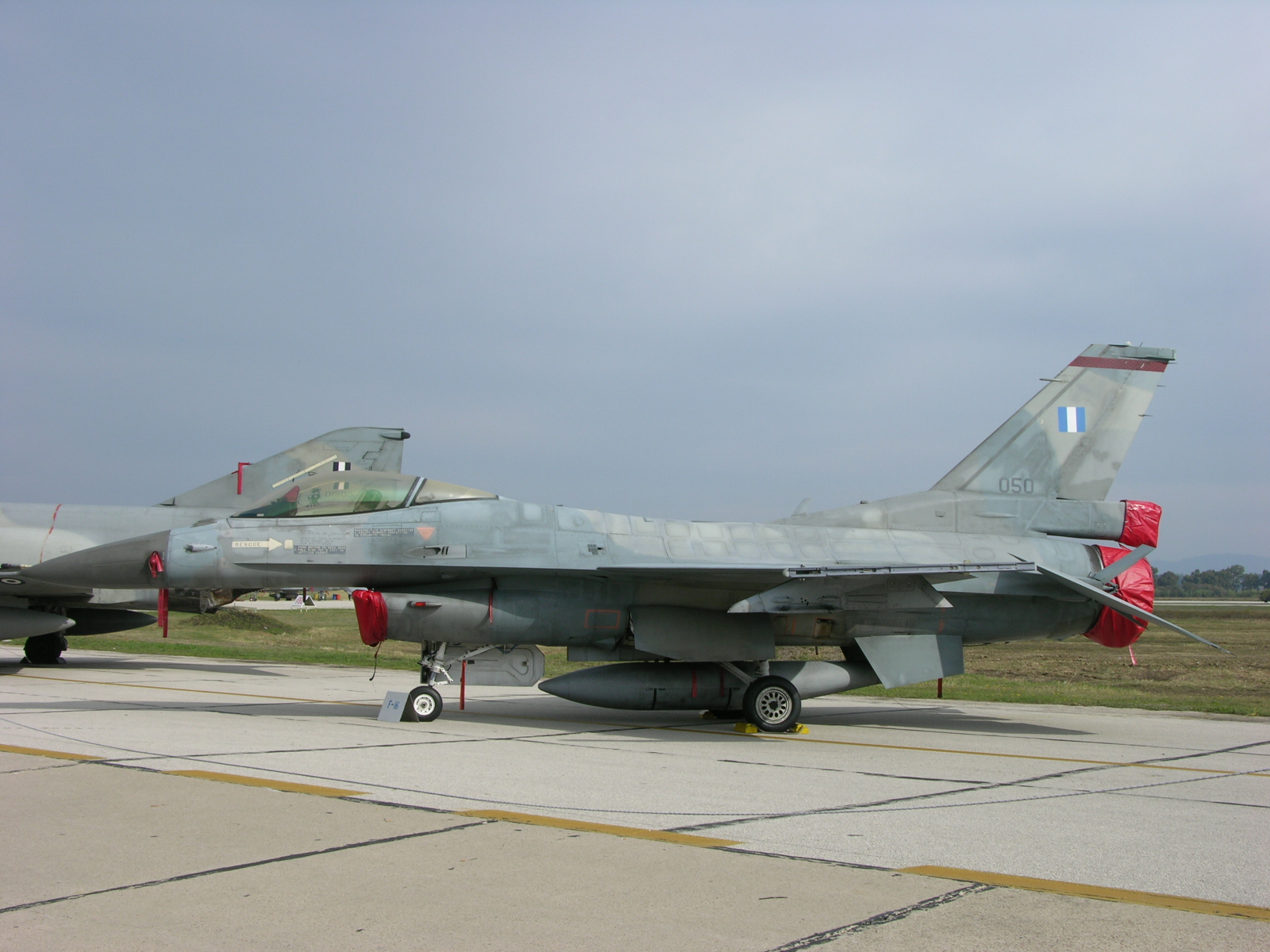
With Flight 522 silent and unresponsive over Greek airspace, the Hellenic Air Force scrambled two F-16 fighters from Nea Anchialos to fly alongside the airliner and find out, visually, what had happened.
At 11:24, the fighters pulled up beside the Boeing 737. What they saw, and later described to investigators, became some of the most chilling testimony in the official case file: First Officer Charalambous slumped motionless over the controls. The captain's seat, empty. Oxygen masks dangling loose in the cabin behind the cockpit windows, their twelve-minute emergency supply long since exhausted. Passengers visible through the windows, still in their seats, utterly still.
For twenty-five minutes, the F-16 pilots flew formation with a ghost — an airliner on autopilot, its crew incapacitated, its passengers unconscious, holding a lazy pattern in the sky over the Aegean with no one at the controls to know they were being watched at all.
Then, at 11:49, one of the intercepting pilots reported something new: a figure moving inside the cockpit, wearing a light blue shirt and dark vest, settling into the empty captain's seat and reaching for a headset.
— Documented in the accident investigation's account of the intercept, AAIASB Report 11/2006Andreas Prodromou was 25 years old, a Helios flight attendant working toward a career at the front of the aircraft instead of the back of it. He held a UK Commercial Pilot Licence — real flight training, but nothing close to a type rating on a Boeing 737. When the cabin lost pressure, that license, and a portable oxygen bottle he managed to reach, made him the last person on Flight 522 who stayed conscious.
25 years old · Cabin Crew, Helios Airways
He died trying.
For more than two hours, while everyone else aboard Flight 522 lay unconscious, Prodromou moved through the aircraft breathing from portable oxygen. At 11:49, he reached the flight deck, entered using the door's access code, and took the empty captain's seat — presumably having found First Officer Charalambous unresponsive and Captain Merten already gone from his seat.
He put on a headset and tried to call for help. But the radio was still tuned to Larnaca departure control's frequency from hours earlier, and in the chaos, he never managed to switch it to the correct Athens frequency. His mayday calls, recorded by the cockpit voice recorder at 11:54 and again at 11:55, were transmitted — and never received by anyone.
Mayday, mayday, mayday…
— Andreas Prodromou, Cockpit Voice Recorder, 11:54 local time — never receivedInvestigators concluded that Prodromou could not have saved the flight even if he had reached the frequency in time. By 11:49, the aircraft's fuel — loaded only for a short scheduled hop to Athens, then held for hours by the autopilot at cruise altitude — was nearly gone. The left engine flamed out roughly a minute after he sat down. He was not qualified to fly the aircraft, had no meaningful time window left to work with, and was, by every account, doing the only thing left to try. He died trying anyway.
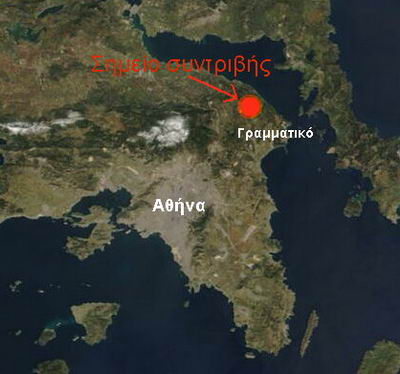
At 12:04 local time, nearly three hours after leaving Larnaca and nine minutes after its second engine flamed out, Helios Airways Flight 522 struck a hillside near the village of Grammatiko, roughly 33 kilometers (20 miles) northwest of Athens International Airport.
All 121 people on board were killed — 115 passengers, including 22 children, and all six crew members. It remains the deadliest aviation accident in the history of both Greece and Cyprus. Rescue and recovery crews worked the hillside for days; the wreckage was scattered widely across the slope, consistent with an aircraft that struck terrain largely intact, under autopilot control, rather than in an uncontrolled spin.
One detail from the investigation offers the only mercy this case file has to give: autopsies found that everyone aboard was still alive, but unconscious, in the moments before impact. Nobody on Flight 522 was awake to know what was happening at the end.
The Hellenic Air Accident Investigation and Aviation Safety Board released its final findings as Report 11/2006 on October 4, 2006. The direct cause was mechanically simple. The reasons it was never caught were not.
Hours before departure, ground engineering had tested the aircraft's pressurization outflow valve, which required setting the pressurization mode selector to MANUAL. The report concluded the selector was never returned to AUTO. Ground engineer Alan Irwin, who performed the maintenance, has always maintained he left it in AUTO as he had for twenty years of routine practice — and in 2013, a Greek appeals court overturned his conviction. The investigation's own report contains an internal inconsistency on this exact point: it both states there was no formal requirement to double-check the selector's position, and lists failing to do so as a contributing cause.
Cyprus and Greek investigators found the selector's incorrect position should have been caught during at least three separate required checks before takeoff — a walk-around, a before-start check, and an after-start check. None of them flagged it. The selector's indicator light sat low on the overhead panel, easy to miss under time pressure and low cockpit lighting.
The 737's cabin altitude warning and its takeoff configuration warning used the exact same tone. One means the cabin isn't pressurizing at altitude; the other, only relevant on the ground, means the aircraft isn't configured to take off. The crew treated the alarm as the second, and radioed the airline about “equipment cooling” lights and circuit breakers — a real but secondary symptom — instead of the pressurization problem that was actually killing them. Boeing had known about this ambiguity from earlier incidents before this crash.
Hypoxia's most dangerous feature is that it impairs judgment before a person notices anything is wrong. An experienced 58-year-old captain with nearly 17,000 flight hours never recognized the emergency unfolding around him — not because he was careless, but because the exact faculties needed to notice the danger were the first ones the thinning air took away.
Take-off configuration warning on. Cooling equipment normal and alternate off line.
— Captain Hans-Jürgen Merten, radio call to Helios engineering, ~09:14 local time — describing a symptom, not the true emergencyTwenty years on, the mechanical cause of Helios 522 is settled. What still unsettles people who study the case is everything human that surrounds it.
Checklists exist precisely so that a tired or rushed crew doesn't have to rely on memory. Investigators found no single villain here, only a chain: an ambiguous indicator light, checklist items performed by habit rather than active verification, and an airline whose training on hypoxia recognition the report itself described as inadequate.
Almost certainly not, by the time he reached the cockpit. The more haunting question is what might have happened had he found the correct radio frequency twenty minutes earlier, or had the fuel lasted twenty minutes longer — a margin the investigation makes clear simply didn't exist.
Mild hypoxia produces confusion and a false sense of calm before unconsciousness — which is part of why the emergency oxygen masks and pre-flight safety briefing exist. The autopsy finding that everyone was unconscious, not awake, in the final descent is the closest thing to certainty anyone will ever have about what those final minutes actually felt like.
The full cockpit voice recorder transcript — released as part of AAIASB Report 11/2006 — documents the crew's confusion over the warning horn, the call to engineering, the deteriorating radio calls, Prodromou's cockpit entry, and his final, unanswered mayday. It is a primary source used in pilot training worldwide specifically because of how ordinary and human every decision inside it sounds in the moment it was made.
Helios 522 changed how the aviation industry treats cabin pressurization warnings, and how one small community in Cyprus remembers a single, terrible morning.
In February 2011, the FAA issued Airworthiness Directive 2011-03-14, requiring Boeing 737 operators to install separate, distinct warning lights so crews can no longer confuse a cabin altitude warning with a takeoff configuration warning. It followed an earlier 2009 directive prompted directly by this crash — and was reissued after further incidents showed the first fix wasn't enough on its own.
Helios 522 is now a core case study in crew resource management and high-altitude physiology training, precisely because it demonstrates how fast and how invisibly hypoxia can compromise even highly experienced pilots.
In Mosphiloti, Cyprus, a Byzantine-style memorial church was founded in March 2006 and inaugurated that July, standing on a pine-covered hill near the Ayia Thekla monastery. It bears the names and photographs of all 121 victims, and remains the site of memorial gatherings each August.
Criminal proceedings followed in both Cyprus and Greece for years, with mixed outcomes and appeals on multiple sides — including the overturned conviction of the ground engineer discussed above. Twenty years later, families of the victims have publicly said they still don't feel the accounting was ever complete.
Every fact in this case file was cross-referenced against at least two independent sources, anchored by the official government investigation. All links open in a new tab.
The Hellenic Republic Air Accident Investigation and Aviation Safety Board's complete final report on Helios Airways Flight HCY522, mirrored on a U.S. federal government domain.
The FAA's official case summary and safety-lessons page for this accident.
The FAA's binding directive requiring distinct cabin-altitude and takeoff-configuration warning lights on Boeing 737s, adopted in direct response to this accident.
Independent aviation accident database entry archiving the official report findings.
Official UK parliamentary record discussing the maintenance engineer's disputed role and the case's aftermath.
Original same-day news coverage of the crash.
Cyprus's paper of record on the memorial, the victims and the community's ongoing grief.
Industry trade-press coverage of the ongoing regulatory fallout from this crash.