Flight Log
UAP FILES: Navy pilots describe a “Tic-Tac” object outmaneuvering an F/A-18 HEROIC: The co-pilot who landed a 767 with zero engine power over Canada BIZARRE: The flight attendant who survived a 33,000-foot fall — read the case HISTORY: Inside the deadliest day in aviation — two 747s, one foggy runway SCARY: The cockpit voice recording no pilot forgets UAP FILES: Navy pilots describe a “Tic-Tac” object outmaneuvering an F/A-18 HEROIC: The co-pilot who landed a 767 with zero engine power over Canada BIZARRE: The flight attendant who survived a 33,000-foot fall — read the case HISTORY: Inside the deadliest day in aviation — two 747s, one foggy runway SCARY: The cockpit voice recording no pilot forgets
Case File · UAP Files · Case Status: Open

THE PILOT WHO VANISHED

A 20-year-old trainee pilot radios Melbourne air traffic control over Bass Strait to report an aircraft orbiting above him — metallic, shining, with a green light, moving at speeds he can't identify. Six minutes and forty-seven seconds later, mid-sentence, the transmission ends in a burst of metallic noise. Neither Frederick Valentich nor his aircraft was ever found. It remains the most thoroughly documented, and still officially unexplained, pilot UAP encounter in aviation history.

October 21, 1978 Moorabbin Airport → King Island, Bass Strait Cessna 182L · VH-DSJ NAA File B1497, V116/783/1047
20Years Old
150Flying Hours
6:47Final Transmission
0Wreckage Ever Found
Part One

The Flight

All times in this case file are local Melbourne time (AEST, UTC+10 — Victoria had not yet switched to daylight saving in October 1978). The official transcript itself is timestamped in GMT; we've converted every exchange for readability and noted the source format in Sources below.
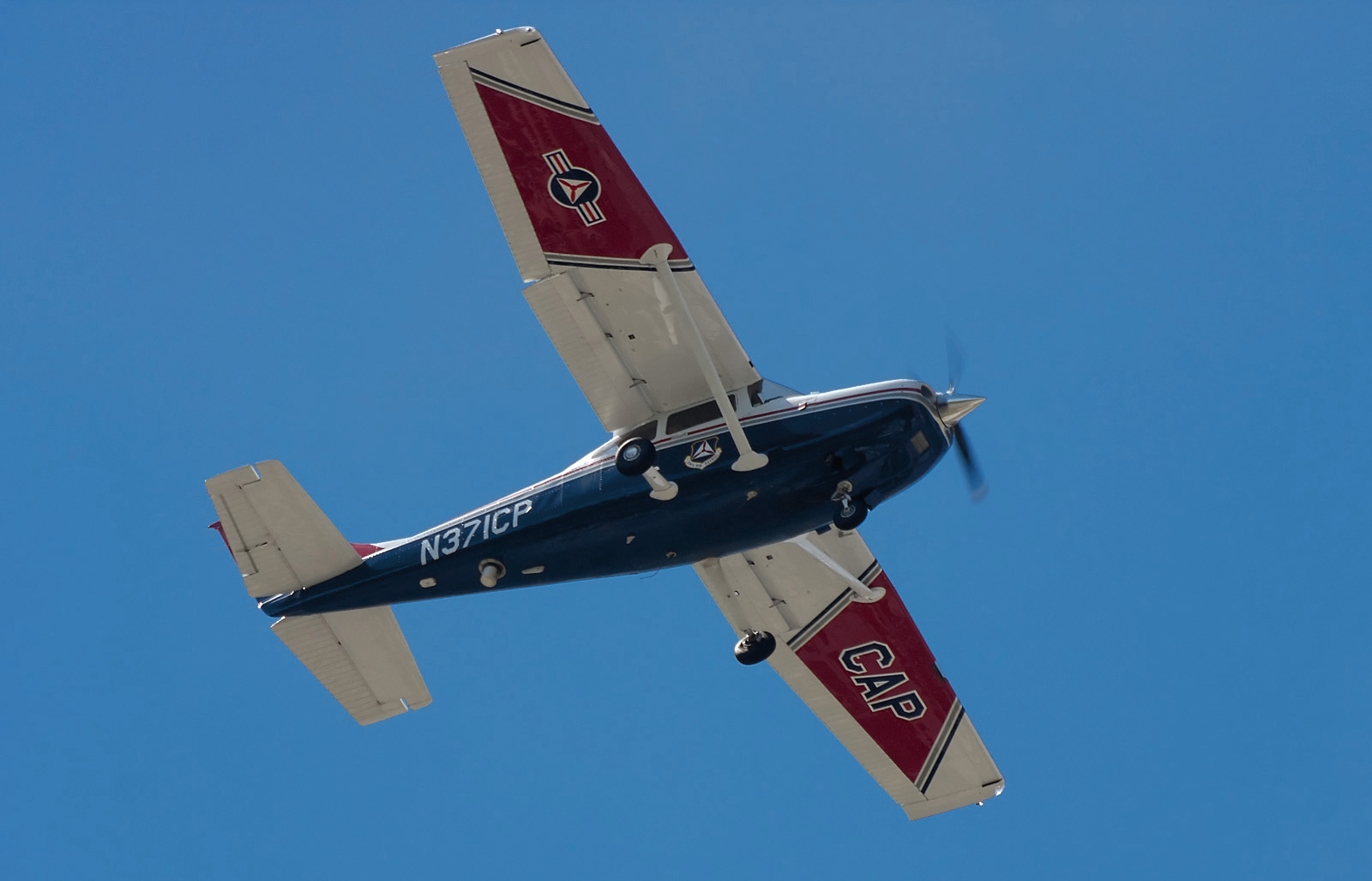
A Cessna 182 Skylane, the same type and era of light aircraft as Valentich's VH-DSJ
Photo: Josh Beasley via Wikimedia Commons, CC BY 2.0. Illustrative — a Cessna 182 Skylane of the same type as VH-DSJ, not the accident aircraft.

Frederick Valentich was 20 years old, a member of the Royal Victorian Aero Club working toward his commercial pilot's licence. He held a Class Four instrument rating — enough for basic night flying, well short of a full instrument qualification for flying blind through cloud — and had logged roughly 150 hours in the air. Friends and instructors described him as a keen, if unremarkable, student: enthusiastic, safety-conscious on paper, and by his father's account, fascinated with UFOs.

On the evening of Saturday, October 21, 1978, Valentich filed a flight plan from Moorabbin Airport, Melbourne's general-aviation field, across Bass Strait to King Island and back — a round trip of roughly 240 kilometres (150 miles) each way, logged as night VFR training. He told people at the aero club he was flying over to pick up a friend, and separately that he was collecting crayfish for a dinner party. Investigators later found no evidence either reason was true. No one on King Island was expecting him, and he never notified the island's airport that he was inbound, breaking standard procedure for the crossing.

6:19 PM — Moorabbin Airport

Wheels Up

VH-DSJ departs Moorabbin under clear skies and light winds — good visual flying conditions for the crossing. Valentich's flight plan has him cruising at 4,500 feet, direct across open water.

~7:00 PM — Cape Otway

Abeam The Coast, On Schedule

Valentich reports passing Cape Otway, the Victorian mainland's southernmost point on his route — the last land he would cross before more than an hour of open water to King Island. Nothing about the flight has looked unusual yet.

7:06:14 PM — Over Bass Strait

The First Call

See First Contact below.

7:06 – 7:12 PM

Six Minutes, Forty-Seven Seconds

The full exchange between Valentich and Melbourne Flight Service. See The Transcript below for the complete, verbatim record.

7:12:49 PM — Silence

No Reply

Melbourne Flight Service calls Delta Sierra Juliet one more time. Nothing answers. See The Final Transmission below.

7:33 PM — King Island

Overdue

Valentich's estimated time of arrival at King Island passes with no landing and no further radio contact. The alert phase begins almost immediately.

MOORABBIN 6:19 PM departure CAPE OTWAY ~7:00 PM, on schedule LAST CONTACT 7:12 PM, over Bass Strait KING ISLAND never arrived FLIGHT PATH — SCHEMATIC, NOT TO SCALE BASS STRAIT
Departure Last landmark, on schedule Last radio contact Never reached

Moorabbin to King Island is roughly 240 km (150 miles), most of it over open water. Valentich's last transmission places him somewhere over Bass Strait, still well short of King Island — the search that followed covered more than a thousand square miles of that gap and found nothing.

Part Two

First Contact

Melbourne Flight Service wasn't full radar-controlled air traffic control — it was a lower tier providing traffic advice and weather over Bass Strait, a stretch with no radar coverage at all. At 7:06 PM, a routine traffic check turns strange within ninety seconds.

At 7:06:14 PM, Valentich keyed his microphone with an ordinary question: was there any known traffic below 5,000 feet near him? Melbourne told him no. Twelve seconds later, he came back — there seemed to be a large aircraft below him, at 5,000 feet. Asked what type, he couldn't say. Four bright lights, he told them, like landing lights.

Ninety seconds after that, the aircraft passed directly over him, at least a thousand feet above. Melbourne asked him to confirm it was a large aircraft. Valentich said he couldn't — not at that speed — and asked Melbourne if there was any Air Force traffic in the area. There wasn't. Whatever he was describing wasn't on Melbourne's board, and it wasn't a plane anyone on the ground could account for.

Er, unknown due to the speed it's travelling… is there any air force aircraft in the vicinity?

— Frederick Valentich, 7:07:47 PM, to Melbourne Flight Service
Part Three

The Transcript

What follows is the complete, verbatim official transcript of Valentich's exchange with Melbourne Flight Service, released by the Australian Department of Transport and preserved today in the National Archives of Australia. It is a public government document. We've converted the original GMT timestamps to local Melbourne time; nothing else has been changed.

DSJ = Frederick Valentich, aboard VH-DSJ (callsign "Delta Sierra Juliet"). FS = Melbourne Flight Service. Ellipses mark pauses recorded in the original transcript; bracketed notes are from the official document itself.

7:06:14 PMValentichMelbourne, this is Delta Sierra Juliet. Is there any known traffic below five thousand?
7:06:23 PMMelbourne FSDelta Sierra Juliet — No known traffic.
7:06:26 PMValentichDelta Sierra Juliet. I am — seems to be a large aircraft below 5,000.
7:06:46 PMMelbourne FSDelta Sierra Juliet — What type of aircraft is it?
7:06:50 PMValentichDelta Sierra Juliet — I cannot affirm. It is four bright… it seems to me like landing lights.
7:07:32 PMValentichMelbourne, this is Delta Sierra Juliet. The aircraft has just passed over me at least a thousand feet above.
7:07:43 PMMelbourne FSDelta Sierra Juliet — Roger — and it, it is a large aircraft — confirm?
7:07:47 PMValentichEr, unknown due to the speed it's travelling… is there any air force aircraft in the vicinity?
7:07:57 PMMelbourne FSDelta Sierra Juliet. No known aircraft in the vicinity.
7:08:18 PMValentichMelbourne… it's approaching now from due east towards me.
7:08:42 PMValentich[open microphone, two seconds]
7:08:49 PMValentichDelta Sierra Juliet. It seems to me that he's playing some sort of game. He's flying over me two — three times at a time at speeds I could not identify.
7:09:02 PMMelbourne FSDelta Sierra Juliet — Roger. What is your actual level?
7:09:06 PMValentichMy level is four and a half thousand, four five zero zero.
7:09:11 PMMelbourne FSDelta Sierra Juliet… And confirm — you cannot identify the aircraft.
7:09:14 PMValentichAffirmative.
7:09:18 PMMelbourne FSDelta Sierra Juliet — Roger… standby.
7:09:28 PMValentichMelbourne — Delta Sierra Juliet. It's not an aircraft… it is
Valentich[open microphone, approx. three seconds]
7:09:46 PMMelbourne FSDelta Sierra Juliet — Melbourne. Can you describe the… er — aircraft?
7:09:52 PMValentichDelta Sierra Juliet… as it's flying past it's a long shape [open microphone, three seconds] — cannot identify more than that. It has such speed [open microphone, three seconds]. It is before me right now, Melbourne.
7:10:07 PMMelbourne FSDelta Sierra Juliet — Roger. And how large would the — er — object be?
7:10:20 PMValentichDelta Sierra Juliet — Melbourne. It seems like it's stationary. What I'm doing right now is orbiting, and the thing is just orbiting on top of me also. It's got a green light and sort of metallic — like, it's all shiny on the outside.
7:10:43 PMMelbourne FSDelta Sierra Juliet.
7:10:48 PMValentichDelta Sierra Juliet [open microphone, several seconds] It's just vanished.
7:10:57 PMMelbourne FSDelta Sierra Juliet.
7:11:03 PMValentichMelbourne, would you know what kind of aircraft I've got? Is it a military aircraft?
7:11:08 PMMelbourne FSDelta Sierra Juliet. Confirm the… er — aircraft just vanished.
7:11:14 PMValentichSay again.
7:11:17 PMMelbourne FSDelta Sierra Juliet. Is the aircraft still with you?
7:11:23 PMValentichDelta Sierra Juliet… it's ah — now [open microphone, two seconds] approaching from the southwest.
7:11:37 PMMelbourne FSDelta Sierra Juliet.
7:11:52 PMValentichDelta Sierra Juliet — the engine is, is rough idling. I've got it set at twenty-three — twenty-four… and the thing is coughing.
7:12:04 PMMelbourne FSDelta Sierra Juliet — Roger. What are your intentions?
7:12:09 PMValentichMy intentions are — ah — to go to King Island. Ah, Melbourne, that strange aircraft is hovering on top of me again [open microphone, two seconds] it is hovering, and it's not an aircraft.
7:12:22 PMMelbourne FSDelta Sierra Juliet.
7:12:28 PMValentichDelta Sierra Juliet — Melbourne [open microphone, seventeen seconds — a strange, pulsed, metallic-sounding noise is audible for the duration]
7:12:49 PMMelbourne FSDelta Sierra Juliet, Melbourne. [No reply. End of official transcript.]
Part Four

The Description

What makes the transcript so unsettling isn't any single line — it's how methodically Valentich keeps reporting, even as what he's describing keeps escalating. He gives his altitude when asked. He confirms details. He answers Melbourne's questions in order, in the flat, procedural cadence of flight training, while narrating something his training gave him no vocabulary for.

7:08 – 7:09 PM

"Playing Some Sort Of Game"

Valentich describes the object flying over him two or three times "at speeds I could not identify" — his first indication that whatever was pacing him wasn't behaving like conventional traffic. He's still calm enough here to ask Melbourne, straightforwardly, whether it might be a military aircraft.

7:10:20 PM

"Orbiting On Top Of Me Also"

He reports doing tight orbits himself, and the object matching him — staying above, holding position relative to his own aircraft rather than simply passing by. This is the moment the encounter stops sounding like traffic and starts sounding like pursuit.

7:10:20 PM

"A Green Light... Metallic... Shiny"

His only detailed visual description: a green light, a metallic surface reflecting what light there was, a long shape as it passed. It's the entire physical record of the object — three fragments of a sentence, and nothing more specific was ever recorded.

7:10:48 – 7:11:52 PM

Gone, Then Back, Then The Engine

The object "vanishes," by his account, then reappears minutes later from the southwest. Almost immediately afterward, Valentich reports his engine running rough — "coughing" — at a power setting where that shouldn't happen. Whether the two things were connected was never established.

What I'm doing right now is orbiting, and the thing is just orbiting on top of me also.

— Frederick Valentich, 7:10:20 PM, to Melbourne Flight Service
Part Five

The Final Transmission

At 7:12:09 PM, Valentich states his intentions plainly, the way he'd been trained to: continue to King Island. In the same breath, he reports the object is back, hovering directly above him. Sixteen seconds after Melbourne acknowledges, he keys the microphone one last time.

It is hovering, and it's not an aircraft.

— Frederick Valentich, 7:12:09 PM — his last coherent sentence

At 7:12:28 PM, Valentich transmits again: "Delta Sierra Juliet — Melbourne." Then the microphone stays open for seventeen seconds. The official Department of Transport transcript itself notes that "a very strange pulsed noise" is audible for the entire duration — a sound that has been described ever since, by researchers and casual readers alike, as a metallic scraping. No words. No further sentence. Then nothing.

Twenty-one seconds later, at 7:12:49 PM, Melbourne Flight Service calls back: "Delta Sierra Juliet, Melbourne." There is no reply. There has never been a reply. That single unanswered call is the last line of the official transcript — the exact point where a documented radio exchange simply stops being a radio exchange.

Frederick Valentich

20 years old · VH-DSJ, Cessna 182L

"It is hovering, and it's not an aircraft."

Part Seven

The Investigation

The Australian Department of Transport opened a formal accident investigation. Its file sat largely out of public reach for more than three decades — and when it finally surfaced, it didn't resolve anything.

The File

NAA Series B1497, V116/783/1047

Titled "DSJ — Cape Otway to King Island 21 October 1978 — Aircraft Missing," the Department of Transport's complete case file — 315 pages, including the radio transcript, flight-plan charts, meteorological data and the search-and-rescue record — is held today by the National Archives of Australia in Melbourne. It stayed effectively inaccessible for years until Adelaide-based researcher Keith Basterfield pushed for its release; a digitised copy went public around 2012.

The Conclusion

No Cause Was Ever Assigned

The Department of Transport's investigation reached a single, formal, and unusual finding for a fatal aviation case: "The reason for the disappearance of the aircraft has not been determined." Where most crash investigations end in a probable cause, this one didn't — and the case has never been formally closed since.

One Working Theory

Disorientation, Never Formally Adopted

Officials floated, without formally adopting, the idea that Valentich became spatially disoriented over the dark water — possibly inverted — and mistook his own aircraft's lights reflected on the surface, or lights from a nearby vessel or island, for an object above him. It was never elevated to an official cause.

The Same Night

Roughly Sixty Other Reports

Independent of Valentich entirely, VUFORS (the Victorian UFO Research Society) and researcher Keith Basterfield later catalogued around sixty separate reports of unusual lights and objects across Victoria, Bass Strait and Tasmania between October 18 and 23, 1978 — concentrated on the evening of the 21st. They include a plumber's photographs near Cape Otway around 6:45 PM, a sighting from Apollo Bay, and a driver on the Geelong road who reported a "solid mass of light" with green flickering lights at 7:10 PM — almost the exact minute Valentich was describing his own green light, dozens of kilometres away.

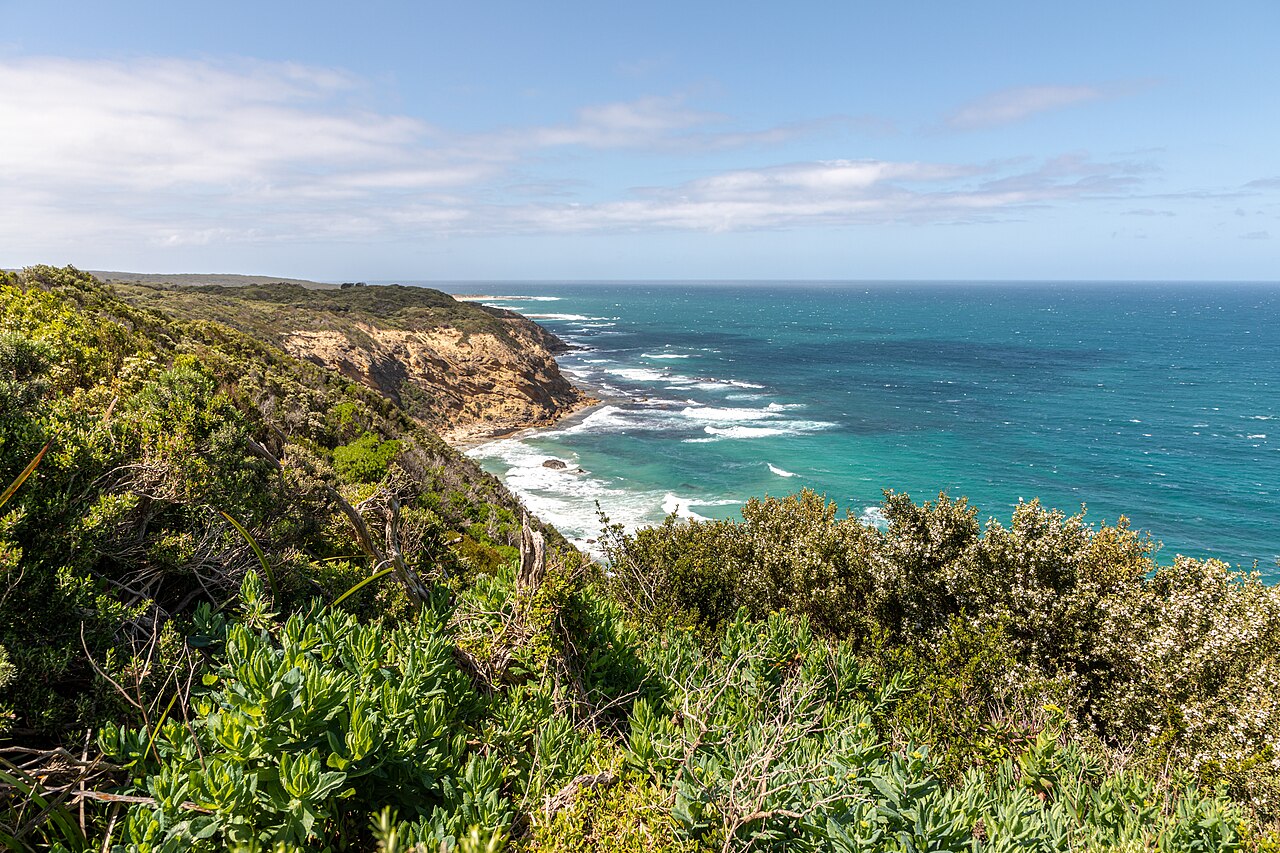
Cape Otway Lighthouse and coastline, Victoria — the mainland's last landmark on Valentich's route, and near where witness Roy Manifold photographed an unexplained object the same evening
Photo: Dietmar Rabich via Wikimedia Commons, CC BY-SA 4.0. Cape Otway, the last landmark Valentich reported passing — and the stretch of coast where a holidaying plumber photographed an unexplained object roughly twenty minutes before Valentich's first call.

It's funny all these people ringing up with UFO reports well after Valentich's disappearance.

— Ken Williams, Department of Transport spokesman, contemporary press comment
Case Status — Unresolved

What Happened?

No theory accounts for every detail in the transcript. That's precisely why the file has never been closed. We lay out the leading explanations here as investigators and researchers have actually argued them — not as a verdict.

Spatial disorientation over black water

The most-cited mundane theory, argued in detail by researchers James McGaha and Joe Nickell, holds that a 150-hour pilot with only a basic instrument rating, flying at night over featureless water with no visible horizon, entered a "graveyard spiral" and lost track of up and down — possibly mistaking Venus, Mars, Mercury or the star Antares, all above the horizon that night, for a hovering light. It's consistent with his rough-idling engine (an inverted or badly out-of-trim aircraft can starve a carburetor of fuel) and with the Department of Transport's own inverted-flight theory. It does not fully explain the object's reported behaviour — matching his orbits, vanishing and reappearing from a specific new direction — as anything but the confused perception of a disoriented pilot.

An unidentified object

What sets this case apart from most UFO reports is that it comes with an official, government-transcribed radio recording, not just a witness account after the fact. Melbourne Flight Service had no known traffic on file, twice, at Valentich's own request. Roughly sixty independent ground observations were logged in the same region on the same evening. No debris consistent with a crash was ever recovered despite an extensive search. None of that proves what the object was — only that "misidentified aircraft" was ruled out in real time by the people whose job was to know, and that nothing conventional has ever been confirmed to explain it.

A staged disappearance

VH-DSJ had enough fuel for roughly five hours in the air — far more than the half-hour crossing needed, and investigators found his stated reasons for the flight, picking up a friend or crayfish, were false. He also skipped the standard notification to King Island of an inbound aircraft. Some researchers have pointed to a report of an unidentified light aircraft landing near Cape Otway around the same time and speculated Valentich staged his own disappearance. No confirmed sighting of him alive has ever surfaced, and his family has always rejected this explanation.

Suicide

Raised early on and largely set aside. Keith Basterfield's interviews with people who knew Valentich, cited by multiple researchers since, "virtually eliminated this possibility" — his demeanour in the weeks before, his plans, and the steady, procedural tone of his own voice throughout the transcript are all inconsistent with it.

Another aircraft, misidentified

The simplest conventional explanation — that Valentich was pacing a real, ordinary aircraft — runs directly into the transcript: Melbourne Flight Service checked twice and had no known traffic on file, and the RAAF has stated it had no aircraft operating in the area that evening either. No confirmed conventional aircraft has ever been matched to what he described.

Verification

Sources

Every fact and every transcript line in this case file was cross-referenced against at least two independent sources, anchored by the official government transcript and archival file. All links open in a new tab.

Official Transcript Transcript of Frederick Valentich's Final Communications with Melbourne Air Traffic Control (PDF)

The complete official Department of Transport transcript, with GMT timestamps, hosted by UFO Research (NSW). This is the primary source for every quoted line in this case file.

National Archives of Australia RecordSearch — Series B1497, Control Symbol V116/783/1047

The Department of Transport's complete 315-page investigation file, "DSJ — Cape Otway to King Island 21 October 1978 — Aircraft Missing," held by the National Archives of Australia's Melbourne office and searchable via RecordSearch.

Researcher Archive Keith Basterfield — Catalogue of UAP Reports From Victoria, Bass Strait and Tasmania, October 1978

Independent researcher Keith Basterfield's compiled catalogue of the roughly sixty separate sighting reports from the same region and dates, including the Roy Manifold, Ken Hansen and Col Morgan accounts referenced above.

Case Reference Australian Missing Persons Register — Frederick Valentich

An independent case summary drawing on the official file, including search-and-rescue timeline detail and contemporary quotes from Guido Valentich and Department of Transport officials.

Aviation History The Aviation Historical Society of Australia — Mysteries of Aviation: Frederick Valentich and VH-DSJ

An aviation-history society's detailed case retrospective, examining the flight, the search and the investigation from an aviation-safety perspective.

Fact-Check Snopes — Frederick Valentich's 'UFO' Sighting and Disappearance

An independent fact-check examining the case's claims, evidence and leading theories.

Secondary Reference Wikipedia — Disappearance of Frederick Valentich

Used as a secondary cross-reference for dates, figures and the range of proposed theories; every fact drawn from it was checked against a primary or independent source above.

A note on times: The official transcript is timestamped in GMT, running from 9:06:14 to 9:12:49. Victoria was not yet on daylight saving time on October 21, 1978, so local Melbourne time was GMT+10 — meaning the exchange ran from 7:06:14 PM to 7:12:49 PM local time, as used throughout this case file. Total elapsed time from Valentich's first call to Melbourne's final, unanswered callout was six minutes and thirty-five seconds by the transcript's own timestamps; the figure of six minutes and forty-seven seconds is the duration most widely cited in secondary reporting on this case, and we've noted both here for transparency.

JOIN THE DISCUSSION