Flight Log
UAP FILES: Navy pilots describe a “Tic-Tac” object outmaneuvering an F/A-18 HEROIC: The co-pilot who landed a 767 with zero engine power over Canada BIZARRE: The flight attendant who survived a 33,000-foot fall. Read the case HISTORY: Inside the deadliest day in aviation, two 747s, one foggy runway SCARY: The cockpit voice recording no pilot forgets UAP FILES: Navy pilots describe a “Tic-Tac” object outmaneuvering an F/A-18 HEROIC: The co-pilot who landed a 767 with zero engine power over Canada BIZARRE: The flight attendant who survived a 33,000-foot fall. Read the case HISTORY: Inside the deadliest day in aviation, two 747s, one foggy runway SCARY: The cockpit voice recording no pilot forgets
Case File · Verified Against The Official Investigation

THE DAY TWO JUMBOS COLLIDED

A bomb threat, a small regional airport never built for wide-body jets, and a wall of fog so thick that two Boeing 747s never saw each other until it was too late. On March 27, 1977, at Los Rodeos Airport on Tenerife, 583 people died without either aircraft ever leaving the ground. It remains the deadliest accident in aviation history.

March 27, 1977 Los Rodeos Airport, Tenerife, Canary Islands, Spain KLM Flight 4805 & Pan Am Flight 1736 Two Boeing 747s · PH-BUF & N736PA
583Lives Lost
61Survivors, All From Pan Am
0KLM Survivors Of 248 Aboard
17:06Local Time, Impact
Part One

The Diversion

Neither aircraft was ever supposed to be at Los Rodeos. Both were headed for Gran Canaria Airport, on the neighboring island, when a bomb changed everything.
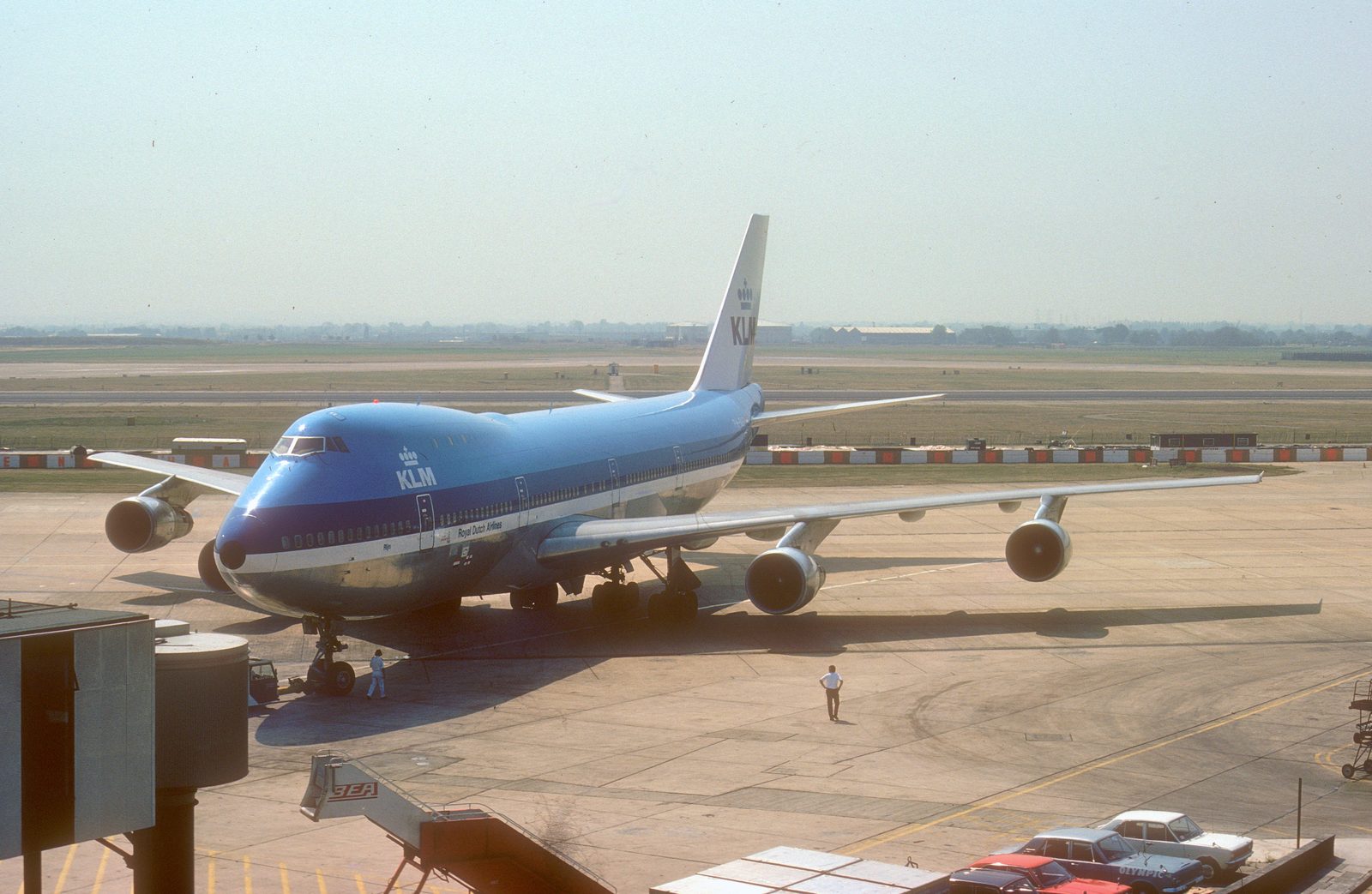
KLM Boeing 747-206B, registration PH-BUF, named "Rijn" (The Rhine), photographed at London Heathrow in August 1975
Photo: Aero Icarus via Wikimedia Commons, CC BY-SA 2.0. Taken August 1975, roughly a year and a half before the accident.

At around 13:15 local time on March 27, 1977, a bomb planted at Gran Canaria Airport by a Canary Islands separatist group exploded in the terminal, injuring eight people. No one was killed by the blast itself, but it forced the airport's closure while police searched for a second device rumored to be planted nearby.

Every flight bound for Gran Canaria that afternoon, including a KLM Royal Dutch Airlines charter carrying Dutch holidaymakers and a Pan Am 747 continuing on from Los Angeles and New York, had nowhere to go but the nearest alternate: Los Rodeos Airport, a small regional field on the island of Tenerife, roughly 100 kilometers away.

KLM Flight 4805 was a Boeing 747-206B, registration PH-BUF, nicknamed “Rijn” (The Rhine). In command was Captain Jacob Veldhuyzen van Zanten, 50, KLM's chief flight instructor and one of the airline's most senior and publicly recognizable pilots, alongside First Officer Klaas Meurs, 42, and Flight Engineer Willem Schreuder, 48. On board were 234 passengers and 14 crew.

Pan Am Flight 1736 was a Boeing 747-121, registration N736PA, nicknamed “Clipper Victor,” the very first 747 to enter scheduled commercial service in 1970. Captain Victor Grubbs, 56, commanded the aircraft with First Officer Robert Bragg, 39, and Flight Engineer George Warns, 46, and a cabin carrying 380 passengers and 16 crew, most of them elderly Americans on a chartered Mediterranean cruise package.
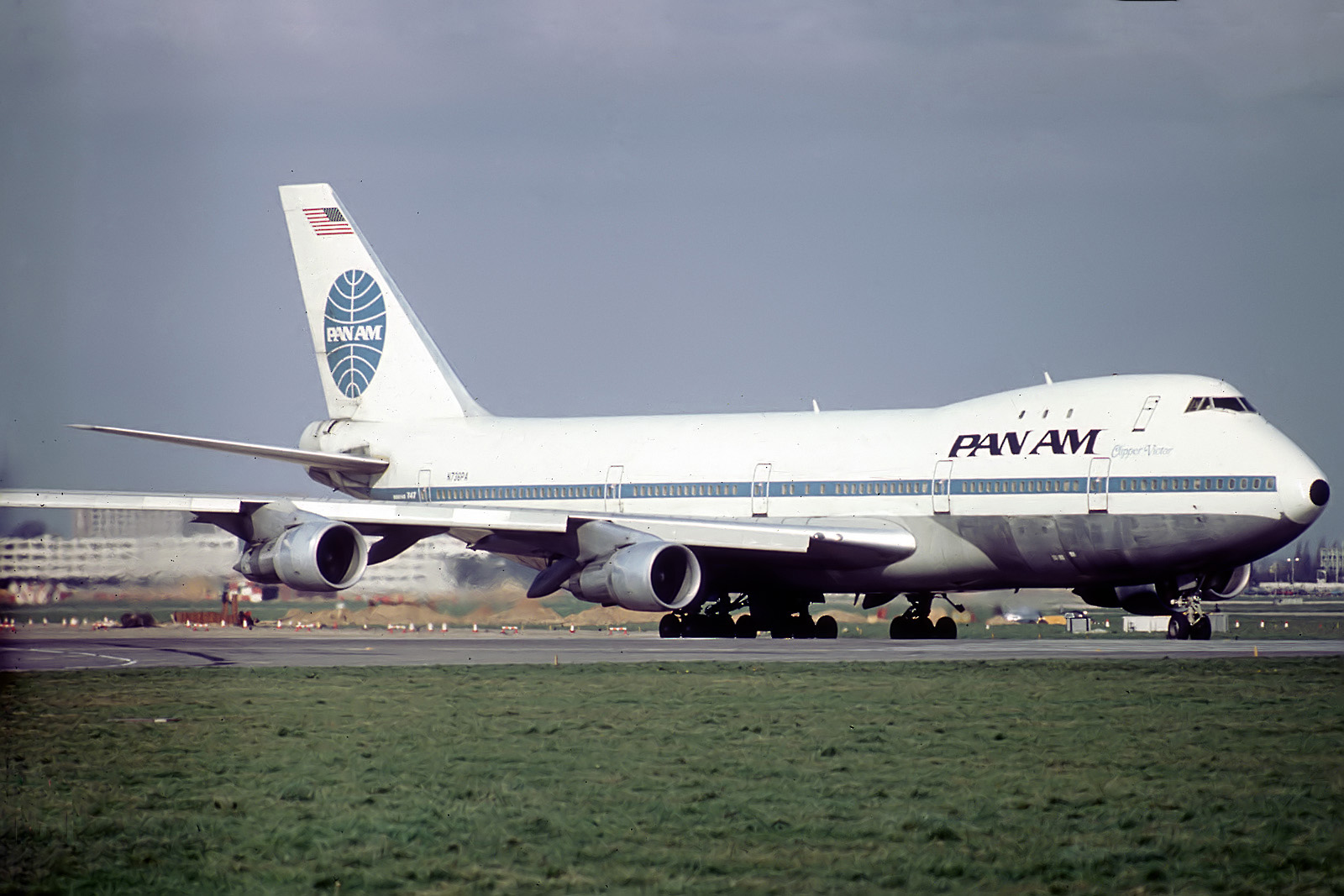
Pan Am Boeing 747-121, registration N736PA, named "Clipper Victor," photographed at London Heathrow on 5 March 1977
Photo: Paul Seymour via Wikimedia Commons, CC BY-SA 4.0. Taken 5 March 1977, just over three weeks before the accident.
Part Two

The Congestion

Los Rodeos was never built to absorb a full afternoon of diverted wide-body jets. It had one runway and one taxiway running parallel to it. That was the entire airfield.

Early Afternoon

Five Large Aircraft, One Small Airport

KLM 4805, Pan Am 1736, and several other diverted jets landed at Los Rodeos within a short span of each other. With the single taxiway already full, incoming aircraft had nowhere to park except along it, blocking it completely for anyone trying to use it as intended.

A Consequential Decision

KLM Chooses To Refuel At Tenerife

Captain van Zanten decided to take on a full load of fuel at Los Rodeos rather than at Gran Canaria, reasoning it would save time once the airport reopened. His first officer and flight engineer had both suggested refueling at their original destination instead. The refueling took roughly 35 minutes.

Blocked On The Ramp

Pan Am Boxed In

While KLM refueled, its parked 747 blocked the only path Pan Am's aircraft needed to reach the runway, with as little as 12 feet of clearance between the two jets. Pan Am's passengers stayed aboard the entire time; KLM had let its passengers off to wait in the terminal, adding further delay once boarding resumed.

Runway Doubles As Taxiway

Backtaxiing Becomes Necessary

With the parallel taxiway unusable, air traffic control had both aircraft taxi out and back down the runway itself, a normal but higher-workload procedure called backtaxiing, to reach the end where takeoffs began. It meant both jets would, briefly, be on the same runway, moving in opposite directions, at the same time.

Part Three

The Fog

Los Rodeos sits at over 2,000 feet of elevation, in terrain known for fast-moving cloud. As the afternoon wore on, that cloud rolled directly across the runway.

Deteriorating By The Minute

From 500 Meters To Near Zero

Visibility along the runway fluctuated as low cloud drifted through, measured at points around 500 meters and then, in patches, dropping to under 100 meters, roughly the length of a single Boeing 747. Pilots and controllers alike lost sight of aircraft they had been tracking visually only moments earlier.

No Way To See The Field

An Airport With No Ground Radar

Los Rodeos had no surface movement radar, the equipment that lets a control tower track exactly where aircraft are on the ground even when nobody can see them. In the fog, the controller working both flights had no way to visually confirm either aircraft's exact position on the runway, and neither pilot could see the other's.

By the time both 747s were taxiing toward the runway's far end, cloud was blowing down its length in bands, at times leaving each crew able to see barely past their own nose. Neither cockpit could see the other aircraft. Neither could see the runway ahead clearly enough to know, for certain, that it was empty.

Part Four

The Miscommunication

What follows is reconstructed directly from both aircrafts' cockpit voice recorders, cross-referenced against the tower frequency, exactly as the official investigation timed it. All times are local (GMT).

17:05:44–50

“Now Ready For Take-Off”

KLM's first officer radios the tower: “The KLM four eight zero five is now ready for take-off and we are waiting for our ATC clearance.”

17:05:53–17:06:08

A Route Clearance, Not A Takeoff Clearance

The tower reads out KLM's departure routing, the clearance for the flight path after takeoff. It is not, and was never intended as, permission to begin the takeoff roll itself.

17:06:09–17

“We Are Now At Take-Off”

Reading the route clearance back, the KLM first officer adds a final line: “We are now at take-off.” Captain van Zanten begins advancing the throttles as it's said. To the tower, the phrase was ambiguous. To the crew, in the moment, it read as a statement of fact.

17:06:18–21

“Stand By For Take-Off”

The tower replies “OK”, a non-standard acknowledgment, then adds: “Stand by for take-off, I will call you.” Only fragments of this reach the KLM cockpit clearly; the rest is lost.

17:06:20 (Same Instant)

“We're Still Taxiing Down The Runway”

At almost the exact same moment, Pan Am transmits: “We're still taxiing down the runway, the Clipper one seven three six.” Both transmissions key the frequency simultaneously, producing a burst of interference on the KLM flight deck that overrides the more critical half of the tower's warning and all of Pan Am's.

Seconds Later

“Is He Not Clear, Then?”

Inside the KLM cockpit, the flight engineer asks, in Dutch: “Is hij er niet af dan?” (Is he not clear, then?) Captain van Zanten answers emphatically: “Oh, yes.” The aircraft continues its takeoff roll.

A note on this exchange: The Spanish investigation and Dutch aviation authorities have never fully agreed on how to apportion responsibility for what each party heard, said, or should have said in these final seconds. We've reconstructed the sequence directly from the official cockpit voice recorder transcripts; the disagreement over interpretation is covered in full in The Cause, below.
Part Five

The Collision

Pan Am's crew had been told to exit the runway at the third taxiway and report back once clear. In the fog, they missed it.

RUNWAY 12/30 · LOS RODEOS · VISIBILITY 100–500M C-3 missed exit KLM 4805 takeoff roll → PAN AM 1736 ← backtaxi, missed C-3 17:06:50 collision, mid-runway SCHEMATIC, NOT TO SCALE
KLM takeoff roll Pan Am backtaxi Point of collision

Pan Am was instructed to exit the runway at the third taxiway (C-3) and report it clear. Its crew, navigating in near-zero visibility, continued past the sharply angled, poorly marked exit toward the fourth. KLM began its takeoff roll from the opposite end of the same runway seconds later.

There he is! … Look at him! Goddamn, that son of a bitch is coming!

— Captain Victor Grubbs, Pan Am 1736, Cockpit Voice Recorder, 17:06:47

Pan Am's crew spotted KLM's landing lights emerging from the fog, bearing directly down the runway toward them, at the last possible moment. First Officer Bragg pushed the throttles forward and Captain Grubbs threw the aircraft into as sharp a left turn off the runway as a fully loaded 747 could manage. It wasn't enough distance, and it wasn't enough time.

In the KLM cockpit, First Officer Meurs and Flight Engineer Schreuder saw Pan Am's silhouette at nearly the same instant. Captain van Zanten pulled back hard, trying to force the aircraft into the air early. Investigators later concluded KLM's nose gear had just lifted off, and its tail briefly struck the runway from the force of the rotation, when its underside struck the top of Pan Am's fuselage.

KLM's main landing gear and lower fuselage tore through the upper rear section of Pan Am's aircraft, directly through the first-class cabin and upper deck lounge, an area normally holding some of Pan Am's passengers, before the two aircraft separated. KLM's engines, still at full or near-full takeoff power, briefly carried it back into the air before it stalled, rolled, and slammed into the runway roughly 150 meters further along, sliding to a stop in flames.

Both cockpit voice recorders stop within a second of each other: KLM's at 17:06:49.7, Pan Am's at 17:06:50.

Part Six

The Fireball

Both aircraft were carrying substantial fuel loads. What happened next took seconds for one aircraft, and just long enough for a handful of people to escape the other.

248Aboard KLM 4805
0KLM Survivors
396Aboard Pan Am 1736
61Pan Am Survivors

KLM's 747, carrying the full fuel load taken on during its 35-minute stop, exploded almost instantly on impact after cartwheeling back onto the runway. The fire was immediate and total. All 248 people aboard, 234 passengers and 14 crew, including Captain van Zanten, First Officer Meurs, and Flight Engineer Schreuder, were killed. There was no time for anyone aboard to attempt an escape.

Pan Am's fuselage, torn open along its upper structure but still largely intact along the left side, caught fire more slowly. For the people seated forward of the point of impact, that difference, measured in a small number of minutes, was the entire distance between survival and death.

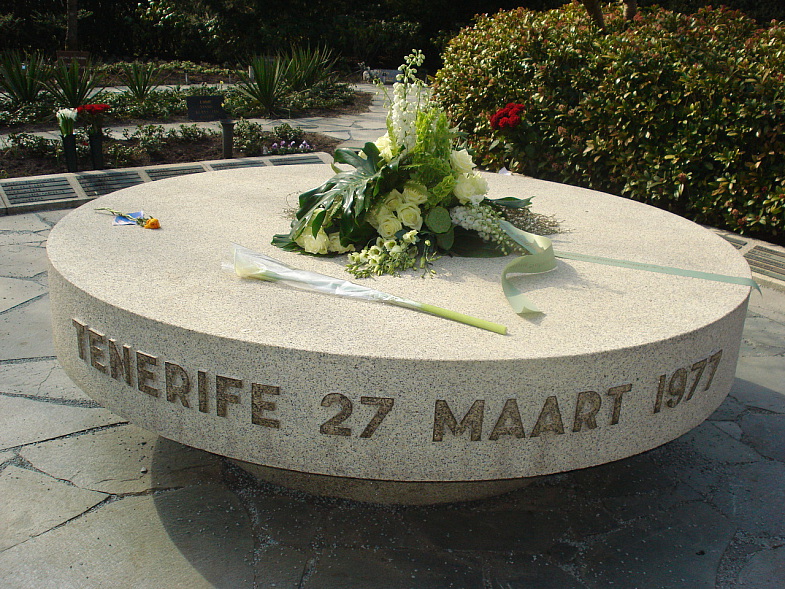
Tenerife memorial stone at Westgaarde cemetery, Amsterdam, inscribed "Tenerife 27 Maart 1977"
Photo: NaturalHeaven1979 via Wikimedia Commons, CC BY-SA 3.0. Memorial to the Dutch victims, Westgaarde cemetery, Amsterdam. No free photograph of the wreckage itself is used in this case file out of respect for those who died.
Part Seven

The Survivors

Every one of the 61 people who survived was aboard Pan Am 1736, seated in or near the forward section of the aircraft, the part of the fuselage furthest from where KLM struck.

Dorothy Kelly

Purser, Pan Am Flight 1736

She survived. She kept flying.

Dorothy Kelly was working the forward first-class door when the collision struck. She was hit by flying debris and fell through a hole torn in the cabin floor into the cargo hold below. Despite a head wound and a broken arm she wouldn't discover until later, she climbed back up and began helping treat other survivors' burns before finally accepting treatment for her own injuries.

Survivors who could still move made their way to the intact left wing, the side of the aircraft furthest from where KLM had struck, climbing out through the torn fuselage and dropping or sliding down to the tarmac before the fire spread. First Officer Robert Bragg also survived, and spent much of the rest of his life speaking publicly about the accident and its lessons, until his death in 2017.

Rescue crews, working in thick fog and smoke, initially concentrated on KLM's wreckage, hundreds of meters away and burning far more visibly. Pan Am's survivors waited on the open tarmac, some for close to half an hour, before help reached them in force. Sixty-one people made it out. Three hundred and thirty-five aboard Pan Am did not.

Part Eight

The Cause

Spain's Subsecretaria de Aviacion Civil, working with the Spanish Civil Aviation Accident and Incident Investigation Commission (CIAIAC), published its findings later in 1977, distributed internationally as ICAO Circular 153-AN/56. The direct cause was stated plainly. Everything that made it possible was not.

Direct Cause

A Takeoff Without Clearance

The Spanish investigation's central finding was unambiguous: Captain van Zanten began the takeoff roll without air traffic control clearance to do so, misreading a route clearance and a partially garbled “stand by” instruction as permission he never actually received.

Contributing Factor

A Radio Frequency That Couldn't Carry Two Voices

KLM's transmission and Pan Am's warning that they were “still taxiing down the runway” keyed the same frequency within a second of each other, producing interference that erased the two pieces of information that, heard clearly, would very likely have stopped the takeoff.

Contributing Factor

Words That Meant Different Things To Different People

“We are now at take-off” was not standard phraseology in 1977, and the tower's “OK” in response, rather than a required, unambiguous readback, left room for exactly the kind of misunderstanding that followed. Neither phrase would be considered acceptable radio communication in commercial aviation today.

Human Factors

A Cockpit Where Rank Made It Harder To Speak Up

Flight Engineer Schreuder's hesitant question about whether Pan Am was clear was met with a firm, immediate “Oh, yes” from his captain, and he didn't press further. Van Zanten was KLM's chief flight instructor, one of the most senior and experienced pilots at the airline; investigators found that his authority in the cockpit made his own crew less likely to challenge him, even when their instincts were telling them something was wrong.

The fundamental cause of the accident was that Captain van Zanten took off without clearance.

— Spanish Civil Aviation Accident and Incident Investigation Commission, Final Report, 1977
A note on disputed responsibility: The Netherlands' Department of Civil Aviation formally disputed placing sole blame on Captain van Zanten, arguing the accident resulted from a genuine, mutual misunderstanding between the KLM crew and the tower, made possible by radio interference and the limits of voice communication itself, not by one crew's error alone. KLM, as the airline, ultimately accepted financial responsibility and compensated victims' families, with settlements averaging roughly $189,000 per victim.
The Cruelest Detail

KLM Called Him To Help

Jacob van Zanten was so senior and so well known within KLM, his photograph had appeared in the airline's own advertising and in the in-flight magazine carried on the aircraft he was flying that day, that in the confusion immediately after the accident, KLM's head office in Amsterdam considered contacting him to help lead their response, before anyone realized he was the captain who had died.

Part Nine

The Legacy

Tenerife remains the deadliest accident in aviation history, and also one of the most consequential. Almost everything about how pilots and controllers talk to each other today traces back, directly or indirectly, to this runway.

Regulatory Change

A New Vocabulary For The Radio

ICAO standardized the phraseology used worldwide as a direct result of this accident. The word “takeoff” is now spoken only when an actual takeoff clearance is being given or canceled, never in a route clearance. Instructions to aircraft on a runway must now include the explicit phrase “hold position,” and clearances must be read back in full rather than acknowledged with a casual “OK” or “Roger.”

Training Reform

Crew Resource Management

Tenerife became the founding case study for what the industry now calls Crew Resource Management: the principle that any crew member, regardless of rank, must feel able to question a captain's decision, and that a captain must be trained to invite that challenge rather than discourage it. CRM training has been mandatory for airline pilots worldwide since 2006.

Infrastructure

Ground Radar Becomes Standard

Los Rodeos had no way to track aircraft positions on its own runway and taxiways once visibility dropped. Spain installed ground radar at the airport, now Tenerife North–Ciudad de La Laguna Airport, in the years that followed, and surface movement radar is now standard equipment at major airports worldwide precisely because of what happened here.

Memorial

Westgaarde, Amsterdam, And Beyond

A memorial stone at Westgaarde cemetery in Amsterdam commemorates the Dutch victims of KLM 4805. A separate memorial garden at Westminster Memorial Park in California honors many of Pan Am's passengers and crew. Both remain sites of quiet remembrance each March 27th.

Verification

Sources

Every fact in this case file was cross-referenced against the official government investigation and at least one independent secondary source. All links open in a new tab.

Official Investigation Report Spanish Civil Aviation Findings: Final Report On The Tenerife Collision (PDF, hosted by the FAA)

Spain's official investigation findings on the collision between KLM Flight 4805 and Pan Am Flight 1736, published as ICAO Circular 153-AN/56 and mirrored on a U.S. federal government domain.

U.S. Federal Aviation Administration FAA Lessons Learned: KLM Flight 4805, PH-BUF

The FAA's official case summary and safety-lessons page for this accident.

U.S. National Transportation Safety Board NTSB Safety Study SIR-86-01: Human Factors Accident Reports (PDF)

The NTSB's 1986 human-factors safety study, published in part to advance crew resource management practices using the lessons of Tenerife.

News Coverage, Retrospective CBS News: Tenerife, Remembering The World's Deadliest Aviation Disaster

Retrospective news coverage of the accident, its victims, and its lasting impact on the industry.

Aviation Trade Press AeroTime: The Tenerife Airport Disaster, Wrong Place At The Wrong Time

Industry trade-press retrospective on the accident and the regulatory changes that followed.

Secondary Reference Wikipedia: Tenerife Airport Disaster

Used as a secondary, cross-referencing source for names, timestamps and sequence of events, verified in turn against the sources above.

A note on the transcript: Some retellings of this accident render the KLM first officer's final radio call as “We are taking off” rather than “We are now at take-off.” Both phrasings appear across reputable accounts; we've used the wording most consistently attributed to the official cockpit voice recorder transcript.

JOIN THE DISCUSSION