Flight Log
UAP FILES: Navy pilots describe a “Tic-Tac” object outmaneuvering an F/A-18 HEROIC: The co-pilot who landed a 767 with zero engine power over Canada BIZARRE: The flight attendant who survived a 33,000-foot fall — read the case HISTORY: Inside the deadliest day in aviation — two 747s, one foggy runway SCARY: The cockpit voice recording no pilot forgets UAP FILES: Navy pilots describe a “Tic-Tac” object outmaneuvering an F/A-18 HEROIC: The co-pilot who landed a 767 with zero engine power over Canada BIZARRE: The flight attendant who survived a 33,000-foot fall — read the case HISTORY: Inside the deadliest day in aviation — two 747s, one foggy runway SCARY: The cockpit voice recording no pilot forgets
Case File · Verified Against Official & Aviation-Safety Sources

FOUR ENGINES DEAD AT 37,000 FEET

Somewhere over the Indian Ocean south of Java, at night, British Airways Flight 9 flew into a cloud nobody could see and lost all four engines within minutes. For thirteen silent minutes, a Boeing 747 carrying 263 people became the largest glider in the sky — and the calmest voice on board belonged to the man flying it.

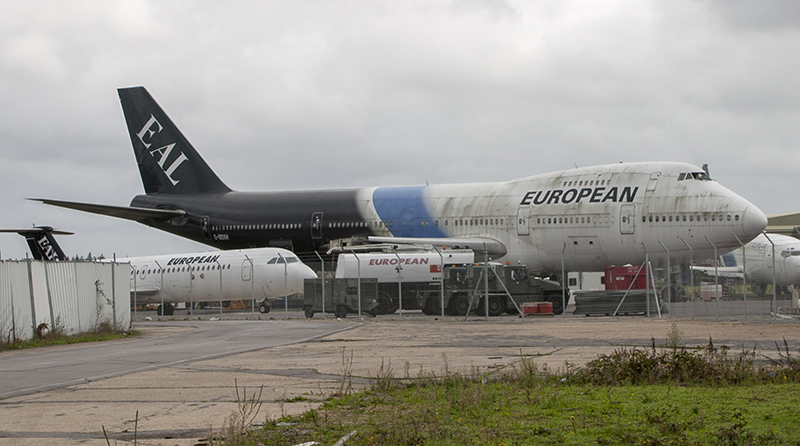
June 24, 1982 London → Auckland, over Indonesia British Airways Flight 9 Boeing 747-236B · G-BDXH “City of Edinburgh”
263Survived, Zero Lost
37,000ftCruise When Engines Died
~13 minWith No Engines At All
4 / 4Engines Eventually Restarted
Part One

The Cloud

Flight 9 was most of the way through a multi-stop route from London Heathrow to Auckland, cruising at 37,000 feet on a clear night south of Java, Indonesia. Nothing on the weather radar showed a threat, because the thing about to stop all four engines on a 747 doesn't show up on weather radar at all.

Photo — G-BDXH, “City of Edinburgh”

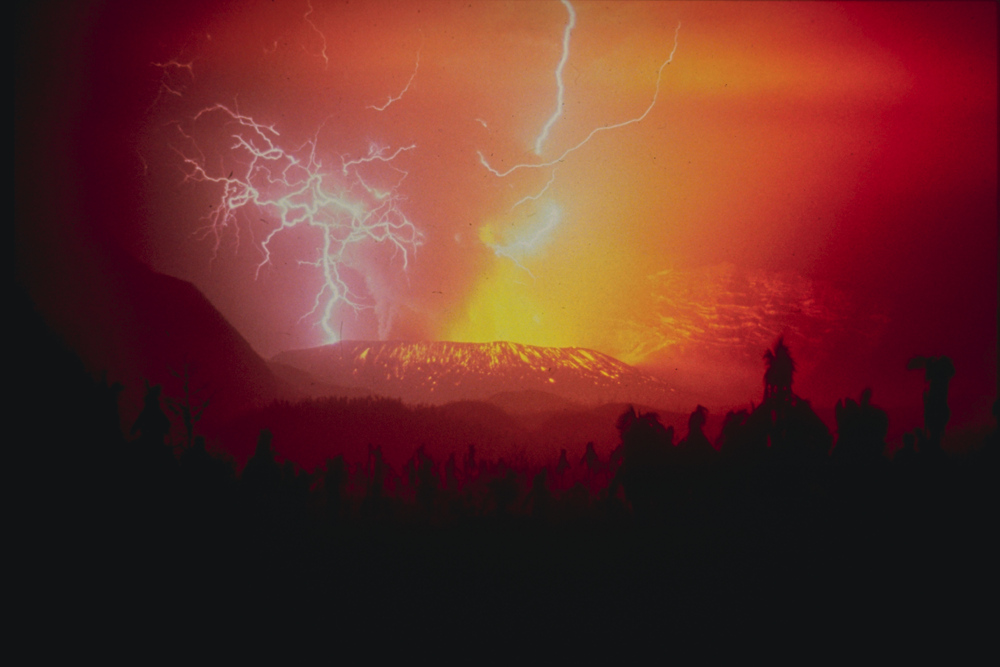
Mount Galunggung, a volcano roughly 110 miles southeast of Jakarta, had erupted, throwing a dense cloud of volcanic ash tens of thousands of feet into the night sky — directly across Flight 9's path. Ash clouds are invisible to onboard weather radar, which is built to detect water droplets, not pulverized rock. Nobody on the flight deck — Captain Eric Moody, Senior First Officer Roger Greaves, and Senior Flight Engineer Barry Townley-Freeman — had any reason to expect what was ahead.

The first sign was visual, not mechanical: a strange glow began flickering across the windscreen, an electrical effect similar to St. Elmo's fire, and an acrid smell drifted into the cabin. Then, one after another, all four engines flamed out.

Cruise — 37,000 Feet

The Glow On The Windscreen

Flying at night with no visual warning, the crew notices a strange luminous effect on the windscreen and smoke-like haze entering the flight deck, moments before the first engine failure.

Engine 4 — First To Go

The First Flameout

Engine four fails first. Within a short span, engine two follows, then engines one and three — all four Rolls-Royce RB211 engines dead, on a Boeing 747, at cruise altitude, at night, over open water near a coastline neither pilot could see.

Immediately After

A 747 Becomes A Glider

With no thrust at all, the aircraft begins a long, silent descent. The crew declares an emergency and turns back toward Jakarta, the nearest safe airport, while beginning immediate restart drills on all four engines.

Descending Through 25,000 Feet Lost

No Explanation, Just A Procedure

The crew has no idea a volcano is involved. What they have is a checklist for a multiple engine flameout, and they work it, over and over, as the aircraft glides down through the dark.

~12,000 Feet — After ~13 Minutes With No Power

Engine Four Catches

Having glided out of the ash cloud without ever knowing it was there, engine four — the first to fail — restarts. The other three follow within roughly ninety seconds. Engine two later begins to surge and is shut down again above 15,000 feet; the aircraft continues toward Jakarta on three engines.

Final Approach

A Windscreen You Can't See Through

See The Landing below.

37,000ft 12,000ft 0 Cruise, engines fail Engine 4 restarts Jakarta landing ALTITUDE PROFILE — SCHEMATIC, NOT TO SCALE

Flight 9 lost roughly 25,000 feet of altitude gliding with no engines at all before Captain Moody's crew got the first one restarted — then continued to Jakarta on three engines after a fourth surged and had to be shut down again.

Part Two

Thirteen Minutes Of Silence

A Boeing 747 with no engines doesn't fall out of the sky. It glides — a controlled, silent descent that, at cruise altitude, can cover well over a hundred miles before it must land or crash. That silence is exactly what made the next thirteen minutes so unnerving for everyone on the flight deck.

With no thrust and no clear cause, Moody's crew worked the emergency the only way you can work an emergency with no information: methodically. Townley-Freeman ran the engine restart drill again and again. Greaves flew the glide profile and coordinated with air traffic control. Moody made the call to turn back toward Jakarta, the only usable airport within reach, and kept the crew focused engine by engine rather than letting the scale of the problem — four failures at once, on a jumbo jet, at night — take over the flight deck.

I was always brought up to expect the aeroplane might break any minute.

— Captain Eric Moody, on the mindset that shaped his response that night

There was no way, in the moment, to know the cause was volcanic ash rather than a catastrophic and possibly worsening mechanical failure. The crew flew the emergency they could see — four dead engines and a rapidly decreasing altitude — and let the checklist, not panic, drive the next thirteen minutes.

Part Three

The Announcement

Somewhere in the middle of the emergency, Captain Moody picked up the public address handset and told 248 passengers, in the same tone he might have used to announce a delayed meal service, that all four engines had stopped.

Ladies and gentlemen, this is your captain speaking. We have a small problem. All four engines have stopped. We are doing our damnedest to get them going again. I trust you are not in too much distress.

— Captain Eric Moody, cabin PA announcement, British Airways Flight 9, 24 June 1982

The line became one of the most famous in aviation history — not because it minimized the danger, but because it gave 248 frightened passengers something to hold onto: a pilot who sounded entirely in control, at the exact moment the aircraft had no engines at all. Cabin crew moved through the aircraft calmly briefing passengers on the brace position and emergency procedures, following the same unhurried tone Moody had set from the flight deck.

Part Four

The Landing

Getting the engines back wasn't the end of the emergency. The ash that had silenced them had also sandblasted the cockpit windscreen to the point of near-total opacity — and the crew still had to land a jumbo jet at night, largely unable to see out of it.

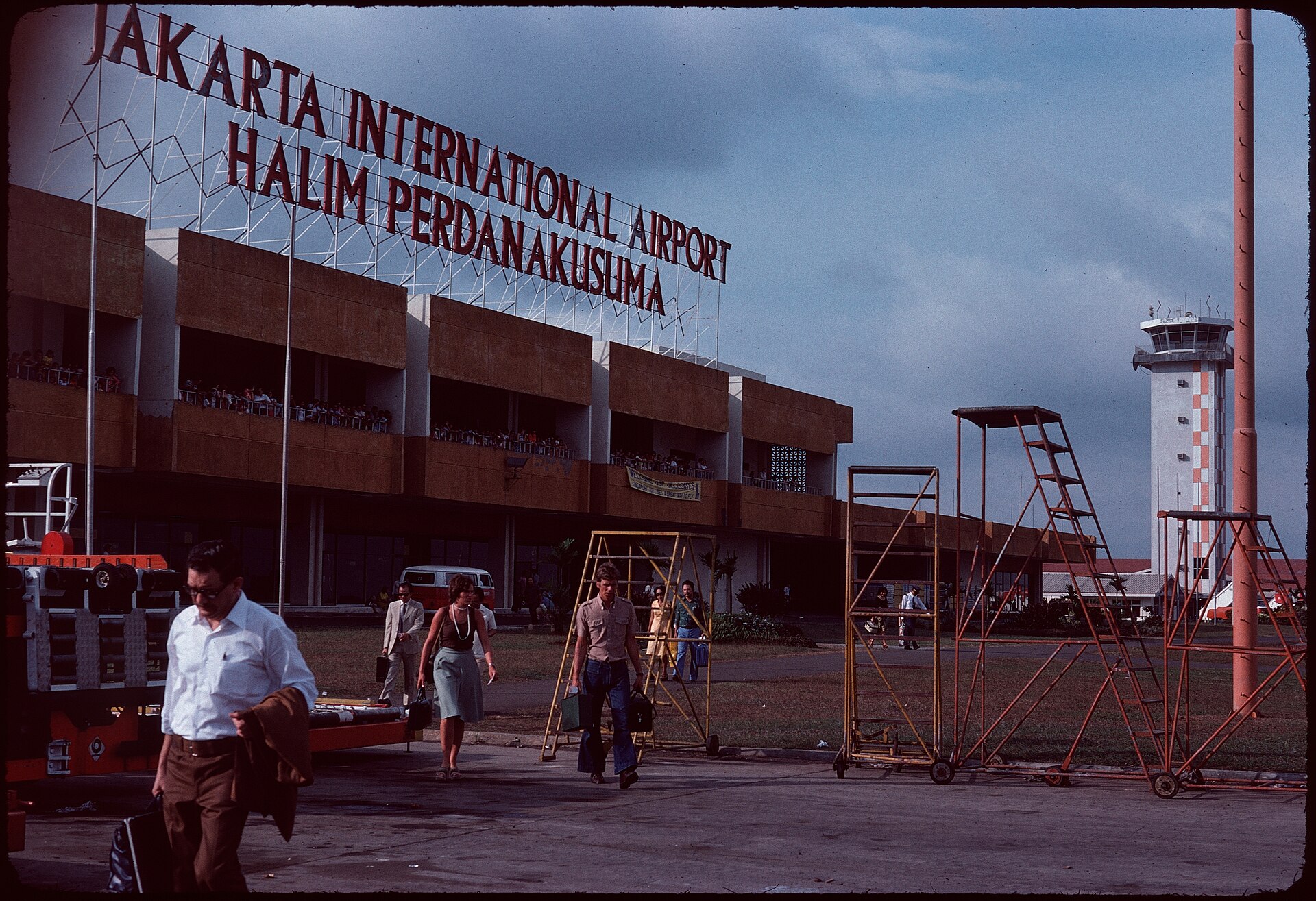
By the time all four engines were running again (with engine two later shut down a second time after surging), the windscreen was so heavily abraded by ash that the crew could see almost nothing through it directly. Moody found a narrow strip at the outer edge of the left windscreen that remained clear enough to use. The aircraft's instrument landing system could provide lateral guidance only — the glideslope indicator was inoperative — so First Officer Greaves called out altitudes against distance-measuring equipment readings, effectively hand-building a virtual glide path step by step on the approach into Halim Perdanakusuma International Airport, Jakarta.

Moody brought the 747 in on Runway 24 and landed it safely. All 263 people on board — 248 passengers and 15 crew — walked off the aircraft.

Halim Perdanakusuma Airport, Jakarta

It was a bit like negotiating one's way up a badger's arse.

— Captain Eric Moody, describing the near-blind final approach into Jakarta
Part Five

The Cause

In 1982, volcanic ash simply wasn't understood as a hazard to jet aircraft. Flight 9 is one of the events that changed that, permanently.

Invisible On Radar

A Cloud That Doesn't Look Like Weather

Volcanic ash is pulverized rock and glass, not water — it doesn't reflect weather radar the way a storm does, and at night it's invisible to the naked eye until an aircraft is already inside it. Flight 9's crew had no instrument or visual cue warning them anything was wrong until the windscreen began to glow.

Why The Engines Died

Melted Glass In A Jet Turbine

Ash ingested into the engines melted in the intense heat of the turbine section, then re-solidified as glass on cooler internal surfaces further back, disrupting airflow and choking the engines until they flamed out — all four, independently, within the same short span, because all four had flown through the identical cloud.

Why The Restart Worked

Clearing The Cloud, Clearing The Glass

As the aircraft glided down and out of the ash, cooler air caused the re-solidified glass deposits to crack and shed from the turbine blades, allowing the engines to be restarted using standard windmill/air-start procedures once clear air was reached.

Why Nobody Saw It Coming

A Known Volcano, An Unknown Aviation Risk

Mount Galunggung's eruption was known to authorities on the ground. What didn't yet exist, anywhere in the world, was a system for warning aircraft in flight that an ash cloud occupied a specific piece of sky at a specific altitude. Flight 9 exposed that gap.

Part Six

The Record

Flight 9's dead-engine glide entered the Guinness Book of Records as the longest glide by a non-purpose-built aircraft — a record that would later be matched by two other airliners for two entirely different reasons, both also covered in this archive.

Guinness World Record

The Longest Glide, Held Three Times

G-BDXH's engineless descent set the original record for the longest glide by an aircraft never designed to glide. Air Canada Flight 143 — the “Gimli Glider” — matched the feat in 1983 after running out of fuel, and Air Transat Flight 236 extended it further in 2001 gliding 75 miles into the Azores. All three are among the most studied “power-off” landings in aviation history.

The Aircraft's Own Fate

City of Edinburgh Flew On

G-BDXH was repaired and returned to service, flying for British Airways for another two decades under the name City of Elgin. It was eventually sold in 2002 and scrapped at Bournemouth Airport in 2009 — an ordinary retirement for an aircraft that once fell 25,000 feet with no engines at all and kept flying anyway.

Part Seven

The Legacy

Flight 9 didn't just make aviation history — it rewrote how the entire industry watches the sky for volcanic ash.

Regulatory Change

The Volcanic Ash Advisory Network

The incident became the catalyst for ICAO's Volcanic Ash Warning Study Group. In 1991, the aviation industry moved to establish dedicated Volcanic Ash Advisory Centers; by 1996, ICAO had designated nine VAACs providing worldwide coverage, and in 1998 their role was formally written into ICAO Annex 3. No airliner flies blind into an ash cloud like Galunggung's today.

Honors

Recognized For Airmanship

Captain Moody received the Queen's Commendation for Valuable Service in the Air and the Guild of Air Pilots and Air Navigators' Hugh Gordon Burge Memorial Award for his handling of the emergency. He retired from British Airways in 1996 after 32 years and more than 17,000 flight hours, and remained a popular, self-deprecating interview subject about the flight for the rest of his life.

In Memoriam

Captain Eric Moody, 1941–2024

Captain Moody died in March 2024. He was remembered across the aviation world not only for saving 263 lives, but for the specific, understated grace with which he did it — proof that the calmest voice in a crisis can be the difference between panic and survival.

Still Taught Today

A Case Study In Crew Resource Management

Flight 9 remains a standard teaching case in crew resource management: divide the problem, work it systematically, keep flying the aircraft, and communicate calm to the people behind you — even when you don't yet know if the emergency can be survived.

Verification

Sources

Every fact in this case file was cross-referenced against at least two independent aviation-safety or industry sources. All links open in a new tab.

Aviation Safety Reference SKYbrary — B742, En-Route, South-Southeast Of Jakarta, 1982

Aviation-safety-industry summary of the incident, maintained by SKYbrary Aviation Safety.

Aviation Safety Database Aviation Safety Network — Accident Record, G-BDXH, 24 June 1982

Independent aviation accident database entry for the aircraft and flight.

Case Study code7700 — Case Study: British Airways 9

Detailed technical timeline used by pilots and aviation trainees studying this event.

Aviation Safety Journalism Flight Safety Australia — Captain Moody's Wisdom

Published by Australia's Civil Aviation Safety Authority's official safety magazine.

Aviation Safety Journalism Flight Safety Australia — Eric Moody, Master Of Airmanship And Understatement

Retrospective on Captain Moody's career and the 1982 emergency, published on his death.

International Regulatory Body SKYbrary — Volcanic Ash Advisory Centre (VAAC)

History and structure of the global VAAC network established in response to incidents including Flight 9.

JOIN THE DISCUSSION