Flight Log
UAP FILES: Navy pilots describe a “Tic-Tac” object outmaneuvering an F/A-18 HEROIC: The co-pilot who landed a 767 with zero engine power over Canada BIZARRE: The flight attendant who survived a 33,000-foot fall. Read the case HISTORY: Inside the deadliest day in aviation, two 747s, one foggy runway SCARY: The cockpit voice recording no pilot forgets UAP FILES: Navy pilots describe a “Tic-Tac” object outmaneuvering an F/A-18 HEROIC: The co-pilot who landed a 767 with zero engine power over Canada BIZARRE: The flight attendant who survived a 33,000-foot fall. Read the case HISTORY: Inside the deadliest day in aviation, two 747s, one foggy runway SCARY: The cockpit voice recording no pilot forgets
Case File · Black Box Files · Deadliest Single-Aircraft Accident In History

THE FLIGHT THAT LASTED 32 MINUTES TOO LONG

On the Friday evening that opened Japan's biggest holiday weekend of the year, a Boeing 747 climbed out of Tokyo with 524 people aboard, more of them than almost any flight in the sky that night. Twelve minutes later, a repair made seven years earlier and never done correctly gave way at 24,000 feet. The tail tore off. Every hydraulic system on the aircraft, four of them, independent, redundant, designed so this could never happen all at once, failed in the same instant. For the next 32 minutes, Captain Masami Takahama and his crew fought a 747 that no longer had a way to steer itself, using nothing but the throttles, while 509 passengers behind them had time, far more time than almost anyone in an air disaster ever gets, to understand exactly what was happening to them. 520 people did not survive. Four did.

August 12, 1985 Haneda, Tokyo → Itami, Osaka Japan Airlines Flight 123 Boeing 747SR-46 · JA8119
Last reviewed and updated: August 2026
524People Aboard
520Lives Lost
4Survivors
32Minutes The Crew Fought
Part One

The Flight

All times in this case file are Japan Standard Time, August 12, 1985. It was the Friday evening that opened Obon, the mid-August holiday when much of Japan travels home to family graves and hometowns, and the short domestic hop between Tokyo and Osaka was booked close to capacity.
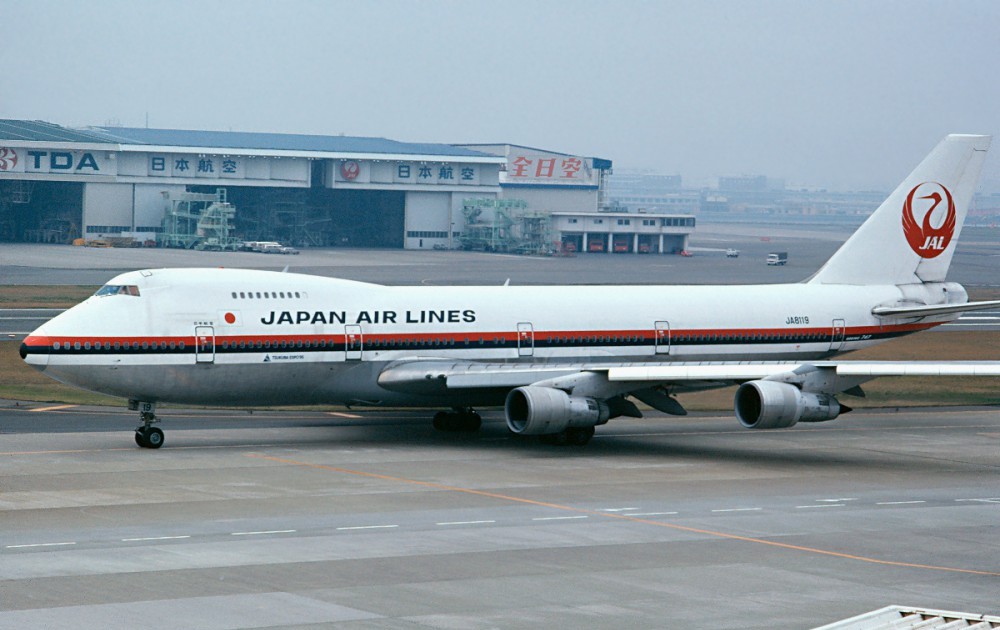
Japan Airlines Boeing 747SR-46, registration JA8119, the aircraft later lost as Flight 123, photographed in March 1985
Photo: Stuart Jessup via Wikimedia Commons, CC BY-SA 2.0. JA8119, photographed March 3, 1985, five months before the accident.

Japan Airlines Flight 123 was flown by a Boeing 747SR-46, registration JA8119, one of the “SR” (Short Range) variant Boeing built specifically for Japan's domestic trunk routes: structurally reinforced to handle far more takeoff-and-landing cycles than a standard 747, configured with extra seating instead of extra fuel range, and flown almost continuously since its 1974 delivery. By August 1985, JA8119 had logged nearly 18,800 flights in just over eleven years, a punishing cycle count that made it, unknowingly, one of the most fatigue-stressed pressure vessels in the sky.

In command was Captain Masami Takahama, 49, a training captain with 12,423 flight hours, more than 4,800 of them on the 747. Beside him sat First Officer Yutaka Sasaki, 39, himself undergoing training toward his own captain's rating, with 3,963 hours logged. Flight Engineer Hiroshi Fukuda, 46, monitored the systems panel behind them, with 9,831 hours of his own. Behind the flight deck, twelve flight attendants prepared a cabin carrying 509 passengers, 524 people in total, one of the fuller flights JAL would fly that entire year.

Among the passengers was Kyu Sakamoto, the singer whose 1961 song “Ue o Muite Arukō” had become an international hit under the title “Sukiyaki,” still the only Japanese-language song ever to top the American charts. Also aboard was banker Akihisa Yukawa, traveling with his family; his daughter, violinist Diana Yukawa, would be born one month after the crash and never meet him. Several well-known entertainers who had been booked, or nearly booked, on the same flight canceled or changed plans that day and lived; the randomness of who was and wasn't aboard became its own small, uneasy part of how the country processed what happened next.

Flight 123 pushed back from Haneda's gate and departed Runway 15L at 18:12, twelve minutes behind schedule, climbing out over Sagami Bay on a short, routine hop that, on an ordinary evening, would have put it on the ground in Osaka in under an hour.
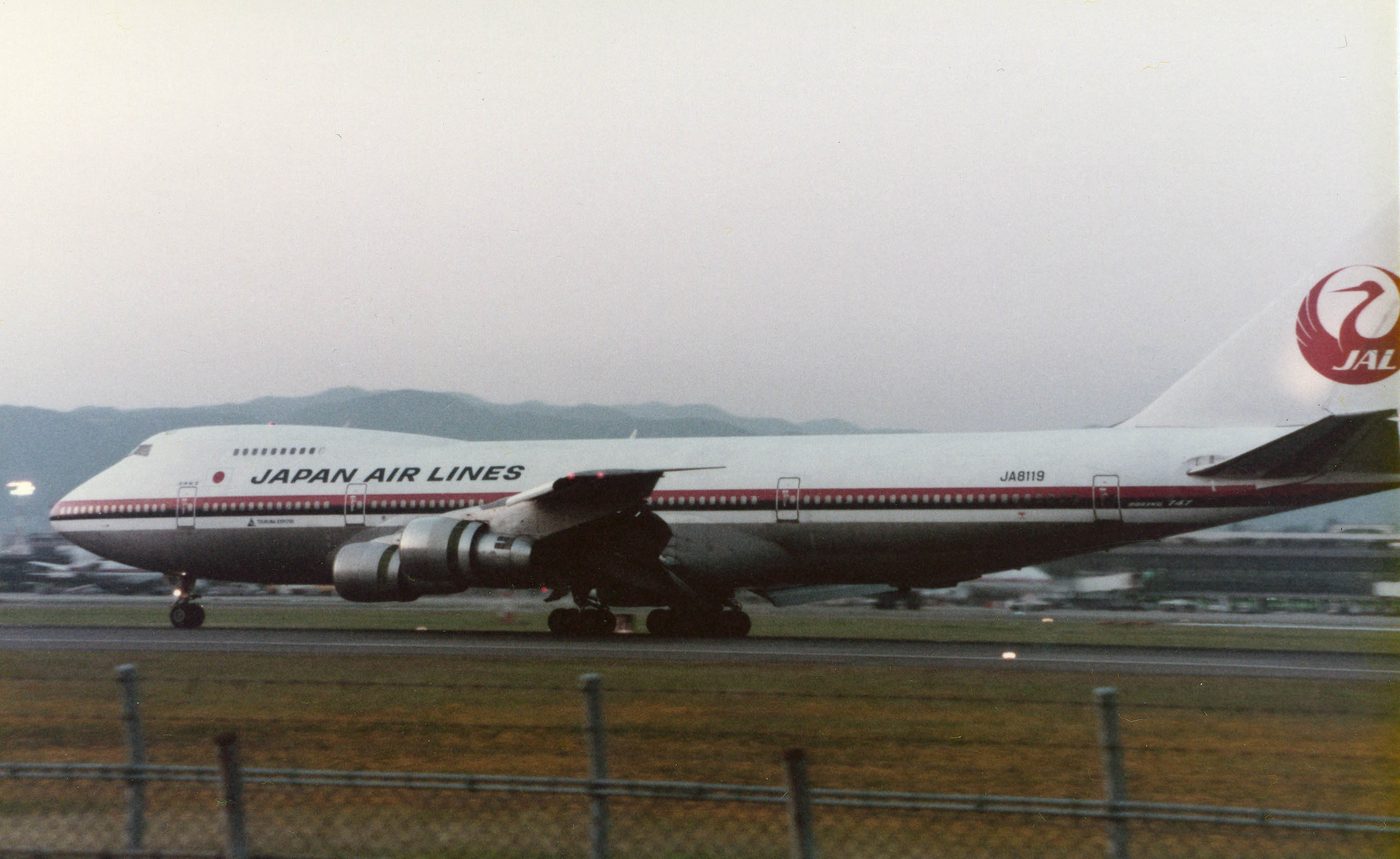
Japan Airlines Boeing 747SR-46 JA8119 at Itami Airport, Osaka, the flight's scheduled destination, photographed in 1984
Photo: Harcmac60 via Wikimedia Commons, CC BY-SA 3.0. JA8119 at Itami Airport, Osaka, Flight 123's scheduled destination, photographed in 1984.
Part Two

The Bulkhead

At 18:24, twelve minutes after takeoff, Flight 123 was climbing through roughly 24,000 feet over Sagami Bay, near the Izu Peninsula, when the aircraft's rear pressure bulkhead, the dome-shaped wall that seals the pressurized cabin off from the unpressurized tail, failed catastrophically.

The Failure

A Wall Built To Hold, Gave Way

The bulkhead had been repaired seven years earlier after an unrelated incident, a repair that, unknown to anyone flying or maintaining the aircraft, had never been done correctly. Under the ordinary stress of another pressurization cycle, it tore open. The explosive decompression that followed collapsed the ceiling around the rear lavatories, blew out the unpressurized aft fuselage structure behind it, and ripped away most of the vertical stabilizer, the tail fin, along with the auxiliary power unit housing.

The Redundancy That Wasn't

Four Independent Systems, Gone At Once

The 747 carries four separate hydraulic systems specifically so that no single failure can ever take out flight control entirely. Their lines happened to run together through the exact structure the tail separation destroyed. All four failed within seconds of each other, something the aircraft's designers had built the entire system architecture to make statistically almost impossible.

Tokyo, JAL 123. Request for immed…e…trouble. Request return to Haneda.

— Cockpit voice recorder, ~18:24, Flight 123's first radio call after the decompression

Captain Takahama squawked the transponder's emergency code and requested an immediate return to Haneda. He had no way yet to know that the aircraft he was asking to bring home no longer had a functioning way to be steered.

Part Three

32 Minutes

With no hydraulics, Flight 123's control surfaces stopped responding to the yoke almost entirely. What followed was one of the longest sustained emergencies in aviation history: a fight, using nothing but engine power, to keep a 350-ton aircraft roughly upright.

~18:25–18:27 — The aircraft rolls into an uncommanded 040° right bank. Takahama's control inputs produce no response. Flight Engineer Fukuda reports hydraulic pressure dropping toward zero across all four systems. He suggests oxygen masks; the captain acknowledges, but in the chaos of trying to hold the aircraft level, none of the three ever puts one on for the rest of the flight.
~18:27–18:31 — Unable to turn back toward Haneda, the aircraft drifts northwest, away from the coast and toward the mountainous interior. Air traffic control offers a vector; the exchange that follows is quoted almost everywhere this accident is discussed, because it's the moment the ground first understood what the crew already knew.

Tokyo: “Japan Air 123, fly heading 090, radar vector to Oshima.”
JAL 123: “But now uncontrol.”
Tokyo: “Uncontrol, roger, understood.”

— Air traffic control recording, ~18:27–18:31
~18:34–18:40 — The aircraft enters a violent, repeating cycle of phugoid oscillation (nose pitching up and down) layered with Dutch roll (yawing and banking together), the exact failure mode hydraulic flight controls exist to prevent. The crew discovers, by trial, that pushing the outboard engines against each other can nudge the heading and roughly damp the oscillations. Around 18:40, they lower the landing gear early, not to land, but because the drag helps stabilize the aircraft further.
~18:40–18:45 — With engine thrust alone, the crew claws back a rough measure of control, enough to loosely hold heading and altitude, though not enough to actually navigate. Offered a closer landing at Nagoya, Takahama chooses to keep trying for Haneda, a decision made with the aircraft still doing something recognizable as flying, and one debated ever since with the unfair advantage of hindsight.
18:46:33 — As the aircraft descends through 13,500 feet and the crew reports, for the third time, that it remains uncontrollable, the cockpit voice recorder captures Takahama's own assessment of where things stood.

This may be hopeless.

— Captain Masami Takahama, cockpit voice recorder, 18:46:33
~18:50 — A photographer on the ground near Okutama captures a photograph of the aircraft passing overhead, tail fin visibly gone. It runs in newspapers across Japan within days and becomes one of the defining images of the disaster, taken roughly six minutes before impact.
~18:53–18:55 — Flaps, deployed through a slow backup electrical system since hydraulics are gone, extend unevenly between the left and right wing, tipping the aircraft into a steep, uncommanded bank that passes 60 degrees. Takahama orders the flaps retracted and calls for more power; the bank angle briefly exceeds 80 degrees before easing.
18:56 — A stall warning sounds near 9,000 feet as airspeed bleeds away; the crew pushes the throttles to maximum in a final attempt to climb clear of the terrain ahead. The ground proximity warning system begins calling “pull up” in the last seconds before impact.
A note on the CVR quotes: The cockpit voice recorder was recovered from the wreckage and its transcript, translated from Japanese, has been reproduced in slightly varying English wording across different books, documentaries and databases over the decades. We've used the versions most consistently corroborated across the official investigation record and independent transcriptions, and have avoided lines whose sourcing we couldn't cross-verify.
Part Four

The Passengers

Almost no one else in the history of aviation disasters has had what the people on Flight 123 had that evening: more than twenty sustained minutes to understand, fully, that their aircraft was fatally out of control, and to decide what to do with the time that was left.

Oxygen masks dropped automatically throughout the cabin at the moment of decompression, and passengers used them, even as the flight deck crew, absorbed entirely in wrestling the aircraft, never managed to put on their own. Cabin crew moved through the aircraft as best they could through the violent oscillations, briefing brace positions and emergency procedures in Japanese and English, continuing to do their jobs for passengers who could see, out the windows, that something had gone catastrophically wrong.

It's specifically because the aircraft stayed airborne, if barely, for so long that Flight 123 produced something almost no other crash in aviation history has: a substantial body of farewell messages, written by ordinary passengers to the people they loved, in the minutes they had left. We cover those messages in full, and with the care they deserve, later in this case file.

509 Passengers, 15 Crew

Japan Airlines Flight 123

They had time most people in an air disaster never get, and many of them used it to say goodbye.

Part Five

The Mountain

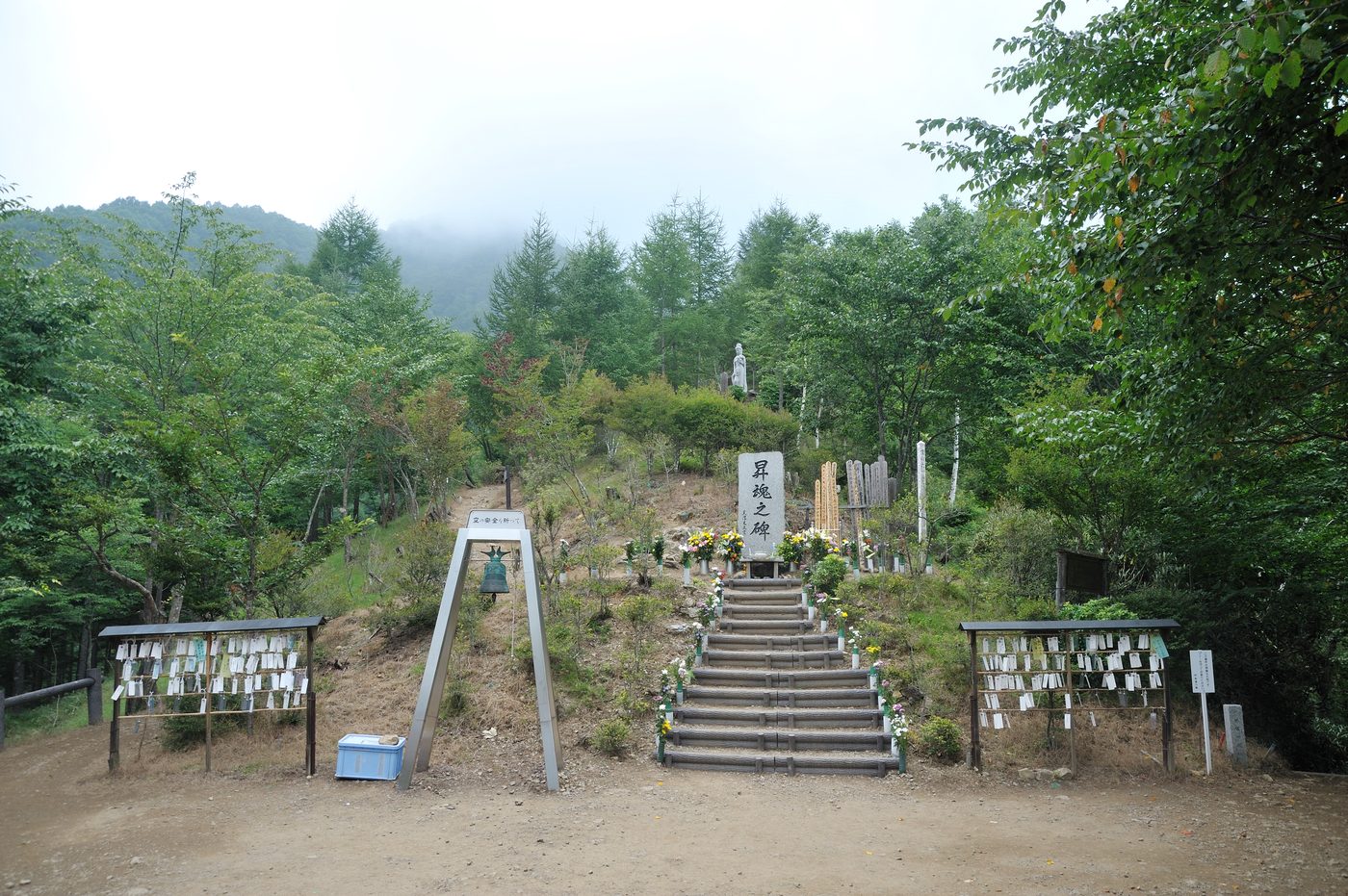
At 18:56, forty-four minutes after leaving Haneda and thirty-two minutes after the bulkhead failed, Flight 123 struck Mount Takamagahara, on Osutaka Ridge in Ueno Village, Gunma Prefecture, roughly 100 kilometers (62 miles) northwest of Tokyo, far off the short coastal route it should have flown to Osaka.

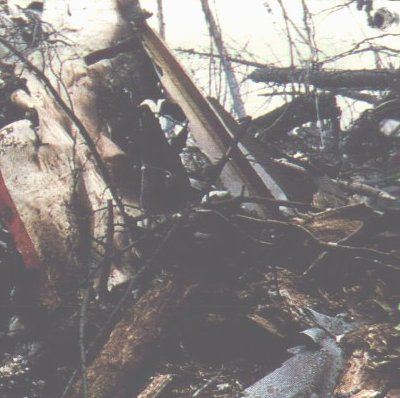
Wreckage of Japan Airlines Flight 123 on the remote, forested slope of Mount Takamagahara, Gunma Prefecture, August 1985
Photo: Public Domain, August 1985. Wreckage on the remote, forested ridge where Flight 123 came down, roughly 1,565 meters (5,135 feet) up Mount Takamagahara.

The aircraft's right wing clipped a ridgeline first; the outer third of the wing sheared away and two engines separated, scattering several hundred meters ahead of the main wreckage. The fuselage flipped, struck a second ridge, and broke apart. Seismographs at the University of Tokyo's earthquake observatory recorded the impact as two small shocks, at 18:56:27 and 18:56:32, precise enough that investigators could timestamp the crash almost to the second from the shockwave alone.

The crash site sat on a remote, densely forested, roadless mountainside with no access for vehicles of any kind, a detail that mattered enormously in the hours that followed, and that remains, to this day, the most painful and most debated part of this entire case.

18:56Impact, Osutaka Ridge
1,565mElevation, Mt. Takamagahara
~100kmNW Of Tokyo
44Minutes, Gate To Impact
Part Six

The Survivors

Four people lived: all female, all seated in the rear of the cabin, rows 54 through 60, the extreme tail end of the aircraft, which broke away and struck the trees and terrain differently than the section ahead of it.

Off-Duty Crew

Yumi Ochiai, 26

An off-duty Japan Airlines flight attendant, deadheading home, Ochiai regained consciousness in the wreckage in the dark. She would later give the most detailed public account of any survivor, of the crash itself, of the long night that followed, and of what she heard from the people trapped around her before rescue finally arrived the next morning.

Mother And Daughter

Hiroko Yoshizaki, 34, & Mikiko Yoshizaki, 8

A mother and her eight-year-old daughter, seated together in the rear cabin, survived the impact together and were found and rescued together the following morning.

A Twelve-Year-Old, Alone

Keiko Kawakami, 12

Kawakami survived the crash that killed both of her parents and her younger sister, who had been traveling with her. She was twelve years old.

A Night That Shaped Everything After

Rescued The Following Morning

All four survivors spent the night in the wreckage on the mountain before rescue crews reached them. What happened, and didn't happen, during those hours is its own chapter of this case, covered in full below.

Part Seven

The Rescue

The crash site was not hard to find. It was hard to reach quickly, and the gap between those two facts has shadowed this case for forty years.

Spotted Within Minutes

A US Air Force Crew Saw It First

A United States Air Force C-130 crew out of Yokota Air Base spotted the crash site roughly twenty minutes after impact, while daylight still remained, and radioed its position to Japanese authorities and to Yokota. American personnel began preparing a helicopter response. Japanese officials, insisting the recovery would be handled domestically, asked the US effort to stand down, and it did.

Located, Then Left Overnight

No Ground Team Set Out That Night

A Japan Self-Defense Forces helicopter located the wreckage after nightfall but could not land safely on the steep, forested terrain, and its crew reported seeing no signs of survivors from the air. Based on that report, ground personnel did not attempt the climb that night. They spent the hours until dawn roughly 63 kilometers away, preparing equipment and access routes, and reached the site the following morning.

If the discovery had come 10 hours earlier, we could have found more survivors.

— A doctor involved in the post-crash medical review, widely quoted in Japanese press coverage of the disaster

Later medical review of the recovered remains concluded that a number of passengers, estimates have ranged roughly from 20 to 50, survived the initial impact and died overnight on the mountain from shock, exposure and blood loss, injuries doctors believed could plausibly have been treated had rescuers reached them sooner. Yumi Ochiai later described regaining consciousness in the dark, seeing lights and hearing the rotors of a helicopter passing somewhere overhead, and hearing the voices and cries of other survivors trapped nearby in the wreckage, voices that, over the course of the night, one by one, went quiet.

A note on this account: Whether a faster ground response could have saved additional lives is not something this case file can settle, and it has been debated by investigators, journalists and the bereaved families themselves for decades. What's documented is the timeline above and the medical findings that followed it. We've presented both plainly, without assigning blame beyond what the record itself supports.
Part Eight

The Cause

Japan's Aircraft Accident Investigation Commission published its findings on June 19, 1987. The mechanical cause traced back seven years, to a single repair job performed on this exact aircraft after an entirely different, survivable incident.

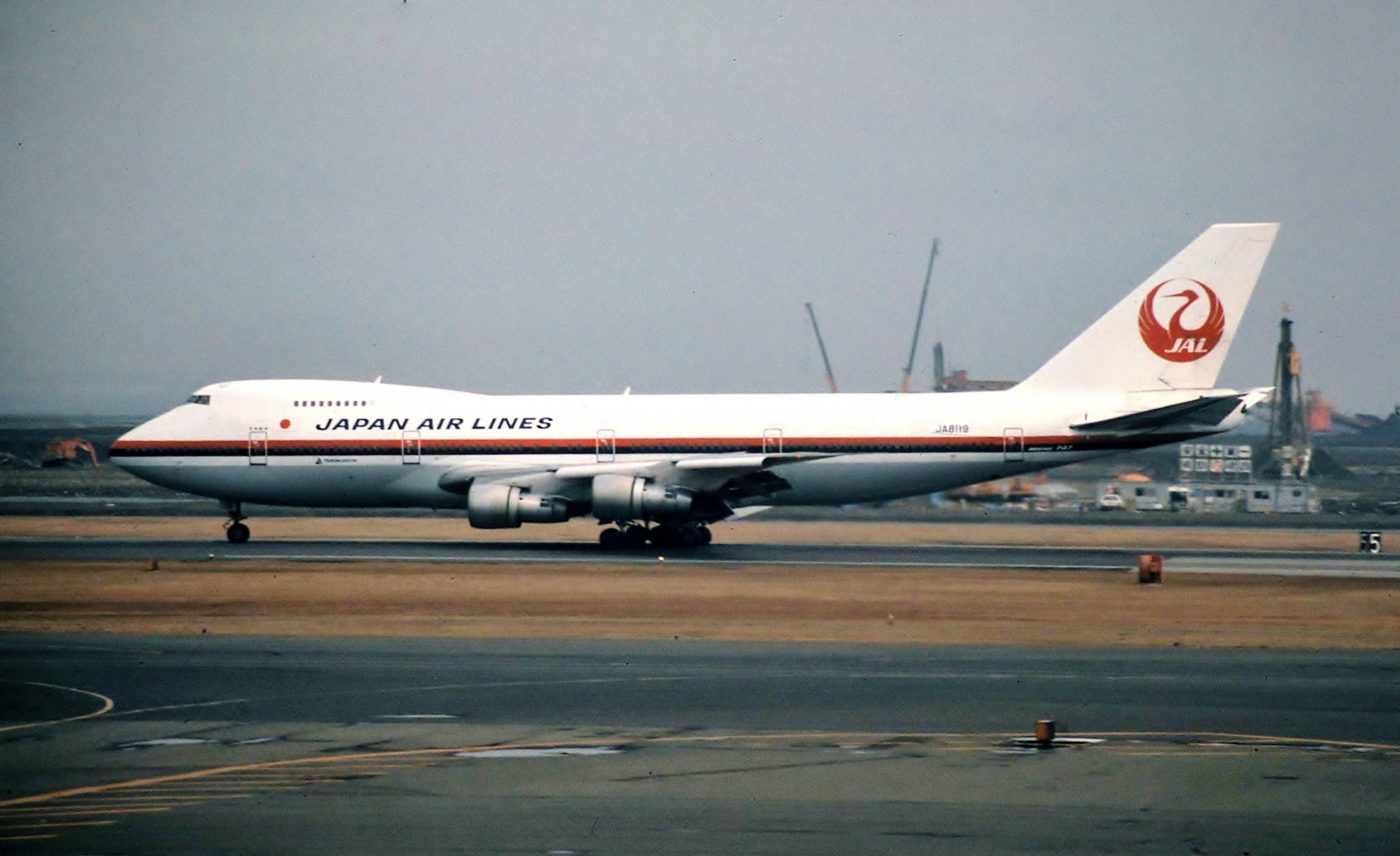
Japan Airlines Boeing 747SR JA8119, the same aircraft damaged in a 1978 tailstrike and later lost as Flight 123, photographed in 1984
Photo: Kjell Nilsson via Wikimedia Commons, CC BY-SA 3.0. JA8119, the same aircraft repaired after the 1978 tailstrike, photographed in 1984, the year before the accident.

On June 2, 1978, this same aircraft, then flying as Japan Air Lines Flight 115, suffered a tailstrike on landing at Itami Airport, striking the runway hard enough on a bounced touchdown to crack the aft pressure bulkhead. Twenty-five of the 394 people aboard were hurt; nobody was killed, and the damage, though serious, was considered routinely repairable.

Boeing technicians flew out to perform the repair. The manufacturer's approved procedure called for one continuous splice plate spanning the cracked section, secured by a specific double row of rivets carrying the structural load. What the technicians actually installed instead used two separate splice plates joined at the middle of the repair, which meant only a single row of rivets, not two, was left doing the work the design required of two.

The Defect

Roughly 70% Of The Repair's Intended Strength

The investigation calculated that the improperly installed repair left the section with roughly 70% of the fatigue resistance a correctly executed repair would have had. JAL's own post-repair inspection did not catch the error, because the flawed splice sat hidden beneath overlapping plates and passed the checks performed at the time.

Seven Years, Unnoticed

12,319 Flights On A Silent Crack

Investigators calculated the defective repair could be expected to fail at roughly 11,000 pressurization cycles. JA8119 completed approximately 12,319 flights on the compromised bulkhead, out of nearly 18,800 flights across its whole operating life, before it gave way on August 12, 1985.

Accountability

Boeing Accepted Responsibility

Boeing publicly acknowledged the repair was performed incorrectly and accepted responsibility for the error. The manufacturer paid compensation to victims' families alongside Japan Airlines.

A Design Lesson

How Redundancy Actually Fails

The 747's four independent hydraulic systems were designed precisely so that no single point of failure could take out flight control entirely. What this accident demonstrated, and what aircraft design has accounted for ever since, is that a redundant system can still fail all at once if its separate paths are ever allowed to run through the same vulnerable structure.

Recovered From The Wreckage

The Farewell Notes

Because Flight 123 stayed airborne for so long, at least seven passengers and one flight attendant used the time they had left to write to the people they loved. Their notes, scrawled on notebook pages, postcards, whatever paper was at hand, were recovered from the wreckage, authenticated, and later published in Japan, where they remain some of the most widely known personal documents in the country's modern history. We reproduce brief excerpts here, in translation, with the respect they're owed.

Hirotsugu Kawaguchi, 52, Shipping Company Manager

“…Please be good to each other and work hard. Help your mother… It's sad, but I'm sure I won't make it… I don't want to take any more planes. Please, kami-sama, help me… To think that our dinner last night was the last time… I am grateful for the truly happy life I have enjoyed until now.”

Keiichi Matsumoto

“Look after Tetsuya, and your parents. Be brave, and live.”

Ryohei Murakami

Rather than a message, Murakami kept a real-time log of the emergency, recording times and observations as they happened. Even mid-crisis, he noted: “The stewardesses are calm.”

Mariko Shirai

“I'm scared. I'm scared. I'm scared.”

Masakazu Taniguchi

A short message asking his wife, Machiko, to care for their children. Decades later, Machiko Taniguchi co-wrote a children's picture book, My Papa's Persimmon Tree, drawn from her husband's memory.

Yumiko Tsushima, Flight Attendant

Rather than write to her own family, Tsushima used her final minutes to write out emergency evacuation and brace-position instructions, in both Japanese and English, for the passengers around her.

Kazuo Yoshimura

A brief note urging his family to live bravely, and to look after the children.

These seven notes, alongside recovered wreckage and personal effects, are preserved today at Japan Airlines' Safety Promotion Center at Haneda Airport, where every new JAL employee, regardless of role or seniority, is required to visit before starting work.

Verification

Sources

Every fact in this case file was cross-referenced against at least two independent sources, anchored by Japan's official Aircraft Accident Investigation Commission report. All links open in a new tab.

Official Investigation Report Aircraft Accident Investigation Commission: Final Report On JA8119 (PDF)

Japan's official government investigation report, published June 19, 1987, archived via the Wayback Machine.

Prior Incident Report Aircraft Accident Investigation Commission: 1978 Tailstrike Report On JA8119 (PDF)

The original 1978 investigation into the tailstrike that led to the faulty bulkhead repair.

U.S. Federal Aviation Administration FAA Lessons Learned: Boeing 747SR-100, JA8119

The FAA's official case summary and safety-lessons page for this accident.

Aviation Safety Reference Aviation Safety Network: Accident Record, JA8119, 12 August 1985

Independent aviation accident database entry archiving the official report's findings.

CVR & ATC Transcript Tailstrike.com: Japan Airlines 123 Accident Database Entry

Compiled cockpit voice recorder and air traffic control transcript excerpts cross-referenced against the official record.

Farewell Notes, Academic Source Dr. Christopher P. Hood: The JL123 Isho (Farewell Notes)

Translated excerpts of the farewell notes recovered from the wreckage, compiled by a Cardiff University academic and author of a full-length study of this accident.

Contemporary Wire Coverage UPI Archives: JAL Passengers Wrote Wills As Plane Plunged

Original 1985 wire service coverage of the farewell notes, published within days of the crash.

Secondary Reference Wikipedia: Japan Air Lines Flight 123

Used as a secondary cross-reference for dates, figures, and the sequence of events; every fact drawn from it was checked against a primary or independent source above.

A note on this case file: This accident killed 520 people, four of whom survived, and it remains, forty years later, deeply painful for the families it touched. We've aimed throughout for accuracy over drama, and have avoided including details, images or speculation beyond what the official record and credible, named sources support.

JOIN THE DISCUSSION