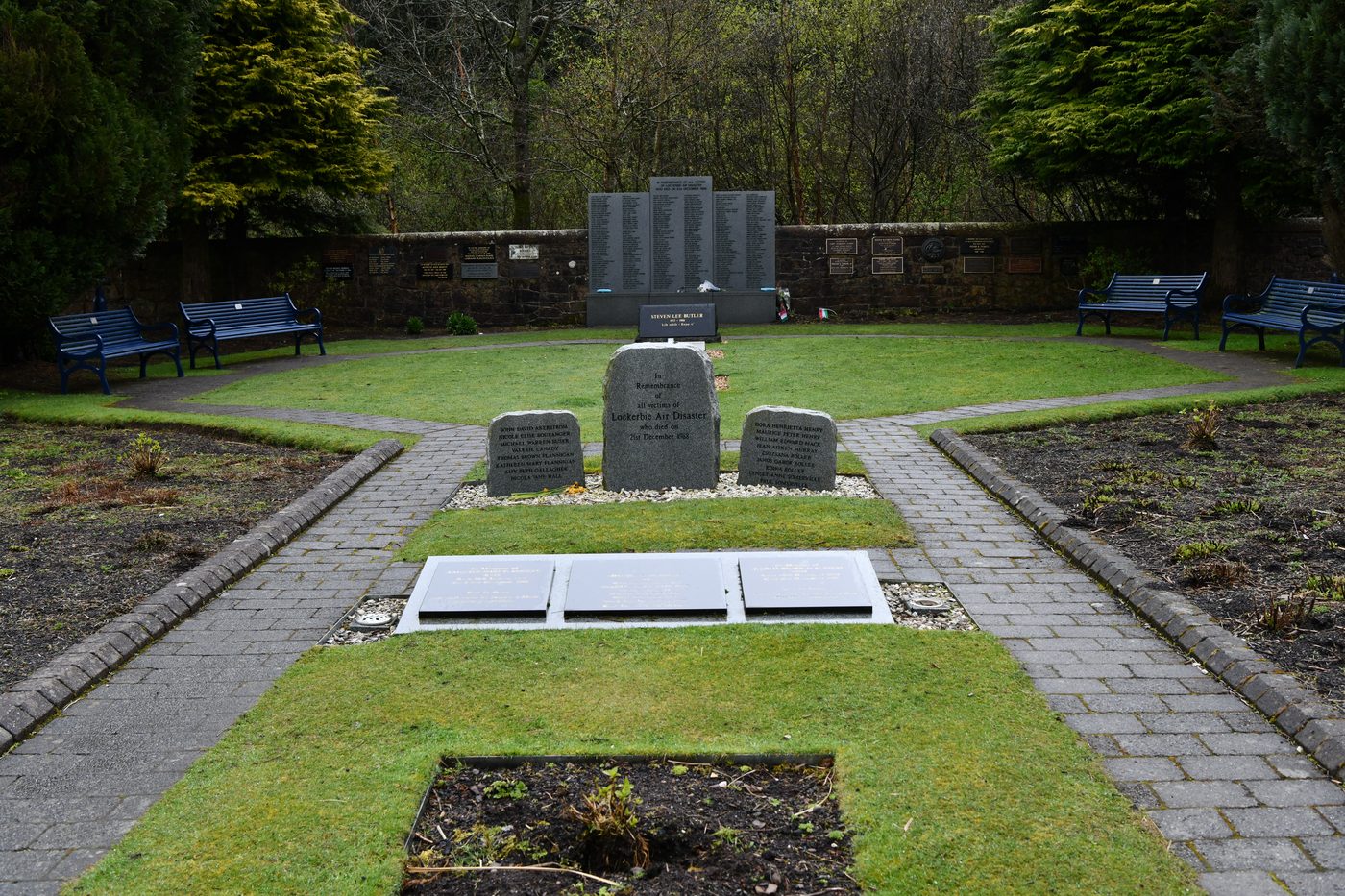
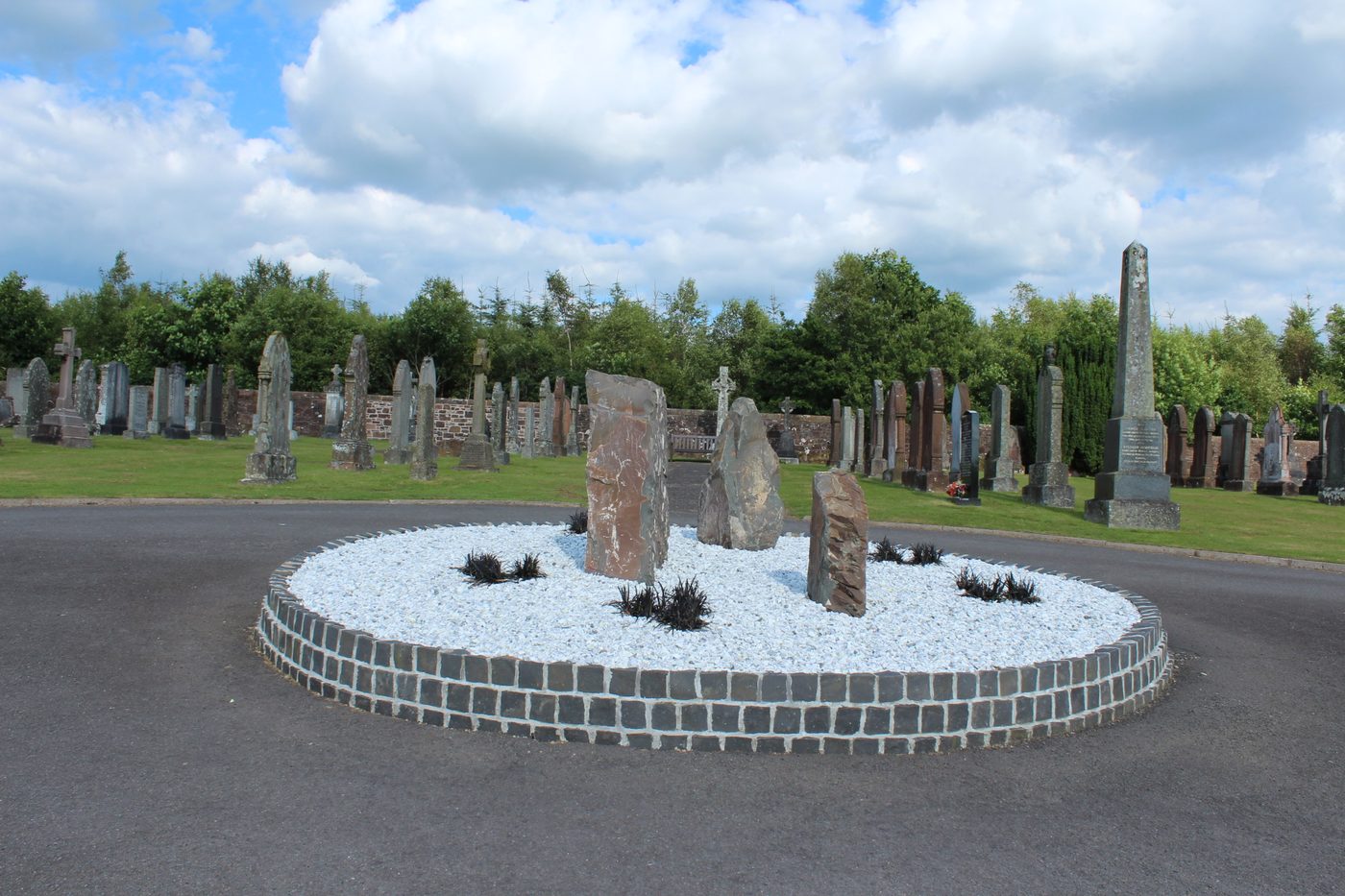
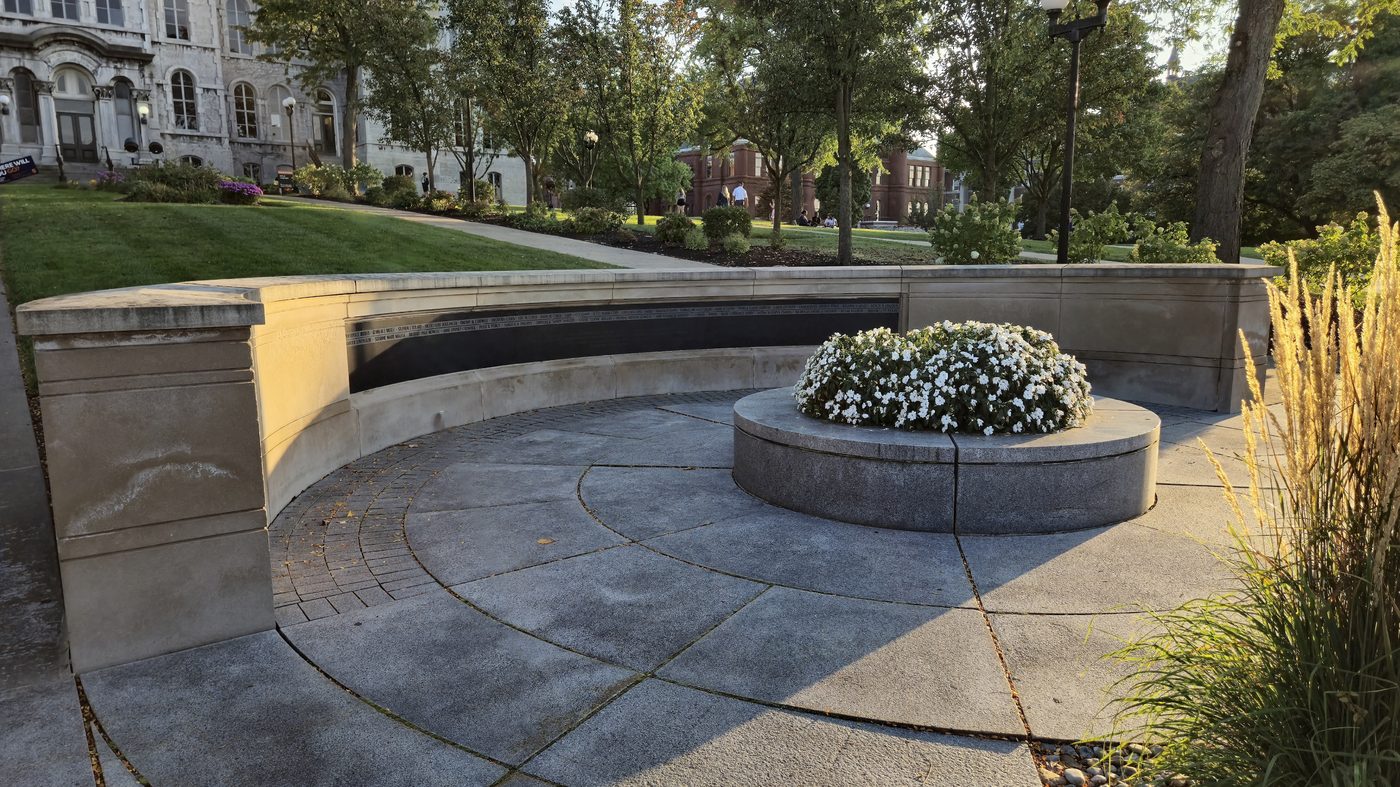
Five days before Christmas 1988, Pan Am Flight 103 climbed out of London Heathrow bound for New York, carrying 259 people, many of them students flying home for the holidays after a semester abroad. Thirty-eight minutes later, a bomb hidden inside a radio cassette player in the forward cargo hold detonated at 31,000 feet over the Scottish border. The nose of the aircraft sheared away in seconds. What remained came apart in the air and fell across an 80-mile trail of Scottish countryside, the heaviest section landing directly on the small town of Lockerbie, where it killed eleven more people who had never set foot on the aircraft at all. All 259 people aboard died. So did 11 residents on the ground. It remains the deadliest terrorist attack ever committed on British soil, and thirty-six years later, the case is still not closed.
All times in this case file are local (GMT), December 21, 1988. Pan Am Flight 103 was a transatlantic feeder route: a Boeing 727 originated the flight number in Frankfurt, West Germany, connecting into a Boeing 747 at London Heathrow for the long leg to New York's JFK Airport, continuing on afterward to Detroit.
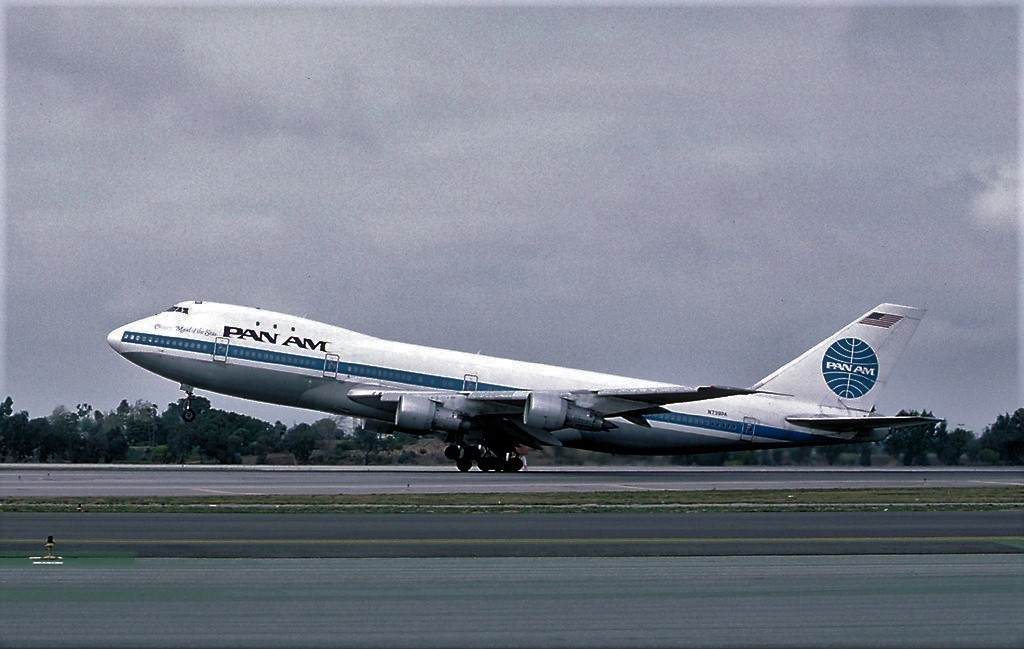
The aircraft flying the transatlantic leg was N739PA, a Boeing 747-121 named Clipper Maid of the Seas, one of the earliest 747s built and delivered to Pan Am back in 1970. It pushed back from Heathrow's Terminal 3 and departed Runway 27R at 18:25, carrying 243 passengers and 16 crew, 259 people in total.
It was five days before Christmas, the busiest travel week of the year, and the cabin was full of people heading home. Thirty-five of them were Syracuse University students, returning from a semester abroad in London and Florence through the university's study-abroad program, along with ten more students from Colgate, Cornell and the University of Colorado on the same route home. Among the other passengers was Bernt Carlsson, the United Nations Commissioner for Namibia, traveling to New York for a signing ceremony scheduled for the very next day.
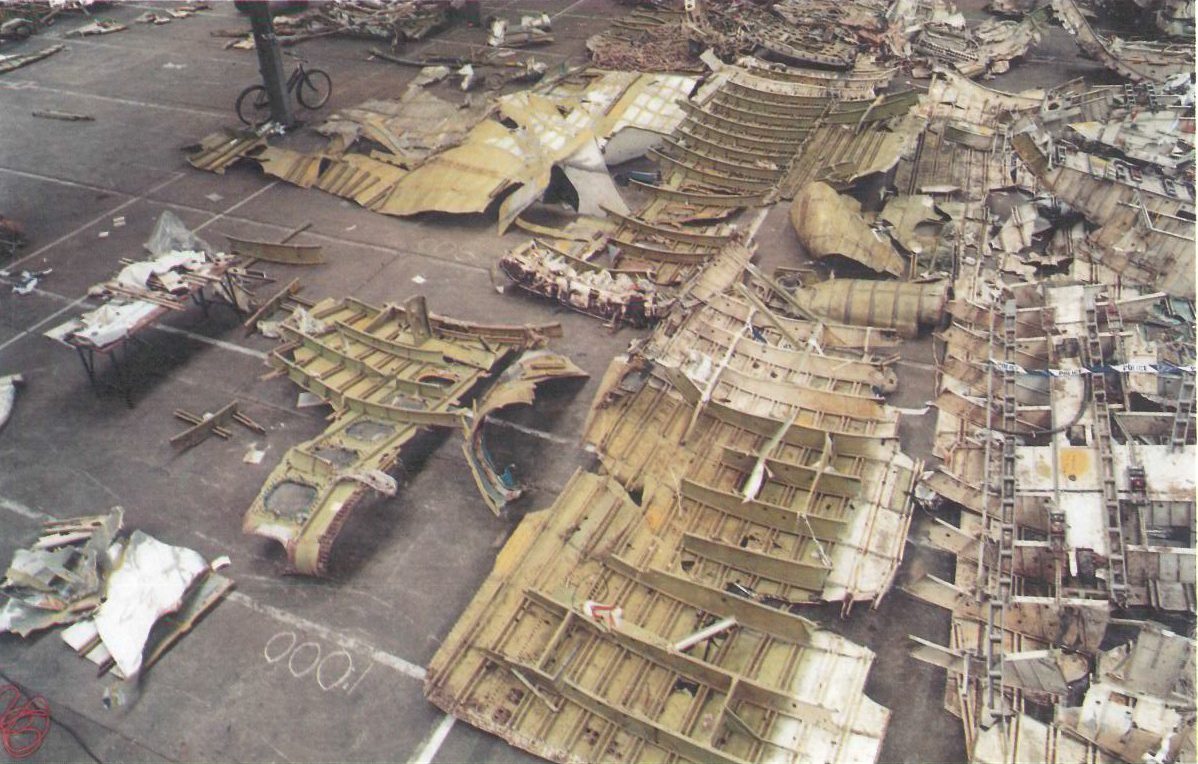
Investigators would later reconstruct, piece by piece, exactly what had been sitting in the forward cargo hold the entire time: a device built to be ordinary enough that no one would look twice at it.
The bomb was built around roughly 340 grams of Semtex plastic explosive, wired to an MST-13 electronic timer, all packed inside a Toshiba “Bombeat” RT-SF16 radio cassette player. The radio was placed inside a brown hardshell Samsonite suitcase, cushioned with baby clothes, and checked in as unaccompanied luggage. It is the kind of device investigators spent four years looking for, and never found, in the wreckage of TWA 800.
Investigators concluded the suitcase began its journey on Air Malta Flight KM180 from Luqa Airport, Malta, was transferred as interline baggage through Frankfurt, and loaded onto Pan Am 103 at Heathrow without ever being matched to a passenger who boarded the aircraft. That baggage-routing finding became one of the most fiercely contested parts of the entire case, and it still is.
At 19:02:50, roughly 38 minutes after leaving Heathrow, Flight 103 was climbing through 31,000 feet over the Scottish border when the timer completed its circuit.
The blast tore a hole roughly 20 inches across in the fuselage skin just above and behind the cockpit. Investigators later determined the shockwave and structural shear ripped the nose section away from the rest of the aircraft in under three seconds, sheared upward and back. No distress call was ever recorded; whatever the crew heard or said in that instant was destroyed along with the aircraft's communications within moments of the blast.
What followed was not a single object falling from the sky but a controlled structure disintegrating into pieces at 31,000 feet: the tail fin tore off under the aerodynamic stress of the now-broken airframe, the horizontal stabilizers followed, and the rear fuselage, cargo hold and landing gear separated as the remaining structure pitched into a steepening, uncontrollable dive.
The wreckage scattered across roughly 845 square miles of Dumfries and Galloway and the Scottish Borders, an 80-mile trail of debris stretching from Lockerbie out toward the North Sea, tracing the aircraft's last heading.
The complete cockpit section came down largely intact in a field near Tundergarth, roughly two and a half miles east of Lockerbie, still holding the crew and first-class passengers in their seats. Investigators would later collect and register some four million individual pieces of wreckage across the search area, tagging and tracking more than ten thousand of them.
A subsequent medical investigation into the disaster, conducted for the Fatal Accident Inquiry, found evidence, including a used oxygen bottle recovered near the body of a steward, suggesting some passengers and crew in the severed forward section may have remained alive, and at least partially conscious, for some portion of the fall before impact. The finding was, and remains, deeply painful for families, and it has been debated by medical experts ever since; we note it here because it is part of the documented record, not to dwell on it.
Pan Am Flight 103
None survived the fall. Eleven more on the ground never saw it coming.
The heaviest section of wreckage, the aircraft's wing box, still carrying most of its fuel load, struck the residential street of Sherwood Crescent at more than 500 miles per hour.
The impact and the roughly 200,000 pounds of jet fuel that ignited with it carved a crater 154 feet long into the street and set off a fireball residents recalled turning night into day. Three houses on Sherwood Crescent were obliterated outright; twenty-one more nearby were damaged beyond repair. Eleven Lockerbie residents were killed, several of them an entire family at a single address; two bodies from the street were never recovered at all.
Roughly half a mile away, the rear fuselage came down on Rosebank Crescent, destroying a house whose occupant, Ella Ramsden, survived. Many of the Syracuse students were found in the wreckage near that second site.
What followed became the largest criminal investigation in Scottish history, led by the small Dumfries and Galloway Constabulary alongside Strathclyde Police, London's Metropolitan Police and the FBI.
Among the four million pieces of debris, forensic examiners recovered a fragment of green circuit board smaller than a fingernail, later identified as part of an MST-13 timer of a type manufactured by a Swiss company and sold, investigators established, almost exclusively to Libyan intelligence.
Fragments of baby clothing recovered from the wreckage were traced to a shop in Sliema, Malta, owned by a merchant named Tony Gauci. Gauci, interviewed by investigators more than twenty times over several years, eventually identified a man he'd sold the clothes to shortly before the bombing, testimony that would become the central, and most disputed, evidence at trial.
Over roughly three years, investigators took more than 15,000 witness statements across dozens of countries before the Crown Office issued indictments in November 1991.
The investigation named two Libyan intelligence officials: Abdelbaset al-Megrahi, head of security for Libyan Arab Airlines, and Lamin Khalifah Fhimah, the airline's station manager at Malta's Luqa Airport. Neither was surrendered for over seven years.
In April 1999, after years of UN sanctions on Libya over the standoff, both men were handed over for trial at a specially convened Scottish court sitting at a former US Air Force base in the Netherlands, Camp Zeist, before three Scottish judges sitting without a jury.
On January 31, 2001, the court convicted Megrahi of 270 counts of murder and sentenced him to life imprisonment. Fhimah was acquitted outright. The court's judgment concluded the “conception, planning and execution” of the bombing was “of Libyan origin,” without specifying every individual involved.
Megrahi always maintained his innocence. In 2007, the Scottish Criminal Cases Review Commission, after a four-year investigation, referred his case back to the appeal court, concluding a miscarriage of justice may have occurred, citing serious doubts about the reliability of Gauci's identification and inconsistencies in the circuit board evidence.
In August 2009, diagnosed with terminal prostate cancer and given roughly three months to live, Megrahi dropped his second appeal and was released from a Scottish prison on compassionate grounds, a decision that drew furious criticism from many victims' families and became entangled in allegations of a UK trade deal with Libya. He lived nearly three more years in Tripoli, still asserting his innocence, before dying in May 2012.
Warning signs existed before December 21, 1988. Almost none of them reached the people who most needed to hear them.
On December 5, 1988, an anonymous caller with an Arabic accent telephoned the US Embassy in Helsinki, Finland, warning that a Pan Am flight from Frankfurt to the United States would be bombed within two weeks. The State Department circulated the warning to US government personnel and embassies. It was also posted publicly on a bulletin board at the Moscow embassy, meaning American officials abroad had access to a threat the flying public never saw. The warning is now believed to have been a hoax unconnected to the actual plot, but the fact that it reached government insiders and not the general public still fuels anger and suspicion to this day.
In 1988, it was standard practice for an airline to load a passenger's checked bag even if that passenger never boarded, a security gap the industry called “interline baggage” convenience. The suitcase carrying the bomb was never physically matched to a boarded passenger at any point in its journey from Malta to Heathrow, because no system existed that required it to be.
Among the 259 people aboard were several US government officials whose presence, once reported, fed years of speculation about the bombing's true target and motive: Matthew Gannon, the CIA's deputy station chief in Beirut, and two US Diplomatic Security Service special agents, Daniel O'Connor and Ronald Lariviere. Their presence has never been shown to have caused the bombing, but it has never fully quieted the theories either.
More than three decades after the bombing, the United States brought a third man into the case, one that, as of this writing, is still making its way through federal court.
US prosecutors identify Masud as a longtime bomb-maker for Libyan intelligence, alleging he built the device used in the bombing and traveled to Malta days before the attack. He is not accused of standing trial alongside Megrahi and Fhimah in 2000, because at the time investigators did not yet have enough evidence connecting him to the case.
The US Department of Justice announced charges against Masud on December 21, 2020, the bombing's 32nd anniversary. He was already in custody in Libya on unrelated charges at the time. In December 2022, the United States announced it had taken custody of Masud; a federal grand jury in Washington, D.C. formally indicted him that same month. He pleaded not guilty in 2023, and as of this writing his federal trial has not yet concluded.
That is precisely what a US federal court has not yet determined. Under both American and Scottish law, he is presumed innocent unless and until proven guilty at trial. We report the charges here as charges, not as an established fact of what happened, and we'll update this case file as the proceedings continue.
Libyan officials have objected to Masud's transfer to US custody, calling it a violation of national sovereignty and arguing the matter was legally settled by Libya's 2003 acknowledgment of responsibility and compensation payments to victims' families. That 2003 settlement, made under Muammar Gaddafi, paid over two billion dollars in total to families while Gaddafi himself never personally admitted to ordering the attack.
Every fact in this case file was cross-referenced against at least two independent sources, anchored by official Scottish and US court and government records. All links open in a new tab.
The official Scottish body's summary of its 2007 review and referral of Megrahi's conviction back to the appeal court.
The Department of Justice's official 2022 announcement of Abu Agila Mohammad Masud's transfer to US custody.
BBC coverage of the town's annual memorial service and its enduring relationship with victims' families.
The university's official history of the Remembrance Scholars program and its 35 students lost in the bombing.
Used as a secondary cross-reference for names, figures and the sequence of events; every fact drawn from it was checked against a primary or independent source above.